Home » 2015 (Page 3)

Yearly Archives: 2015

Three People Die Daily in Police Actions

by Brian T. Lynch, MSW

On April 4, 2015, Walter Scott of South Carolina was stopped by a North Charleston police officer for a burned out blinker on his car. It was Saturday morning. Scott had no prior criminal history and was unarmed. At some point Scott exited his vehicle and according to the police officer Scott reached for the officer’s Taser. The officer drew his weapon and fired multiple shots, killing Walter Scott. The officer said he feared for his life and was justified in using deadly force.

That’s the way things stood until three days later when a video tape by an anonymous witness surfaced at the New York Times and other media outlets. The video clearly shows Scott running away and the officer calmly taking aim and firing multiple shots into Scott’s back. The officer then handcuffed Scott, ran back to where the office had fired his gun, picked up an object and then dropped it beside Scott’s body. The video was turned over to investigators and Officer Michael Thomas Slager was charged with first-degree murder for the shooting death of Walter Scott. Michael Slager is white. Walter Scott is black. This is a nightmare story that is all too common.

Between May 1, 2013 and April 4th, 2015 there were 2,178 citizens killed by police officers in the United States according to an extensive search of public news accounts. These media accounts include police homicides, justified or otherwise, murder/suicides involving police officers and their family, DWI accidents involving officers under the influence of alcohol or drugs, police assisted suicides of mentally ill persons and other such catagories. A more detailed analysis of this database

is pending and will be published here when completed. But there are a few quick facts off the top that you should know.

In 23 months news accounts reported 2,178 civilian fatality incidents at the hands of the police. That means there are about 94 per month or around 3 police homicides per day. Fatalities are almost entirely men, 2,044, with only 135 woman killed and 6 whose gender was undisclosed.

The identities of 565 victims were undisclosed to the media. The average age of the known fatality victims is 36.9 years. Latino’s make up 18.7% of the general population and were 17% of the fatality victims during the past 23 months. Whites make up 77% of the population but only 48.1% of the victims. African-Americans make up just 13.2% of the general population but 492 of the victims of police related fatalities, or 30.5% of the total. If there is a perception in the Black community that they are disproportionally targeted by police, these facts only confirm their fears.

The vast majority of law enforcement officers are good, law abiding men and woman who put themselves on the line to protect us. So, it may seem impossible that any officers could wantonly direct deadly force towards otherwise law abiding citizens of color without legal justification. The Scott video is graphic evidence that it does happen. You can see for yourself here, but a warning: video is disturbing.

A full and fair discussion of racism, the law and the American Justice system is overdue. The urgency is now. People are dying.

Understanding Social Power

by Brian T. Lynch, MSW

Introduction

What does it really mean when we say, “that person is very powerful.” Or what is it about an organization or corporation that makes us think of it as being powerful. The word “power” has clear meaning when we are talking about a car motor, or water crashing down a cliff side. Yet when we apply the word to people or organizations it is more difficult to pin point just what we mean. The power we are speaking of is social power, and why a person has it and how it operates often seems mysterious.

My purpose here is to describe in brief my understanding of social power, what it is and how it operates. I have read books and articles on the subject but have not been very satisfied. I found the language of these works to be somewhat inaccessible or ambiguous. Also, the focus is often too narrow for such a broad topic.

I have no special credentials to bring to this task beyond a lifetime of observation as a social worker in the fields of mental health and child welfare. I consider myself privileged to have observe people on many different levels from the intimacy of their homes to the halls of government power. This discussion, then, is intended more as a personal reflection than a scholarly pursuit and a hopeful effort to raise a productive discourse on this topic.

While each of us understands social power and responds to it in our daily lives, it remains difficult to define. This is partially because it is so pervasive and takes so many forms. It operates on every level of human interactions from the intimate to the geopolitical. For social beings, social power is our atmosphere. It surrounds us like an ocean, is essential for our survival and yet as invisible and ever changing as the wind.

Social power is often expressed in symbols. We all recognize obvious symbols of social power, like an American flag or a corporate logos. We bestow social power on our politicians when we elect them to govern. We ascribe power to people who attain “powerful position” in their company or organization. There are also very clear status symbols of power, such as a police uniform, or a Gucci handbags or the Armani suits worn by successful business people. We recognize social power when we see the skyline of great cities or the grandeur of beautiful cathedrals and synagogues. Social power is often very evident in religion. It is seen in religious symbols of worship. The special attire of priests, ministers or rabbis confer a measure of social power in the form of respect or prestige. The ornate garments of the Catholic pope during a high mass still invoke the power of ancient Roman.

But the absence of power is just as evident. We see it in the beggar or the homeless woman on the street. We sense the absence of power in the ghettos or in the desolation of small, redundant rural towns in far flung places. We sense it in young children or in the elderly living out their lives in a nursing home. We even sense it in our pets.

We all recognize and respond to social power every day. We know there is a certain pecking order in our families, among our friends or among our colleagues at work. We often exercise or respond to social power without giving it much thought. We acquiesce to authority figures such as a parent, a teacher, a rabbi, a boss or a judge. We often accede to the requests of a trusted friend or a loved one and expect the same in return. Conversely, we are very aware of social power when it is imposed on us or we are imposing it on others.

Aware of it or not, in big ways and small, we are constantly exercising or responding to social power. How we experience it goes by many names; respect, duty, obligation, intimidation, pressure, fear, expectation, demand, request. We also experience our own social power as internal feelings. We might feel empowered, entitled, privileged, respected, or even feared. On the other hand, we feel weak, vulnerable, shamed or disempowered when we are ignored, rebuked, humiliated or abused. Suffice it to say, we are a massively social species. We have evolved keen social instincts and most of us develop significant social skills throughout our lifetime.

In future installments I will define social power and trace its many forms over the spectrum of human activity. At every stage, after each post, I hope that you, the reader, will provide your reactions, insights and ideas to help improve this project. No contribution is too small or too grand, so please take the time to comment and share your thoughts and ideas. Thank you.

Is Obamacare Helping Anyone Stay Healthy?

by Brian T. Lynch, MSW

Let’s say you really want to know if Obamacare has had a positive effects on keeping people healthy. Partisan politics makes it difficult to get any concrete or objective answers to this or any questions regarding the Affordable Care Act (ACA). So how would you go about finding the answer?

You could find out by designing your own study. You might start by looking at diseases that are silent killers because these have permanently damaging effects long before there are physical symptoms.

Diabetes is just such a disease. According to medical sources, as many as one person in four have diabetes and don’t know it. The longer it goes undetected the more it damages your internal organs, yet a simple blood test and doctors visit is all it takes to uncover and control this disease.

Now imagine that you have results of 400,000 diabetes blood tests nationwide from which you could pull out all the newly diagnosed cases. First you sort the new case in 2013, before any Medicaid expansion, from the 2014 cases after the expansion. Next you sort the new diabetes cases from each period by the 26 states that expanded Medicaid from the 24 states that refused. A concrete measure of an improved healthcare outcome would be finding that there was an increased rate of diabetes detection in the expansion states over the non-expansion states.

Just such a study was done and published this week (March 21, 2015) by Qwest Diagnostics, a national medical laboratory. What their analysis discovered was a 23% increase of newly diagnosed cases of diabetes in the states that expanded Medicaid in 2014. There was only a 0.4% increase in new diabetes cases from states that did not expand Medicaid. What’s more, they were able to see a trend towards earlier detection of diabetes in the expansion states. Earlier detection means fewer heart attacks, strokes, kidney transplants, amputations, blindness and premature deaths. This, in turn, means a healthier population and lower health care costs over time.

Thousands of people will now lead healthier lives and live to their full potent in those 26 states that expanded Medicaid under the ACA. The number of people who could have been covered by the expansion roughly equals the number who got coverage in 2014. This means an almost equal number of people will likely experience needlessly declining health due to undiagnosed diabetes. The states that don’t expand Medicaid will have higher healthcare costs in the future resulting from a less healthy population.

The news isn’t all bleak for the poor or elderly in states that didn’t expand Medicaid. A report by the Avalere Health organization recently found that there are 550,000 new enrollees in standard Medicaid in 15 states that have not expanded Medicaid. They attribute this rise in enrollment to the “woodwork effect,” caused by increased public awareness and publicity surrounding Obamacare. These are individuals who were eligible for standard Medicaid but hadn’t applied. It is safe to presume that some of them will benefit from the early detection of diabetes.

From this one Quest diagnostics study alone the answer is clear. The Affordable Care Act is having a positive effect on the health and well-being of citizens in those states that expanded Medicaid. There are other silent killers that can easily be detected early while treatments and cures are still possible, such as high blood pressure and many types of cancer. If earlier detection of these diseases are also resulting from Medicaid expansion, this would be overwhelming evidence that the ACA is improving health outcomes.

Expanding Medicaid doesn’t cost the states any additional revenue for the first few years. After that there is significant reimbursements from the Federal Government. Refusing Medicaid expansion actually costs states millions of dollars in uncompensated care right now. Doing this on ideological grounds is not a principled position, not when it clearly results in a less healthy population and increased medical expenses for the foreseeable future.

I close with a quote from the actual Quest Diagnostics study findings:

Actual Study Findings:

“We identified 215,398 and 218,890 patients who met our definition of newly diagnosed diabetes within the first 6 months of 2013 (control period) and 2014 (study period), respectively (a 1.6% increase). We identified 26,237 Medicaid enrolled patients with new diabetes in the control period vs. 29,673 in the study period: an increase of 13%. The number of Medicaid-enrolled patients with newly identified diabetes increased by 23% (14,625 vs. 18,020 patients) in the 26 states (and District of Columbia) that expanded Medicaid compared with an increase of 0.4% (11,612 vs. 11,653 patients) in the 24 states that did not expand Medicaid during this period. Similar differences were observed in younger and older adults and for both men and women.”

————————————————————————————————–

Quest Diagnostics Diabetes Study: http://care.diabetesjournals.org/content/early/2015/03/19/dc14-2334.full.pdf+html

Avalere Health Report: http://avalere.com/expertise/managed-care/insights/avalere-analysis-medicaid-non-expansion-states-experience-up-to-10-enrollme
Lake Hopatcong in New Jersey Needs Your Vote

by Brian T. Lynch

I grew up a few blocks from Lake Hopatcong and the experience has stayed with me all my life. I learned to swim there. I learned to fish and ice fish there. But the best gift of all was discovering my inner calmness in the reflections of countless sunsets and the gentle lapping of its waves. I have loved rivers and lakes ever since. It is where I feel most at home.

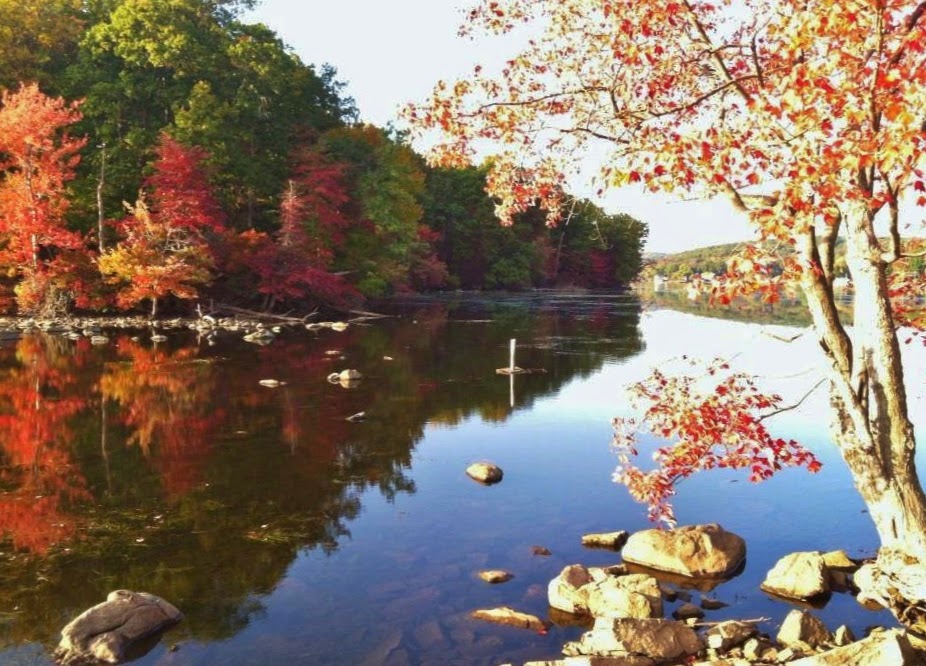
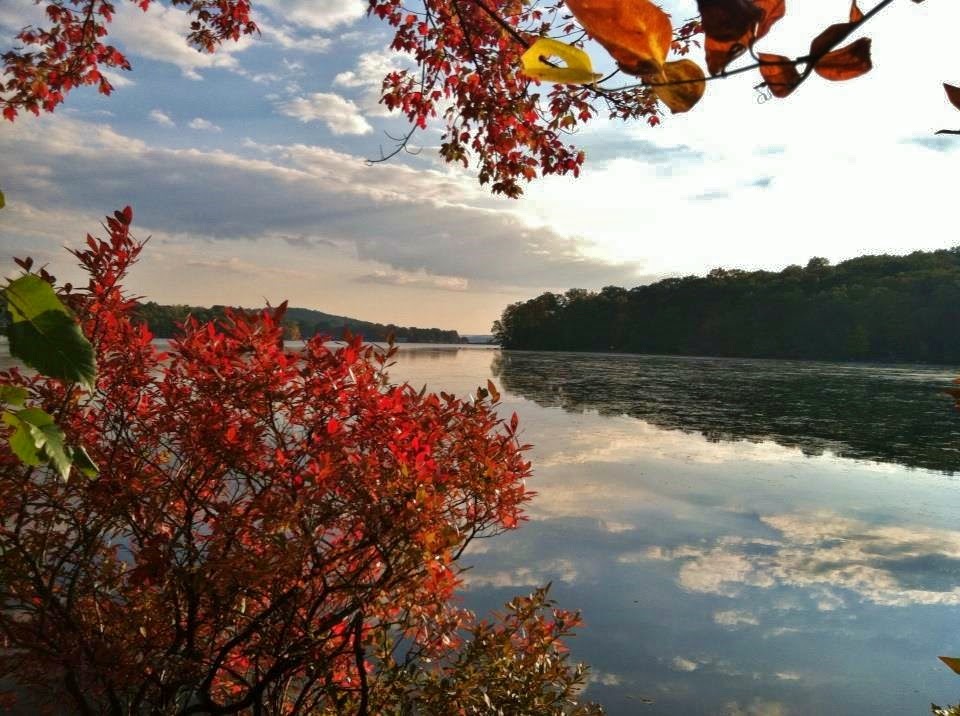
A view from tiny Snake Island on the North end of Lake Hopatcong in the Fall of 2013 looking over to a nature preserve.

Which is why I want to help the lake I love by asking you to help the Lake Hopatcong Foundation win a small grant. By casting a vote to win this small grassroots grant from the Boat U.S. Foundation you may help create a public guide map of this beautiful lake. To vote, please must click on the following link to vote for Lake Hopatcong to receive this grant:

http://www.boatus.org/grants/vote.asp

“But how does a guide map help this lake”, you ask?

New Jersey politics is heavily comingled with the interests of developers. Over the years this beautiful lake has been transformed from summer resort and recreation area to largely a residential lake. Lake access has become too limited due to over development, so tourism is down. (I would love to see the State open another state park.) This gives the New Jersey State government less incentive to support environmental stewardship of our largest lake and natural attraction. Encouraging more tourism will help attract more attention to preserving and maintaining the lake.

If they win the grant, the Lake Hopatcong Foundation will create a Lake Hopatcong Guide Map. The map will include information on invasive species and the location of pumpout stations. The map will be available for free and printed on water-resistant, tear resistant and durable 12” x 18” paper. They will also update the Lake Hopatcong Guide app which is available for free download for iPhone, iPad and Android. Information on how to prevent aquatic hitchhikers and the locations of pumpout station will be added to the app and their website. This will facilitate visitor, encourage tourism and it would be good for the health of the lake in the long run.

Putting this small grant towards some great environmental issue would be a little bit like throwing a pail of water on a burning house. The impact would be negligible. So please help out and cast a vote for help the Lake Hopatcong Foundation win this small grant. Here is a little history of Lake Hopatcong. Please come visit it if you are in the vicinity some day.

LAKE HOPATCONG, NEW JERSEY

Lake Hopatcong is New Jersey’s largest lake. It is about 4 square miles in area. It is in the water shed area know has the New Jersey highlands about 30 miles from the Delaware River and 45 miles from New York City. Lake Hopatcong was created by damming and flooding two ponds that were known as Great Pond and Little Pond. It is substantially spring fed while the Musconetcong River flows out from it.

The Big and Little Ponds in the Hopatcong basin were form during the last glacier. They were about two miles apart with some wetlands between. It is believed that these lakes were first settled by the Lenape Indians. Here they found that the lakes provided abundant fish and forested shores with plenty of game. The word “Hopatcong” is believed to be a derivative of the Lenape word “hapakonoesson”, meaning Pipe stone”.

Sometime between 1750 and 1765 the Brookland Forge and mill built a damn where the Musconetcong River flows from the lake in order to supply greater water power for the forge. This damn raised the water level by six feet and connected the two ponds.

220px-Lake_Hopatcong_State_Park_NJ_beach_scene_houses_in_distance

In the early 1800’s plans were made to build the Morris Canal to connect the Delaware River with New York Harbor. The 900 foot elevation of Hopatcong basin was perfectly suited to supply water for the canal.

In 1831, the Morris Canal Company purchased the Brookland forge site and replaced the dam with one that raised the water 12 ft above the original level of Great Pond creating the lake as it exists today.

Lake Hopatcong is home to the greatest variety of game fish of lake in New Jersey.

Each spring it is stocked with brown trout, rainbow trout, and brook trout. It is home to Largemouth and smallmouth bass, rock bass, chain pickerel, channel catfish, bullheads, hybrid striped bass, walleye, muskellunge as well as perch, crappie, bluegill and carp.

I have never been skillful or lucky enough to catch one of the monster fish that inhabit the lakes depths, but I have always been inspired by those who do seem to catch these great fish.

Once a first class resort destination for the rich and famous, today Lake Hopatcong is largely a residential lake with limited public access. There is the New Jersey State Park in Landing and a number of marinas and restaurants on the lake and two yacht clubs. Many of the restaurants can be accessed by boat. You can simply dock and dine at any of these classic lakeside restaurants.

Jefferson House restaurant outdoor view

So again, Please help the Lake Hopatcong Foundation win this small grant, Click on the following link to vote for Lake Hopatcong to receive this grant: http://www.boatus.org/grants/vote.asp and Thank YOU!

Republicans Having a Selma Moment

by Brian Lynch, MSW

It’s been fifty years since marchers seeking voting rights were beaten on the Pettus Bridge in Selma Alabama, yet Republican leaders still can’t join hands with African Americans on that bridge without offending bigots in their base. Fifty year later and a show of unity on that bridge is still the wrong message coming from the Republican Party? Really?

Edmund Pettus Bridge Pic

This begs further questions. Just how much of Republican politics is driven by the desire to preserve white privilege? What percentage of their base feel hostile towards inclusion and justice for all? And who can be surprised after this missed opportunity to learn that 90% of African Americans vote for Democrats, or that Latinos are increasingly turning to the Democratic Party?

Media pressure was put on the Republicans when it was learned that no leaders were planned to go to Selma. At the last minute House Republican Majority Leader Kevin McCarthy announced he will to join in the 50th anniversary events. McCarthy is a close friend of Democratic Congressman John Lewis who was beaten on that bridge 50 years ago. The cynical view is that McCarthy is the best Republican representative since his attendance can be forgiven by the bigots on the grounds that he is Lewis’ personal friend. This isn’t to impugn McCarthy’s motives for attending, which I’m sure are genuine.

Political spinners can say whatever they want, but no rational citizen who wants our society to advance can accept any more excuses from those who hold us back. The Republican Party has clearly chosen the wrong side of history. This time it is Republicans who are beating themselves on the Edmund Pettus Bridge.

_________________________________________________

Historical foot note: The Edmund Pettus Bridge is named for Edmund Winston Pettus, a former Confederate brigadier generalU.S. Senator from Alabama and Grand Dragon of the Alabama Ku Klux Klan.

The Plot to Kill Public Employee Pensions

by Brian T. Lynch, MSW

In war and politics, if you pick your battlefield you win. The current pension fight in New Jersey is a classic example. Nearly everyone in the state sees it as a battle between a broken pension system and cash strapped citizens, but this is all just a setup.

Governor Chris Christie cut $1.5 billion in pension payments from the latest budget proposal while also cutting modest tax increases on the rich to pay for it.  When the unions squealed, he offered the public a false choice between tax hikes on the middle class or cuts to popular and essential programs.  His framing of the problem this way pits average citizens against civil servants and their unions.  This is the battlefield of choice for national conservatives.

This fight could have been between government solvency and any other public obligation of the state, but it’s not.  It’s against public employee unions because killing public sector unions and fix pension systems has been a conservative priority for decades.  This is a grand plan playing out in many other states.  Starving public pensions was always a choice, not a necessity.  If all those missed pension payments had been made the system would be awash in cash today given the huge growth in the investment markets over the past twenty years.

But Gov. Christie almost blew this plan to destroy public pensions in New Jersey when he enacted pension reforms that might actually fix the system.  His reform plan could still fix it if implemented, but not without seriously upsetting his potential conservative backers.

In order to keep his presidential hopes alive Governor Christie had no choice but to sabotaged his own reforms and further degrade the state pension system by not paying what he promised.  A state judge has seen through his shallow plan and ordered him to restore the cuts, and he has appealed. I hope the New Jersey Supreme Court will uphold the lower court’s decision.

I hope everyone else in New Jersey sees though his sham and demand that that he stick to the pension reform plan he has been boasting about on his trips out of state.  And if the reader here happens to live in a conservative state with public pension woes, take a lesson from New Jersey.  Take a step back and look around to see in whose battlefield you are standing.

HERE IS WHY GEORGE WASHINGTON IS WORTH CELEBRATING

George Washington warned this Nation about political parties that,”alternate domination of one faction over another, sharpened by the spirit of revenge, natural to party dissension, which in different ages and countries has perpetrated the most horrid enormities.” He called political parties..”a frightful despotism.”

He called plutocrats (wealthy, controlling capitalists) ,”powerful engines” of cunning and ambition that “subvert the power of the people and usurp, for themselves, the reins of government.”

Because a democratic government is compelled to enact the will of the people he gave this advice: “Promote then, as an object of primary importance, institutions for the general diffusion of knowledge.” He said, “In proportion as the structure of a government gives force to public opinion, it is essential that public opinion should be enlightened.”

He denounced war that is coerced by “habitual hatred” and those who profit from it. He said “The nation, prompted by ill-will and resentment, sometimes impels to war the government, contrary to the best calculations of policy… The government… makes the animosity of the nation [towards war] subservient to projects of hostility instigated by pride, ambition and other sinister and pernicious motives.”

And he made all of these comments in his Farewell Address, with the hope that we would still  be listening.

A Best of Times, Worst of Times Economy

by Brian T. Lynch, MSW

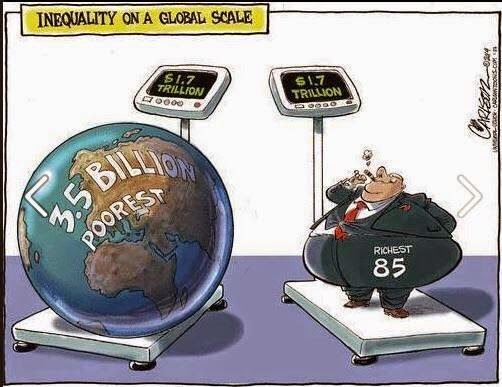
How is it possible that the investment economy is booming while the economy of ordinary citizens is still in such a slump? Stock prices are at an all time high and big time investors are getting high rates of returns while worker wages have declined and are just starting to rise. The raises in wages so far is still not keeping up with inflation. It seems like there are two separate economies not entirely connected to each other. Right?

To understand what’s happening we have to begin by acknowledging that most of the richest billionaires today have gotten much of their wealth increases at the expense of lower wages for the rest of us. This trend is more than thirty years old now in the United States. There is plenty of evidence supporting this fact for those who care to look. And this wage suppression is a global phenomenon, not just a U.S. feature.In order to increase consumer spending while wages remained flat we have had to make a series of changes, beginning with mothers entering the workforce, longer work hours followed by layaway plans, credit cards and then home equity loans to pay for spending beyond our means. These have run their course and the long hard pay down of personal debt (including college loans) means that consumer spending will be sluggish for the foreseeable future.

The impact on the economy of stagnant wages is ever slower consumption of goods and services over time. There isn’t as much money to buy things. This slower rate of consumption suppresses demand. Lower demand means fewer jobs and even lower wages for the rest of us. This is the cycle were we find ourselves today.

The consumption of goods produces the profits from with owners of capital collect returns on their investments. Lower demand due to suppressed wages would normally also lower returns on capital investments but for the factors that have kept consumption afloat. Now there are no hours left in a day, fewer household members available to work, no more capacity to borrow against future earnings. Now the impact of low wages has come home to roost and lower sales means less profit to be made.

Before the 1970’s this situation would right itself when owners shared a portion of their wealth by offering productivity raises to reward their workers. Productivity wages are based on growing productivity and are separate and above cost of living increases. Productivity raises, along with cost of living adjustments, allowed the labor/consumers to increase spending and boost demand. Increased demand would spur on manufacturing and stimulate the whole economy.

But today’s billionaires have found another way to profit without sharing their wealth with wage earning consumers. They spotted the growing ownership stake of many in the middle class and created an opportunity to take it all back. It is hard for most of us to see in our lifetime, but this is the first time in history of the world that the middle class (upper-middle mostly) has accumulated a significant stake in capital ownership. Many of us have retirement accounts, money market funds, etc. People in the upper-middle class, doctors, lawyers, middle-managers etc., have become mini-investment capitalists. Prior to the vast destruction of property caused by the world wars in the last century, wealth was concentrated at the top as is happening again today. Middle class gains in the 20th Century directly correspond to capital losses by the wealthiest owners during the two world wars.

Billionaire capitalists, the “true heirs” to wealth ownership, have responded to middle-class ownership of capital by creating a massive financial investment casino filled with elaborate new investment vehicles. The object is to entice new wealth owners to play in the billionaire’s casinos. Mortgage backed securities and swaps are just two small examples that nearly bankrupted the economy in 2008.

These new and incomprehensible investment products has spawned a whole new class of hucksters, like Bernie Madoff, who use these bewildering new instruments to create slick ponzi schemes. But the bulk of these new investment opportunities are just a big casino games in which the house (billionaire owners) always wins. Billionaires are quickly siphoning away middle class ownership stakes in capital through high finance games of chance. In this way they can boost returns on investments and entertain themselves without sharing their wealth through higher wages.

Because these billionaire owners, who make up less than .01% of the population, control the investment odds, they are sure to win back all the capital they lost in the war years of the last century. Middle class gains in the 20th Century correspond to capital losses by the wealthiest owners during the two world wars. This now explains why the stock market and investment economy seem to be booming while the economy on Main Street slumps. Billionaire capitalists don’t have to share wealth to make wealth like they use to. There are enough small investors with an ownership stake willing to gamble what little they have in this new investment casino to keep billionaire fortunes growing.

If you, the reader, are still with me at this point let me assure you that the geometrically rising gains by the wealthiest owners of capital are not an inevitability. There are difficult but concrete steps we can take to bring capitalism back into balance for everyone. A discussion of these solutions does require a much deeper understanding of problems that I can provide here. I firmly believe it is in our best interest to arm ourselves with a much better understanding of the forces creating our two economies; Forces that are threatening our democratic institutions. For a fuller understanding I recommend Thomas Piketty’s excellent book, Capitalism in the 21st Century. I encourage you to strike up conversations with others and share your thoughts and questions.

_______________________________
Image Credit: (and recommended site) http://oxfamblogs.org/fp2p/is-doing-something-about-inequality-just-a-choice-between-bash-the-rich-v-tackling-poverty-some-thoughts-for-blog-action-day/#prettyPhoto-img/0/