Home » 2016 (Page 3)
Yearly Archives: 2016
The Panama Papers Scandal Parses the Difference Between Bernie and Hillary
by Brian T. Lynch, MSW

This is yet another example where a clear eyed, independent Bernie Sanders warned against passing legislation that he knew would be disastrous while Hillary Clinton pressed for its passage. Sanders said exactly what would happen if the Panama free trade agreement passed. He said it would make it easier for, ” … the wealthiest people and most profitable corporations in this country to avoid paying their fair share in taxes by setting-up offshore tax havens in Panama.
Today we read headline stories like this:
“Years before more than a hundred media outlets around the world released stories Sunday (April 3, 2016) exposing a massive network of global tax evasion detailed in the so-called Panama Papers, U.S. President Barack Obama and then-Secretary of State Hillary Clinton pushed for a Bush administration-negotiated free trade agreement that watchdogs warned would only make the situation worse.”
After the free trade agreements passed in Congress, then Secretary of State Hillary Clinton released the following statement:
“The Free Trade Agreements passed by Congress tonight will make it easier for American companies to sell their products to South Korea, Colombia and Panama, which will create jobs here at home. The Obama Administration is constantly working to deepen our economic engagement throughout the world and these agreements are an example of that commitment.
Source: https://blogs.state.gov/stories/2011/10/13/passage-colombia-panama-and-south-korea-trade-agreements
In opposition to the Panama free trade agreement bill being debated in the Senate, Bernie Sanders said this on October 12, 2011 (Panama comments printed here in full) :
Finally, Mr. President, let’s talk about the Panama Free Trade Agreement.
Panama’s entire annual economic output is only $26.7 billion a year, or about two-tenths of one percent of the U.S. economy. No-one can legitimately make the claim that approving this free trade agreement will significantly increase American jobs.
Then, why would we be considering a stand-alone free trade agreement with this country?
Well, it turns out that Panama is a world leader when it comes to allowing wealthy Americans and large corporations to evade U.S. taxes by stashing their cash in off-shore tax havens. And, the Panama Free Trade Agreement would make this bad situation much worse.
Each and every year, the wealthy and large corporations evade $100 billion in U.S. taxes through abusive and illegal offshore tax havens in Panama and other countries.
According to Citizens for Tax Justice, “A tax haven . . . has one of three characteristics: It has no income tax or a very low-rate income tax; it has bank secrecy laws; and it has a history of non-cooperation with other countries on exchanging information about tax matters. Panama has all three of those. … They’re probably the worst.”
Mr. President, the trade agreement with Panama would effectively bar the U.S. from cracking down on illegal and abusive offshore tax havens in Panama. In fact, combating tax haven abuse in Panama would be a violation of this free trade agreement, exposing the U.S. to fines from international authorities.
In 2008, the Government Accountability Office said that 17 of the 100 largest American companies were operating a total of 42 subsidiaries in Panama. This free trade agreement would make it easier for the wealthy and large corporations to avoid paying U.S. taxes and it must be defeated. At a time when we have a record-breaking $14.7 trillion national debt and an unsustainable federal deficit, the last thing that we should be doing is making it easier for the wealthiest people and most profitable corporations in this country to avoid paying their fair share in taxes by setting-up offshore tax havens in Panama.
Adding insult to injury, Mr. President, the Panama FTA would require the United States to waive Buy America requirements for procurement bids from thousands of foreign firms, including many Chinese firms, incorporated in this major tax haven. That may make sense to China, it does not make sense to me.
Finally, Panama is also listed by the State Department as a major venue for Mexican and Colombian drug cartel money laundering. Should we be rewarding this country with a free trade agreement? I think the answer should be a resounding no.
It is very difficult for average citizens like me to see clearly what our politicians are really up to. This is true in part because we no longer have an independent press challenging our politicians pro-business policies. If “free trade” is good for businesses and the wealthy (the donor class), it’s good for corporate media profits and for campaign funding PAC’s.
It is this nexus between business, politics and the media that form the self-interested “establishment” in America. It is a ruling elite that competes with itself along party lines without faithfully serving the interests of ordinary citizens. Both the extraordinary outsider presidential campaigns of Donald Trump and Bernie Sanders are driven by this single aspect of our national polity, the establishment elite.
Donald Trump representing opposition to the Republican flavor of the establishment elite. He thrashes about like a wild man trying to cobble together a rage tag constituency of the disillusioned on the right.
Senator Sanders, on the other hand, has always seen through the self-serving positions of the New Democrats (or Third Way Democrats). The centrist moves of the modern Democratic party has always been a slide towards corporate power. It helps Democrats win elections because centrist positions are more lucrative for Democratic campaigns. By not accepting PAC money or wealthy donations, Bernie Sanders has demonstrated just how clearly good politicians can see the true impact of proposed legislation.
In this and many other examples, Bernie Sanders is like a prophet. Not the religious kind, but in the secular sense. He sees where we are headed more clearly than most and then uses that information to try and get us to change course. That is what prophets, and parents and true statesmen do.
On the Passing of Justice Scalia
by Brian T. Lynch, MSW
This is my sense of what just happened and my prediction of how history will view this moment. (It is also my shortest blog post ever.)

My deepest sympathies for the Scalia family, his friends and closest colleagues.
Bernie vs. Hillary – The Clearest Distinction in a Generations

Part I, The Progressive Era
by Brian T. Lynch, MSW
The distinction between Democratic presidential candidates Bernie Sanders and Hillary Clinton couldn’t be sharper. If this doesn’t seem obvious, it is because Beltway media coverage of the candidates obscures more than reveals. Financial considerations of the for-profit news media creates short time horizons and shallow perspectives. The historical context of current events is often lost. To clearly see how different our choices are between these two Democratic Party candidates we need a little more information.
The two biggest areas of contrast between Bernie Sanders and Hillary Clinton are centered around two words that are very much in the public debate. These words are, “progressive” and “electability.” This essay is broken into two parts, each dedicated to these significant differences.
The Progressive Era
The term “progressive” as it relates to politics is not as vague a term as current usage suggests. The “Progressive Movement” was an historical development leading to a particular political philosophy. Born out of the Gilded Age, it held that the irresponsible actions of the rich were a corrupting influence on public and private life in America. It’s most influential period was between 1900 and 1920, although its influence continued throughout the 20th century. Progressivism was both a political and a social movement. It held that advances in science, technology, economics, and social organization could improve the conditions in which most citizens live, and that government had a role to play in promoting these advances.
Progressivism was a rejection of Social Darwinism (arguably a forerunner of Aya Rand’s Objectivism). It was a reform movement with goals considered radical in their time. Progressives sought to curb the power of big business and US corporations. It brought about laws to regulate fair commerce and break up monopolies. It fought to eliminate bribery and corruption in politics and to bring about political reforms. It fought against the extreme social injustice and inequality of that time, including opposition to child labor, widespread illiteracy, and horrible working and living conditions. It sought to improve lifestyles and living condition of all Americans and to establish health and safety standards both in the workplace and the communities where people lived. The progressive movement was also for the conservation and protection of our natural resources.
Among the activists in the movement were people such as Thomas Nast, Upton Sinclair, Charlotte Perkins Gilman, Eugene Debs, Jane Addams, who founded Hull House and pioneered the field of social work, Booker T Washington, W. E. B. DuBose and many more. They and the muckrakers of the day found a sympathetic ear in Theodore Roosevelt, a Republican President. This is an important point as Progressivism was a sweeping and transformational movement supported by candidates in both political parties. The Progressive Movement ushered in the modern, middle-class oriented society we enjoy today.
Rise of Conservative Movement
Fast-forwarding for the sake of brevity skips a lot of important history, but it is fair to say that a strain of Progressive Movement philosophy has been baked into our political DNA. It remains most prominent in the Democratic party while largely disappearing from the establishment wing of the GOP. It’s disappearance is roughly correlated with the rise of our current income inequality and the growing power of the super rich. But a progressive element within the GOP is still not entirely absent even in conservative voters as evidenced by the continuing popularity of Medicare and Social Security among Tea Party Republicans.
On the Democratic side, the progressive vein of the party suffered though a crushing political loss with the landslide victory of Richard Nixon over George McGovern in 1972, followed a decade later by the rise of the conservative movement capped by the landslide election of Ronald Reagan in 1980.
President Reagan’s election marked the beginning of a successful and synergistic partnership between the Republican Party and private corporate wealth. This partnership began a decade earlier with the conscious decision to create ideologically conservative public media platforms and apply modern business marketing techniques to promote conservative causes, including a successful anti-union marketing campaign that turned workers against unions. The power of organized labor was also challenged by newly organized industry advocacy groups. These industry trade groups gave rise to the powerful corporate lobbies we have today. Among the early successes of industry trade groups was a law that created political action committees, or PAC’s where corporations were able to provide substantial campaign contributions to political candidates of their choosing, and their candidates were all conservative and mostly Republican. The influx of money, the marketing prowess and the organizing clout of this marriage between the GOP and big business overwhelmed the Democratic Party. The effectiveness of massively coordinated conservative messaging cannot be overstated. It began the shift of America’s political center to the right. The power of this massively coordinated messaging, rather than the strength of conservative ideas, continues to power this rightward movement of our electoral center today.
DLC Transforms The Democratic Party
To many Democrats it was clear that the Party had to change strategy. Progressive causes were no longer winning elections. The diagnosis, unfortunately, was that the progressive agenda was the problem rather than copious amounts of corporate money, more effective marketing techniques, and the rise of conservative funded media outlets with their focus group tested propaganda.
A Democratic political operative name Al From believed that economic populism was no longer politically viable. He founded an organization named the Democratic Leadership Council (DLC) to move the Democratic Party away from progressive and socialist influences. The DLC sought more conservative alternatives that could appeal to the rightward shifting center of the American electorate. This required a willingness to compromise progressive values and embrace some conservative ideas. It was a strategy that triangulated politicians and the political party base on both the right and the left to win broad appeal for more “centrist” proposals. It also meant shifting Democratic Party allegiance towards big business interests and away from the poor and working classes. (The impact that this shifting focus had on the Democratic electorate will be explored more in Part 2).
More and more Democrats joined the DLS and adopted its ideas, which became known as the Third Way. It’s adherents became known as New Democrats. Their willingness to compromise and pass corporate friendly legislation, in combination with corporate lobbying, brought in the donation needed to fund successful campaigns. The crowning success of the New Democrats was the popular election of their candidate, President Bill Clinton. From then till now Democratic Party has hitched a ride on the shifting center of the American electorate. The DLC’s New Democrats became the establishment wing of the party.
Under Bill Clinton the New Democrats schemed and compromised their way with Republicans to pass a mixed bag of legislation, from a progressive stand point. Clinton got passed a the Family and Medical Leave Act, welfare reform legislation, legislation to deregulate banks and insurance companies so they can compete with investment banks, to list a few accomplishments. The DLC’s had to push ever further to the right to follow the shifting electoral center, but it was winning elections again. To better compete with GOP success, the Democratic party began adopting Republican style marketing strategies and ever closer ties to big corporate donors. Still, the electorate slide to the right continued. The Party was locked into a strategy that kept Democratic candidate competitive but left no room to challenge the conservative movement or corporate media more broadly. There was always the danger that directly confronting the right wing conservatives would dry up the corporate donation that Democratic candidates came to rely on.
It’s work on transforming the Democratic Party done, the DLC dissolved in early 2011, and on July 5 of that year, DLC founder Al From announced on the organization’s website its historical records had been purchased by the Clinton Foundation. The DLC had become the Democratic Party establishment.
Democratic Establishment Today
Today, New Democrats are simply called Democrats. They still claim the title of progressives, but it is a more relative term today. Those most closely associated with the former DLC, however, hold important policy positions that are considerably more conservative than before the DLC was founded. For example, former DLC activist oppose single-payer universal healthcare. They are more hawkish. They supported the Iraq War and are in favor of stronger military interventions in areas of active conflict. They are in favor of charter schools and “No Child Left Behind”. They are more aligned with Wall Street and market-based solutions to economic problems. They support free-trade agreements including NAFTA, and now the Trans-Pacific Partnership Agreement (TPP). They continue to fear that economic populism is not politically viable and while they have come late to addressing income and wealth inequality, their are less aggressive in their approach
This is the current state of the Democratic Party establishment, of which Hillary Clinton is the heir apparent. If she doesn’t see that she is an establishment Democrat, it is because a true progressive alternative has not presented itself in a long time. Today’s Democratic Party is progressive in name only. Hillary Clinton revealed more than she realized when she recently said some call her a centrist and she is proud to wear that label. Capturing the electoral center remains at the heart of her campaign strategy.
What she and other establishment Democrats haven’t realized is that they have chased the electoral political center far to the right of actual political sensibilities of most ordinary citizens. For decades Democratic and independent voters have given up on the electoral process. They are not among the likely voters the Party targets to win elections. And the Party has stopped listening to the families they represent. They haven’t notice just how rigged the economy has become. They have stopped talking about the poor and the term “working class” has disappeared from the Party’s vocabulary. They compete instead, with Republicans on the issues of the GOP’s own choosing while conservative operatives successfully frame every debate to benefit wealthy donors. Establishment Democrats have not stopped to notice just how painful the nearly 40 year decline in wages has been for the middle-class .
The Contrast
Bernie Sanders, on the other hand, has never stopped listening to the people or noticing what is happening to poor and middle class Americans. He retained his progressive values as an independent representative from Vermont. His record on this is clear. He continues to to promote progressive values and even retains the “socialist” tag that became associated with progressive philosophy in the 1960’s. When Hillary Clinton challenged him in the recent debate by asking what made him the gatekeeper of who is a progressive, Bernie couldn’t reduce his answer to a pithy sound byte. The question is breathtaking for those familiar with the transformation of the Democratic Party over the decades. There are very few champions of true progressives left in politics today. How could anyone answer her in question in a short few words? It requires too much context because so much of the history of the Party has been lost. But once the context is understood, the stark contrast between Clinton and Sanders is between:
1. A candidate who will continue to ride the electoral center wave to the right in exchange for small but more certain gains that improve our lives, or
2. A candidate who awakens the vast number of disaffected voters to challenge right-wing ideology directly, sweep conservatives from office and make way for bold ideas that will greatly benefit most people.
A Good Day for American Deplomacy
by Brian T. Lynch, MSW
Diplomats are our solders for peace. They should be treated like the great patriots and heroes that they are. For too long they have been put on the shelf or forgotten. President Obama set them to work again for America, for all of us.
Today Iran released the American journalists and others that it held hostage in Iran for months. And now the NY Times says Iran has dismantled major parts of its nuclear program, paving the way for sanctions to be lifted. The UN Nuclear Agency is reporting that Iran has met all of its commitments in the Landmark nuclear deal with six world powers. This appears to be a major triumph of American diplomacy and for world deplomacy. Let’s celebrate and see who cares to joins in the celebration!!!
Sowell on What Makes Poor Folks Poor – Liberal Racism and Inferior Culture
by Brian T. Lynch, MSW
Thomas Sowell is a conservative “scholar” at the Hoover Institute and author of a new book, Intellectuals and Race. I haven’t read his book yet, but I did watch Sowell’s interview with Peter Robinson of the Wall Street Journal. I found Thomas Sowell’s interview disturbing in that it seems to boil down to an old conservative argument that the poor have no one to blame but themselves and the liberals who made them helpless. You can watch his WSJ interview on You Tube.
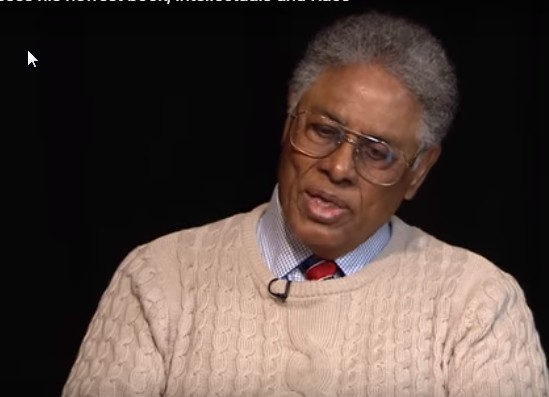
https://www.youtube.com/watch?v=H6ImP-gJvas
Several points stand out in Sowell’s arguments on the negative impact that ” liberal/progressive” intellectuals have had on our attitudes towards race vs. racism. First, he conflates liberalism with progressivism. These are two separate dynamics in their scholarly meaning. The opposite of progressive is conservative, but the opposite of liberal, in its classical meaning, is totalitarian. Within the actual social context of these two dynamics it is entirely possible to hold both liberal and conservative policy positions or progressive and totalitarian positions. For example, it would not have seemed inconsistent during the Progressive Era, in the early twentieth-century, to be for union rights but opposed to woman’s suffrage, Progressives then were not as liberal as most progressives are today. By treating these terms interchangeably, in their current colloquial sense, he maligns the liberal movement that seeks to empower today’s poor or marginalized people and make America more inclusive.
Secondly, he seems to conflate race with culture. These are also separate elements of sociology. The former is a largely subjective classification system based on superficial physical attributes associated with continent of origin. The latter is a complex set of rituals, customs, values, norms and shared history by loosely associated clans or social groups. There are as many different cultures within each race as there are among the races, even just within North America. Generalizations based on race as a culture are inherently flawed.
Thirdly, when distinguishing this amalgam of race based culture from “racism” he incorrectly identifies racism as primarily perceptual in nature. His concept of racism doesn’t incorporate the many physical racist acts that socially marginalized people endure every day. These foundational fallacies allow Sowell to make his larger points, the same ones often raised by other conservative thinkers. The first is that there are, and have always been, better and more adaptable cultures in the world. This is an accurate statement but he leaves it there, as if it were an immutable law. He offers no hint as to why this is so. He fails to mention our human capacity to alter social institutions in ways that improve the outcomes of individuals from variant cultures.
The other major point he raises is that marginalized people allow themselves to be defined by the racist perceptions against them by others. The “others”, he argues in his example, are liberal intellectuals, especially during the “progressive era”, who blamed the economic plight of African-Americans (among other groups) on broad social factors and government policies, rather than on the their mal-adaptive culture. This shift in the causal roots of their less successful living standards, according to Sowell, absolves the marginalized from responsibility for their own self-improvement and causes them to see themselves as helpless victims of a society organized against them.
The explicit argument here is that every person has within themselves the power to rise above all obstacles and prejudices set against them. It is the familiar argument of taking personal responsibility as the only condition for economic or personal success. The proof offered (as is so often the case) is the personal experiences of the writer and anecdotal examples of other success stories. The obvious logical fallacy is that these exceptions prove that everyone else can do what these few have done. Unfavorable social conditions are only controlling factors if individuals allow it to be so. The failing is theirs. It is their own fault. It is a weakness in their character or collective culture.
The empirical truth is that for the vast majority of those who are subjected to social or institutional discrimination, their chances for success in life are seriously harmed. All the physical racist acts they suffer cause immeasurable personal damage and have an accumulating effect on them as individuals. That there are rare exceptions who become successful doesn’t prove that the majority of marginalized people are flawed individuals. In fact, it proves the opposite, that the infrequency of exceptions is a measure of the extent of the damage discrimination causes.
If equal opportunity can’t produce equal personal outcomes under the best of circumstances, as most would agree, then why would unequal opportunity offer the same chances of success? And if policy can benefit one group of individuals (as is certainly true), why is it an individual’s personal failing when policy choices disadvanges then. It makes no sense.
Poisoning the Postal Service
by Brian T. Lynch, MSW
Article 1, Sec.8, Clause 7: [The federal government] is to provide for naturalization, standards of weights and measures, post offices and roads, and patents.
Citizen access to personal or business communications, and an adequate means to distribute goods and communications from anyone to everyone were central concerns of the founding fathers. They understood that healthy commerce and a free and healthy democracy require every citizen to have access to these vital services. It was an article of faith that the states would mostly provide these services for their own citizens, but it may have been less clear whether competition between states would restrict communications or transportation between states. This outcome would weaken us as a nation, and threaten democracy in our Republic. So the founders made it explicit in our Constitution that the federal government would provide for post offices and roads.
If you need a reminder of just how the US Postal Service makes America great, read the great Op Ed piece in today’s New York Times written by a Turkish immigrant. Zeynep Tufekci wrote:
“I WAS transported recently to a place that is as enchanting to me as any winter wonderland: my local post office.
In line, I thought fondly of the year I came to this country from Turkey as an adult and discovered the magic of reliable mail service. Dependable infrastructure is magical not simply because it works, but also because it allows innovation to thrive, including much of the Internet-based economy that has grown in the past decade. “
Today, the great national infrastructure we call the US Postal Service, which delivers mail to every citizen, without regard to what it cost to deliver mail to citizens living in remote regions, is under attack by commercial interest lobbyists. Capitalists don’t want the US Postal Service competing with UPS or FedEx or Amazon’s delivery services. Government competition, they argue, reduces potential corporate profits.
Wealthy corporate owners are intent on killing off the US Postal Service. Their methods are to funnel campaign cash to federal elected officials and encourage them to pass laws and regulations designed to impede the Postal Service operations. The US Postal service costs taxpayers zero dollars in taxes, yet the once financially viable Postal Service is made to pre-fund their retirement system. This is unprecedented in business. It causes the post office to operate in the red so politicians can point to it as a model of government inefficiency.
Politicians also appoint cronies into upper management positions to advocate draconian cuts and adopt policies that undermine employee morale and weaken customer services. In many parts of the country you can no longer call your local post office and speak directly with the post master if you have a question. When I call my local post office phone number the call is redirected to a national call center that tends to screw up the processing of even simple complaints. Still the postal system survives and most of us don’t want to see it go away.
What would mail delivery look like if the Postal Service closed? We don’t have to guess because we have many examples to learn from. The principle obligation of private corporations is to their shareholders. More specifically, it is to maximize profits. Whatever business model or corporate mission statement, shareholder profits come first in law and practice.
The impact of competition between corporations to maximize profits naturally causes them to focus more on profitable segments of their business and spend less time and resources on unprofitable segments of their business. In the package delivery business, as is true with Amtrak in the transportation business, there is a competitive advantage to reconfigure routes in ways the optimize profits. Some routes in less profitable areas become under-served while others are more than amply served. Eventually corporate executives come to see beyond competing interests to areas where mutual interests would be better served if service to certain segments could be dropped altogether, The government would then steps in to insist that service must be maintained for people living in unprofitable segments of the “market.” Private corporations then complain that government is on their backs and insist that if the government wants those citizens to have the service, government must subsidize their corporation to make up for the unprofitable routes they are forced to maintain.
So in effect, if applied to the US Postal Service, we would go from a nationwide, person to person delivery system that costs the US taxpayers nothing, to a private corporation system that would require taxpayer assistance in order to maintain the most unprofitable routes. And once the corporations start engaging in high level collusion, the cost of postal services would creep up and up.
Capitalism does best when distributing benefits based on merit, provided the rules of the market are structured to encourage honest competition. This capitalist model does not work well when distribution of benefits is based vital human needs or open, universal access. This seems to be a natural law. We need to resist the capitalists call for privatization of essential government services and recognize the US Postal Service in particular as the national treasure it really is.
 Data Driven Viewpoints