“Dark Pools” Caste a Shadow Over Stock Prices

We now know that the universe is filled with dark matter. This strange substance cannot be seen, heard, felt or touched, and doesn’t interact in any way with ordinary matter. Even so, its presence can be felt by its gravitational influence. It is the enormous amount of dark matter that causes galaxies to form and to spin as rapidly as they do.

While dark matter may ultimately be beneficial to the cosmos, “dark pools” in the financial markets doesn’t seem like a good idea. When large investors buy large blocks of stocks outside of public view, they do so to obtain a tactical advantage. The market effect of dark trading is that the real value of openly traded stocks is less certain. This is another example of how the playing field is tilted away from mom and pop investors and towards the rich and powerful.

http://www.reuters.com/article/2014/04/11/us-sec-darkmarkets-idUSBREA3A0CP20140411


WASHINGTON/NEW YORK (Reuters) – U.S. securities regulators are considering testing a proposed reform that could drive business to major…

REUTERS

NSA vs. Citizens of the World.

by Brian T. Lynch

Before Edward Snowden blew the whistle on the clandestine activity of the National Security Agency (NSA) and selectively released documents to the press, no one had any idea what the NSA was up to. This apparently included the President of the United States and the Congressional Select Committee on Intelligence that is charged with agency oversight.

The Select Committee on Intelligence initially denied the validity of Snowden’s claims because they, too, were in the dark about NSA operations. Once the Committee got a hold of Snowdon’s documents and investigated, they learned that the NSA concealed a great deal about its operations from Congress and even lied to Congress on occasions to protect its secrets. Since them more has surfaced from release of Snowden’s NSA documents. Among the revelations:

  • NSA engaged in mass surveillance of US citizens as well as the citizens of allied nations.
  • NSA collected metadata on all US domestic phone calls and subjected them to powerful meta analysis that can reveal very personal information about citizens not connected in any way with terrorism.
  • NSA collected and analyzed all, or nearly all domestic and foreign emails.
  • NSA engaged in domestic spy on human rights organizations, also not connected in any way with international. terrorism or criminal activity.
  • NSA spied on other international human rights organizations.
  • NSA breached its own protocols many times and targeted innocent civilians for scrutiny.
  • NSA tapped the personal cell phones of world leaders who are our allies.
  • NSA listened in on lawyers negotiating international trade agreements.
  • NSA spied on the UN and on the UN Children’s Fund.
  • NSA broke the encryption code that protects financial business transactions worldwide.
  • NSA has (and may still be) provided U.S. law enforcement agencies with secretly and illegally obtained evidence in domestic criminal cases, even non-violent criminal cases, without ever informing the defendant or the courts of the evidence or its source.

AND this is not a comprehensive list of the illegal, unconstitutional or questionable activities in which the NSA has engaged.

Discussion about these issues began to take place for the very first time only after Snowden brought them to light. These discussions are now taking place worldwide, because before Snowden, no one knew these things were even happening.

Here in the U.S., the investigation of Snowden’s claims has prompted Congress and the Obama Administration to being reorganizing and reforming the NSA. It’s abusive practices are being curtailed. President Obama has personally and publically apologized to world leaders for the conduct of the NSA. Other nations are now exploring the issues raised by Snowden’s revelations and considering how NSA technology in the wrong hand might threaten human rights.

These are the fact that are now out in the open. The main stream media has been far to silent and passive in covering this scandal. Most people remain unaware of the scope and significance of the NSA’s illegal activities. This agency has significantly violated our constitution and our personal civil rights. With or without the help of the national press, we have a responsibility as citizens to explore these issues and pass judgment on the activities or our government.

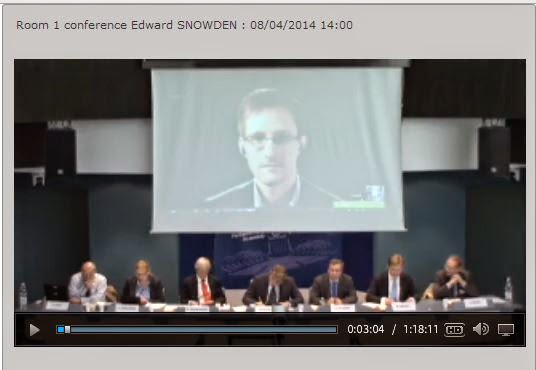
Here is the full video link of Edward Snowden’s testimony on April 8, 2014, before the Council of Europe hearing on Mass Surveillance and Whistle Blowing. It is compelling testimony with serious implications, and demonstrates once again, that the rest of the civilized world is having an important discussion about the threat posed by mass surveillance which is absent here in the United States. Our main stream media gave little attention to this event. The United States Government was invited to participate in these discussions, but declined.
http://clients.dbee.com/coe/webcast/index.php?id=20140408-1&lang=en

To be clear, no one disputes the fact that Mr. Snowden broke laws when he turned over classified documents to the press. What he did was clearly illegal. But his actions should be weighed against the greater good that may have resulted from these disclosures. Yes, the law is the law, but justice is our goal and mercy is our higher value. We may want to strike a balance in this case between what laws Snowden broke and the harm that would have followed if NSA abuses had not been brought to our attention. Public discussion and ultimately public opinion following civil dialogue should the final judge in this case.

With respect to prosecution, how do we proceed when government wrong doing is at the heart of the case? I believe this is very much a matter for public debate to seek a popular consensus on his fate. We, the people, should be the jury here. We would be abdicating our responsibilities as citizens to close our eyes and let the establishment laws deal with him when we are all plaintiffs and the government itself is the accused.

Civil Service Pensions – A Marker for What We’ve Lost

by Brian T. Lynch, MSW

In New Jersey, as in many other states with conservative Republican Governors, the state civil service pension systems are under attack. A friend of mine, who has followed Governor Chris Christie’s rhetoric in the newspapers, commented about how reasonable this sounded since the system seems to be going broke. But the story of the pension system in New Jersey is more complicated that the current political sound bites. Let me tell you a true story about how civil service pensions came to be a target for public ridicule.

When I first went into civil service it was a calling to serve, not a career choice for the prospect of making lots of money. I was following the inspired words of John F. Kennedy and asking what I could do for my country. I was, and am still, an idealist. Money didn’t matter as much to me. I wanted to help people. I still feel that way now, which is why I blog.Back when I started with the state, everyone in the private sector had better health care and benefits, better defined pension benefits and they made a lot more money per hour or had higher salaries. Even the state cars we drove back then had no radios or air conditioning as that was considered too extravagant for state employees. That is the way it was, so working for the State came with low earnings expectations.

But things were changing in 1979 when I began my civil service career, even though I didn’t know it at the time. Big business had begun organizing politically and started spending big bucks on lobbying government for laws and regulations more favorable to business. Industry organizations were created to raise money and coordinate anti-union marketing campaigns. Ronald Reagan came into power in 1980 and set the tone for union bashing by crushing the air traffic controllers union. Private sector wages, which up to that time always rose in to proportion to increases in hourly GDP, were frozen and have remained frozen ever since. A fear campaign and actual business tactics based on globalization made jobs less secure. Private company pension systems were intentionally dismantled by big corporations to quarterly boost profits. Profit sharing arrangements took their place initially so workers had to invest in their company for their hope of retirement income. Then Wall Street saw all this money and wanted some action. They got congress to pass the IRA laws and all that pension money went to them.

Instead of real raises, businesses only offered cost of living adjustments, which keeps up with inflation but doesn’t share the extra wealth that the growing hourly GDP created for their employers. That extra wealth went to CEO’s and wealthy stockholders, beginning the cycle of great income disparity we have today. At the same time, Reagan cut the top marginal tax rate from 70% to 28%, a windfall for the rich and a huge loss of tax revenue that the rest of us had to bear.

So while the raises, salaries and benefits I received were always sub-par compared with the private sector during the first half of my career, declining private sector wages and benefits, rather than civil service raises or improved benefits, is the reason civil service looks so good today. In fact, civil service benefits have been steadily eroding for the last 15 years but this decline is slower than the collapse of private sector benefits. Civil service salaries also have barely budged in years and actually declined when you factor in inflation. But the assault on private sector salaries and benefits makes civil service look great by comparison only.

Know this, if corporate business interests had not conspired to suppress wages in America over the last 40 years the median income for a family of four today would be over $100,000/year. Instead it is shrinking and down to $51,000/year.

My point is that people in this country who work in the private sector have to fight back to regain a fair bite of the wealth they create for their employers. Workers need to re-organize and demand their fair share of our GDP. Rather than tearing away at civil servant pensions, people should be working to recreate what has been taken from them and use civil service as the framework and model to rebuild private sector retirement security.

There are particulars about why the pension system in New Jersey is in so much financial trouble.  It isn’t because it is too generous. It is in trouble because when New Jersey was flush with money during Governor Christie Whitman’s (R) term she stopped making payments. She said she did this because the stock market was booming at that time. She said the pension system was way over-funded and didn’t need more cash. By the time she finished bankrupting the state with massive tax cuts and increased credit spending, Governor James Florio (D) didn’t have the revenue to pay into the state pension system during his entire term in office. This default model became a habit with subsequent Governors. Nothing, or only fractional amounts, were paid into the retirement system for the last 20 years. Governor Chris Christie (R) refused to put money into the system a few year back, when he had the money to pay, saying he didn’t want to put money into a broken system. This is crazy talk since it was the Executive branch that broke the system in the first place by doing exactly what he was doing.

The New Jersey State Pension system is, to a lesser extent, also in trouble because it has been abused for years by politicians bumping up the salaries of their political cronies just before retirement so they get huge pensions that they didn’t deserve or contribute towards. Politician’s take advantage of the way pensions are calculated to reward their buddies.

In New Jersey, civil service pensions are based on the average salary for the last three years. Recently the Star Ledger newspaper criticized the Governor for bumping up the salary of a political friend such that his retirement income was around $120,000 per year when his base salary had been closer to $30,000 for most of his career. Politician’s have treated the state’s pension system like it was there private cookie jar.

So when the state’s pension system, or any states fixed pension system becomes a target for political destruction, let it be a reminder instead of just how much ground private sector workers have lost. Let state pension systems be the model on which the rest of the work force rebuilds what they once had.
Photo Credit: http://ivn.us/2012/07/11/california-ignores-growing-public-pension-crisis/

New Employment and Health Care Stats Refutes Obamacare Opponents

by Brian T. Lynch, MSW

 The latest labor statistics and health care statistics refute the false claims being made against the Affordable Care Act (ACA) by Obamacare opponents. The claims and facts below are summarized from an excellent op/ed in Forbes magazine by Rick Ungar, which can be found here: 

 CLAIM: Obamacare will lead to a decline in full-time employment as employers reduce hours to below 30 per week to avoid providing health benefits.

 FACT: Numbers just released by the  Bureau of Labor Statistics (BLS), shows that part-time workers in the U.S. fell by 300,000 since the Affordable Care Act became law.  This past year, the first full year of Obamacare health coverage, full-time employment grew by over 2 million.  Part-time employment leaders who oppose Obamacare.  Fewer cops, fewer teachers, fewer folks providing essential social services in the public sector  all to make political point.

CLAIM: Millions of Americans are losing their individual health insurance policy due to Obamacare.

FACT:   A new study  by Lisa Clemans-Cope and Nathaniel Anderson of the Urban Institute found that prior to the Affordable Care Act the number of people kept their individual policy was very low with just 17 percent retaining coverage for more than two years.”  The Urban Institute conducted a survey last December that asked 522 people between the ages of 18 and 64,  “Did you receive a notice in the past few months from a health insurance company saying that your policy is cancelled or will no longer be offered at the end of 2013?” Only 18.6% said their plan was cancelled because it didn’t meet ACA coverage requirements, while the expected cancellation rate was 17% in the years prior to Obamacare. You can find the following bar graph and read more  in Health Affairs.

Obamacare Survey Bar Graph

The 18.6 percent who lost individual health insurance coverage due to the ACA requirements amounts to about 2.6 million people. According to the Urban Institute researchers over half of these folks will  be eligible for coverage assistance. Still, roughly one million people will have to replace their cancelled policy with something that may cost them more. This isn’t good but it is less dramatic than what has been reported and most of these individuals would have been in the same boat prior to the ACA.

Facts matter – The Gallup-Healthways Well-Being Index was also just released. It reveals that 15.9 percent of American adults are now uninsured, down from 17.1 percent for the last three months of 2013.  That translates roughly to 3 million to 4 million people getting coverage who did not have it before.  The the number of Americans who still do not have health insurance coverage is on track to reach the lowest quarterly number since 2008.

There are currently 5 to 8 million people who can’t access Medicaid because their political leaders oppose Obamacare. That means the number of people being denied access to Medicaid expansion for political reasons is greater than the number who have signed up for Obamacare so far.  The Rand Corporation recently analyzed 14 of the states with governors who oppose the Medicaid expansion and found their actions will deprive 3.6 million people of health coverage under Obamacare. These states will forgo $8.4 billion in federal funding. Moreover, their political opposition to Obamacare will cost these states $1 billion for programs that partially compensate medical providers who care for the indigent. (see Huffington Post: http://www.huffingtonpost.com/2013/06/03/medicaid-expansion_n_3367301.html). 

 Below is an excerpt and table of the uninsured by state that is taken from the Health Affairs Blog, which you can goto at: http://healthaffairs.org/blog/2014/01/30/opting-out-of-medicaid-expansion-the-health-and-financial-impacts/

 Clearly, if the extreme efforts underway to by politicians to derail the Affordable Care Act was instead focused towards making it work, Obamacare would be wildly successful. 

Examining the numbers. The number of uninsured people in states opting in and opting out of Medicaid expansion is displayed in Exhibit 1. Nationwide, 47,950,687 people were uninsured in 2012; the number of uninsured is expected to decrease by about 16 million after implementation of the ACA, leaving 32,202,633 uninsured.  Nearly 8 million of these remaining uninsured would have gotten coverage had their state opted in.  States opting in to Medicaid expansion will experience a decrease of 48.9 percent in their uninsured population versus an 18.1 percent decrease in opt-out states. 

Exhibit 1: Uninsured Population by State, Pre- and Post-ACA 

Dickman-Exhibit 1

Here is a link to a website where you can check out state-by-state enrollments using an inter-active map: https://www.statereforum.org/tracking-health-coverage-enrollment-by-state?gclid=COCG7ffPob0CFYt9OgodPTQALQ

 And this link is to an inter-active map showing the state-by-state status on Medicaid expansion: https://www.statereforum.org/Medicaid-Expansion-Decisions-Map?gclid=CJ_i4L3Rob0CFYuXOgod2RMA4g

Coal Ash Disaster Turns Capitalists into Socialists (Again)

by Brian T. Lynch, MSW

Commentary:

Coal ash is what’s left after coal is burned. It’s a toxic stew containing heavy metals including arsenic, lead and mercury.  For many years Duke Energy has mixed coal ash with water and pumped this cocktail from coal fired power plants into huge open pits. In February, one of the sludge pits located in North Carolina began releasing millions of gallons of toxic coal ash into the Dan River, a source of public drinking water for thousands of people.

coal-ash-spill.jpeg3-1280x960

 Photo and article: http://www.salon.com/2014/02/26/north_carolina_might_finally_crack_down_on_duke_energy_after_disastrous_coal_ash_spill/

Duke Energy spent millions over the years to keep government from properly regulating their waste products.  For all those decades the stockholders and upper management of Duke energy have profited from this arrangement. Now that the inevitable has occurred, clean up effort will take years and cost a billion dollars. Millions more will have to be spent to correct the improper disposal problems that Duke Energy has practiced for decades.

Lynn Good CEO

Safely storing coal ash should have been a cost of doing business for Duke Energy all along, but they have deferred that cost to boost their profits. Now Duke Energy’s president and CEO, Lynn Good, thinks taxpayers should bear the cleanup costs. She said, “Ash pond closure has been a plan for very long time. And because that ash was created over decades for the generation of electricity, we do believe that ash pond disposal costs are ultimately a part of our cost structure.” She believes the burden of this clean up should be shared by everyone equally.  (Corporate socialism? Again?)

Corporation are legally obligated to maximize profits for their shareholders. This would be fine if they were also legally obligated to paid the full cost of doing business without cutting corners. Cleaning up toxic spills is far more expensive than preventing themand regulations to enforce safe disposal are less expensive in the long run. But asking the victims of their environmental crimes to pay for cleaning up their mess and fixing their problem should not be an option.

(See also: http://www.politicususa.com/2014/03/14/republican-hypocrites-force-nc-taxpayers-pay-duke-energys-toxic-coal-ash-dumping.html )

Understanding Intelligence – Essential for a Rational World

by Brian T. Lynch, MSW 

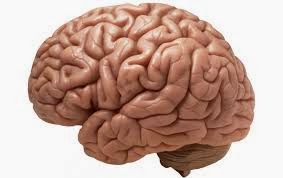
What I really want to write about are the practical implications of a new theory of human intelligences, but this will have to wait. The problem is that emerging knowledge about the workings of our cerebral cortex has not yet been widely shared. It hasn’t caught the attention of the popular press. Whenever I start to make some connection between an experience and how it relates to how our brain functions, I have to backtrack and offer an explanation of the new theory. Whatever point I was trying to make gets lost and my friends grow impatient.

What’s needed are brief summaries explaining aspects of how intelligence works. The summaries need to be clear enough to spark interest and promote more understanding. I know I am hungry for this kind of knowledge. Understanding the brain is truly the last frontier of science. Our mind, with its trillions of neural connections, is the deepest mystery in the universe. Everything we know of the world outside ourselves is contained in this single organ. The research that I will try to summarize here relates only to human intelligence and not to other functions of the brain. It doesn’t specifically relate to the mysteries of self-awareness or personality. And yet, understanding the workings of this thin, convoluted layer of cerebral cortex covering our more primitive brain is essential to solving the bigger mysteries of who we are.

Our Intelligent Brain

So, how does our intelligent brain work? There are some good and important books on the subject. The one I rely on here is called “On Intelligence”, by Jeff Hawking’s and Sandra Blakeslee. It is lay account of a theory on intelligence, but beware, some of its chapters are a bit technical.

Here is just one aspect of how the cerebral cortex works that I found interesting. Our intelligent brain is constantly detecting and anticipating patterns. The cortex is a pattern maker. It organizes sensory and worldly experience into patterns at every level of detail from the smallest sensory inputs to the biggest concepts of how the world works. It integrates these patterns into ever larger concepts or images until, at the highest levels, our brain creates an enduring image of the world around us. This image of the world, while enduring, is also malleable and responsive to new insights and information. Importantly, our intelligent brain is constantly predicting what to expect next from our sensory field.

Our brain anticipates everything that we see, feel, hear, taste or smell. It expects that similar circumstances will produce the same or similar sensory experiences. The strength of these expectations grows stronger the more they are reinforced by past experiences. Our brains also have a higher expectation of seeing certain patterns when these patterns are well integrated into the bigger picture of the world created in our brains. So strong are these patterns that even when we only see portions of them our brain recognizes the whole. For example, if we only see the eye and nose of a friend in a picture we recognize that person as our friend. If we see three dots on a page we might recognize that they form a triangle without seeing any lines between the dots. Seeing part of an image is enough for our brains to know what the whole pattern or image looks like.

The Intelligent Sub-Conscious

What’s remarkable about brain pattern recognition is that most of it happens at the subconscious level. Here is a little experiment to demonstrate what I mean. Place your hand on a wooden door near you and then grabbed the doorknob. Nothing about this experience surprises you, right? It’s just an everyday experience. And until I mention that the metal doorknob feels cooler than the door, you may not have noticed. That’s because your brain expected that pattern. Your brain knows metal feels cooler than wood every time you touch them in a room. You might even know the scientific reason for this is that wood and metal have different rates of conduction. Your brain expected these to items to feel different, so there was no need to alert your conscious brain. If the doorknob had felt warmer or soft your brain would have alerted your conscious mind immediately.

During every waking moment our senses are continuously bombarded with stimuli. What we see, or hear is constantly changing and billions of impulses reach our brain every instant. If our intelligent brain had to analyze every electro-chemical pulse it would be overwhelmed with data. Instead, our brain only has to recognize challenges to the familiar patterns stored within our cortex. Computers, on the other hand, have to process every byte of informational every time it is presented or else it freeze.

How Our Cortex is Structured


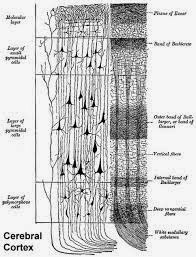
At every scale of human experience, our brain expects certain patterns to emerge from our sensory field. To accomplish this our cortex is made up of seven distinct layers on a horizontal axis and billions of distinct, hierarchical columns on the vertical axis. Additionally, each vertical column is connected to other vertical columns by a neural network, and information super highway system. The seven levels of each neural column is also connected to each other by neural pathways. This makes our cortex massively interconnected.

The first, or bottom layer of cortex only recognizes the electro-chemical patterns that come directly from the sense organs. The complexity of recognizable patterns grows with each ascending layer of cortex. For example, on the lowest level of the visual cortex area only specific geometric patterns will be recognized by particular columns. Combining this low level information from many nearby columns might cause the next level of cortex to recognize that these lower level patterns represent a human nose. At a subsequently higher layer of cortex the patterns represented by that nose and maybe an eye or other facial features recognized by still other columns might confirm that these patterns belong to the face of a friend. And so it goes until at the highest cortical levels our brain creates an enduring mental representation of the person we are visiting with, the room in which we are standing and all of the surroundings around us.

Another feature of our cerebral cortex is that it has more neural feedback connections then uptake, or feedforward connections. That means there are more neural connections from higher layers of the cortex to the lower layers of the cortex. This structure enables the higher levels of the cortex to tell lower levels what patterns they should expect to emerge from the sensory field. When columns in the lower cortex see an anticipated patterns, they signal back that they are satisfied. But when the lower levels of the cortex see something unexpected, they pass this additional information up the line to the next higher level. If that level of the cortex can’t resolve the pattern conflict, it passes these signals on to the next higher level, and so on, until some higher level of the cortex can make sense of the information. Most of these pattern conflicts are resolved subconsciously, but occasionally they pop into our highest executive level, which is our conscious mind. Our attention will suddenly focus on this unexpected thing that has disrupted our stream of conscious thoughts.

Intelligence and Consciousmess

As we move through the day our brain alerts our conscious self to only those things which need our attention. For example, we might slip on an old pair of shoes and walk around without thinking much about how they feel, but if a pebble suddenly gets caught in our shoe we become aware of the new sensation. (“Excuse me, self, but a pebble may have entered your shoe.”) If we put on a new pair of shoes we notice how differently they feel until we get use to them. If they don’t fit correctly we are annoyingly aware of them until we take them off. But for the most part we are not conscious of the millions of patterns, large or small, that our intelligent brain processes every day. Most of our intelligence activity is at work in our subconscious mind.

This ability to expect and process normal pattern activity without having to attend to everything we see or hear allows our brain to focus attention on the rapidly changing information that is most important to our survival. It allows us to listen and process what someone is saying while ignoring a passing car. It allows us to assess traffic movements at an intersection without being distracted by the radio. This is important because our capacity for consciousness is a limited resource. Our intelligent brain must conserve this executive function and use it for only the most salient and important aspects of our sensory field.

Introspection and Intentionality

But we are also able to focus attention on patterns of thought or behavior that are not otherwise calling for our conscious attention. We can introspectively direct our focus to examine the patterns and associations stored in our cortex. We are not a passive audience to our senses. We have a conscious mind with which we can look inwardly to examine our intelligent brain. We can learn things about how the real world is structured from the patterns created in our cortex. We can also rearrange or re-associate these patterns when we find errors in the way they have formed (cognitive therapy being one dramatic example). We can perceive gaps in our knowledge of things and direct our own behavior to gather more information.

Implications for Conscous Thoughts

Our brain forms patterns from sensory input whether we are aware of it or not. This leads me to one of the major implications that I would like to discuss further in a future post. Our intelligent brain is forming patterns and associations based on what we may be seeing or hearing even when we aren’t paying conscious attention. We know that repetition strengthens patterns and associations.

Advertisers and marketers know this as well. They choose words and images to invoke associations most favorable to their purposes and use repetition to reinforce and strengthen those associations within our cerebral cortex. The marketing of ideas and products is effective even when we aren’t paying conscious attention to the ads. Think about that the next time you are wandering around a supermarket. Think about it in connection with our political campaigns and the public dialogue we watch on TV or listen to on the radio.

When we commonly think about intelligence we usually limit our discussion to our conscious problem solving ability. We usually don’t consider that most of our brains intelligent activity happens at the subconscious level. We are not aware of the extent to which false patterns of information can subconsciously form to subsequently influence our conscious choices and opinions. In a future posting I hope to expand on this topic. I believe we can inoculate ourselves against propaganda and false advertising, but only if we have a better understanding of how our intelligent brain operates.

Obama to Expand Executive Authority, Says Ezra Klein

by Brian T. Lynch – January 30, 2014

Yesterday evening Ezra Klein spoke at Drew University in Madison, New Jersey, as their guest lecturer. Ezra Klein is a journalist, blogger (Wonk Blog), political analyst and occasional guest star on MSNBC’s news opinion shows. At age 29 he is one of the most influential journalists in Washington, and he is currently creating his own internet news organization in collaboration with Vox Media.

1030474185_d031dbe445

Klein focused his remarks on the broad structures of modern American politics that explain the context for President Obama’s State of the Union address the night before. The President’s address, he started, was notable for what it didn’t contain. It didn’t contain any reference to getting any big new initiatives passed in Congress.  President Obama has conceded that anything he proposes would be blocked from passage. Instead, Obama proposed plans to accomplish what he can through executive orders. He is using, and perhaps expanding his executive powers. The other remarkable feature of the President’s address was the specificity and scope of these executive plans. Klein spoke to both of these issues.

By objective measures, according to Klein, the U.S. Congress is the most polarized it has been in a long time. He pointed out that polarization is not synonymous with rancorous debates or disagreements. Polarization is a measure of the overlap between two political parties, the less overlap, the greater the polarization. He pointed out that in the 1950’s and early ’60’s the Democratic party was comprised of moderates, liberals from the North and conservatives from the South. The Republican party was also a blend of conservatives, liberals and moderates. Under these conditions there were pitched debates both between and within both parties. There were also ways to forge compromises between like minded representatives within each party.

The dynamic that blended the two parties this way was race, according to historians Klein cited. Once the civil rights act was passed and progress was made in racial integration, the Democrats lost the South and the two parties began reshuffling. Liberals moved into the Democratic Party and conservatives moved into the Republican Party. This resulted in less overlap and lead to the polarization we have today.  In Klein’s view, the most conservative Democrat today has less in common with the most liberal Republican in that party, and vice versa. There is so little overlap that compromise is nearly impossible to achieve.

Party polarization and the inability to compromise leads directly to congressional stalemate (which Klein begrudging called “gridlock”).  Under current conditions, when a minority party helps the majority pass legislation it makes the majority party look strong and effective, thereby improving their chances of being re-elected. Conversely, when the minority party obstructs the majority, it makes the majority party look ineffective and powerless causing voters to switch allegiances and elect the minority party.  This, according to Klein, explains why the current congress is unable to act.

Without structural changes, such as the rise of a third party, Klein sees little hope for improvements in congress. The most powerful branch of government, the legislative branch, is at an impasse. According to Klein, that doesn’t mean nothing will be getting done. As he sees it, when congress can’t exercise its powers, the authority and power of the other two branches of government grows to fill the void.  This isn’t necessarily a bad thing (but it does seem to require greater vigilance on our part). This brought Klein to his second observation about Obama’s State-of-the-Union address; the detailed account of where the Administration would be taking actions without the Congress.

The first two years of the Obama presidency saw the passage of more huge and important pieces of legislation than at any other time since the Lyndon Johnson administration. These are game changing initiatives with far reaching implications for American society. For example, the ACA has many little noticed, but broadly stated provision that will eventually re-invent (and improve) how treatment of common illnesses will be approached by doctors in the future.

Klein pointed out that most laws are written in general legalese that still requires Executive Branch interpretation and the creation of rules and policies to create an operating administrative framework. The 2,000 page Affordable Care Act, he said, has already generated tens of thousands of pages of rules, regulations and policies in a still unfolding process actuating the law.  It is the creation of policy and administrative regulations that gives chief executives in state and federal government their most effective way to exercise power.

President Obama just announce that this is exactly what he intends to do. I will uses his executive powers to permanently shape  the policies and interpretations of the legislation he got passed in his first term. He intends to accomplish the goals for which he was elected through the constitutional powers he has as the administrator-in-chief of the federal bureaucracy.

(Note: Once in place, the rules and administrative codes created to animate laws are, by intentional design, hard to alter. This is actually the role and purpose of a bureaucracy, to be a bulwark against the capricious dictates of power or transient swings of populist politics. Bureaucracies are often maligned for being cumbersome and slow to change, yet this is also their greatest contribution towards stable and coherent governance. This fact is little understood and seldom appreciated.)

Much of the beltway media has interpreted the President’s address as an admission that he is already a lame duck president, but nothing could be further from the truth. Klein believes that the rest of his term will produce enormous changes and benefits through executive actions. Because these changes will be happening in the nitty-gritty of agency bureaucracies it will be difficult for the beltway press to report on the changes.

The Washington media, according to Klein, has a structural bias towards the much easier reporting on Congress. The legislative branch is centralized, accessible and filled with characters and conflicts that sell the news. Administrative law is dry, decentralized and much less accessible. Still, this is where Klein sees the real action over the next few years. Perhaps this is where he intends to focus his attentions as he moves to create his new internet news venture with Vox Media. Time will tell.

Graphic Truths about Debt and Deficits

NATIONAL DEBT?

Republican’s increase our public debt by lowering taxes on the wealthy, raising corporate welfare and starting wars. If you are surprised by this bar graph then you then you need to shop around for a more reliable news source.

Republican's increase our public debt by lowering taxes on the wealthy, raising corporate welfare and starting wars. If you are surprised by this bar graph then you then you need to shop around for a more reliable news source.

WAR SPENDING?

chart 1

CORPORATE WELFARE?

Corporate Welfare Grows to $154 Billion even in Midst of Major Government Cuts


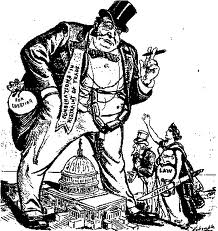
The Embodiment of Corporate Welfare Himself - Mr. Moneybags

Editor’s Note: Even as the federal government executes major cutbacks, it’s giving huge subsidies in the form of tax breaks to industry, a fact legislators rarely acknowledge. The Boston Globe recently published a thorough and eye-popping report detailing the nature and extent of these breaks. We think it’s a must-read. 

By Pete Marovich

First published in the Boston Globe

WASHINGTON — Lobbying for special tax treatment produced a spectacular return for Whirlpool Corp., courtesy of Congress and those who pay the bills, the American taxpayers.

By investing just $1.8 million over two years in payments for Washington lobbyists, Whirlpool secured the renewal of lucrative energy tax credits for making high-efficiency appliances that it estimates will be worth a combined $120 million for 2012 and 2013. Such breaks have helped the company keep its total tax expenses below zero in recent years.

The return on that lobbying investment: about 6,700 percent.

These are the sort of returns that have attracted growing swarms of corporate tax lobbyists to the Capitol over the last decade — the sorts of payoffs typically reserved for gamblers and gold miners. Even as Congress says it is digging for every penny of savings, lobbyists are anything but sequestered; they are ratcheting up their efforts to protect and even increase their clients’ tax breaks. [snip] http://reclaimdemocracy.org/corporate-welfare-tax-breaks-subsidies/

__________________________________________________

Here is how the rise of corporate welfare looks in my state of New Jersey, and note in particular how it has grown under Gov. Chris Christie:

Time for Workers to Re-Organize!

ORGANIZED LABOR? 

Regardless of what you have been lead to believe about the evils of unions, there is no question that organized labor is responsible for creatiing the middle class and the good life as we know it today. But all that is in decline as anti-union sentiment grew in response to organized business interests in the 1070’s. I say this because I don’t see anyone else point out these facts. Here is another graphic view of how middle class income has declined in lock step with union membership over the years. Also, you will see that the savings in employee wages have gone directlty to the top 1% creating the huge income and wealth disparity we have today. Check it out:

It is clear to me, at least, that the heart of our economic woes is due to 40 years of wage suppression. This results in a declining middle class, a growing number of people falling into poverty, a decline in federal income tax revenue and an added burden on government to support a growing number of poor, working poor and unemployed Americans. You can’t separate chronically lower wages from our declining consumer spending. Regardless of what the economists say, if people don’t have money to spend the economy slows down and jobs disappear. Stocks are doing so well because so much of our financial sector is based on even more depressed foreign labor, yes, but also on depressed wages here at home.

If corporations what to stimulate consumer spending here, and make America attractive to foreign investors, they need to raise wages. They won’t do that because they personally benefit, financially, by keeping labor costs down. Their corporations benefit from the artificially cheap US labor pool created by government aid to the working poor for housing assistance, WIC, food stamps, daycare, etc. And then these bastards making all the money have the nerve to pit us against each other by promoting the lie that the working poor are somehow less worthy, or that they are stealing from us. If corporate leaders don’t see the light then the only alternative is for the work force to re-organize itself and demand higher wages.


Victims of the Third Column of American Politics

BLOGGER’S COMMENTARY

oligarchy2

He has been a friend of mine for years. We worked well together on school projects when both are children attended the same high school and our families socialized together. Outside of politics we have a lot in common, yet in the past five or six years we have become estranged. It isn’t our fault. We are victims of the rising tide of political partisanship.

It’s a damn shame that the billionaire puppet masters pumping money into politics to create divided, dysfunctional government have also driven a political wedge between him and me. I suspect there are many other friendships that have fallen victim to divisive politics. I tried to repair our friendship by explaining that the politics dividing us is actually a result of a third party attack on democracy, a third column, as I see it. But my friend is too firmly embedded in conservative doctrine to trust my arguments.

The larger truth is that there is a third column in American politics. It is the hidden hand of unprecedented wealth and corporate ownership. The only force in the world big enough to control corporate power  is civil governments. The power elites don’t what to be told what they can and can’t do, especially by one person, one vote majority rule. They are accustomed to corporate governance which boils down to one dollar, one vote. Their intent is to cripple civil control over our democracy and make government do its bidding. They have already overwhelmed most states and many countries around the world. Whether you are conservative or liberal, Democrat or Republican, it is the ultra privileged elite that is controlling the media and writing the scripts. THIS really is the big picture. What was once the conservatives/ liberal continuum was ruptured and is now this great divide. We were never so different before, my conservative friend and I. This is all a grand scheme and we are all caught up in it.

The wealthy oligarchs donate to the Republican Party in a ratio of at least 2 to 1 over Democrats. Moreover, their strategy with the two parties is very different. On the Democrats side they only support targeted seats and spend money on targeted issues. They buy specific votes when they need to kill or pass legislation important to them (making Democrats look sleazy in the process). This appears like the traditional way we think about lobbying and government, and both sides to it. This targeted strategy also happens leaves room for Democrats to champion other popular causes that don’t harm the oligarchs interests. This helps to preserve the facade of a democratic republic.

On the Republican side the Oligarch’s mostly own the whole party. They have put together an unlikely coalition of fundamentalist Christians, libertarians, small and large business owners, conservative special interest groups, neo-confederate separatists and anyone else who harbors antipathy towards the federal government. In fact, antipathy towards the federal government is the common thread that hold this coalition together.

To gain support of the fundamentalist Christians, who oppose secular government, the elite ruling class spends lots of money ginning up social conservative causes, like abortion or same sex marriage. To libertarians they serve up small government rhetoric, incite Second Amendment fears and promote “big brother” narratives. To businessmen they rant about government regulations and pro-labor policies. To white cultural warriors they attack immigration, welfare queens and exploit racial animus. To neo-confederates they clamor for stricter interpretations of the constitution and direct verbal animosity towards the federal system. To hold on to bread and butter Republicans they demonize liberals and the Democrats to raise fears about voting for them. To all of these groups they rail about taxes, but the whole time their real goal is to control the levers of power for their own gain. There is no longer any room left in the Republican Party for politicians who loves government and wants it to succeed in improving the lives of ordinary Americans (i.e.: moderates).

In the end, the wealthy power elite are neither Democrats nor Republicans, neither conservatives nor liberals. They are out for themselves and their own financial interests. This is the third column of American politics and the hidden hand behind the growing dissatisfaction with our system of government.