Home » 2016 (Page 2)
Yearly Archives: 2016
Police Involved Homicides – Where’s Our Outrage?
by Brian T. Lynch, MSW
Here’s a very disturbing story that has not been reported in the national press. You may not have heard about this even though it has been happening for decades.
There is a growing number of African-American men infiltrating local police departments and abusing their authority to intimidate predominately white men within their communities. Some of these black officers are bulking up on steroids. In some cases these black cops are affiliated with Black Power movements. These rogue officers of color are stopping and harassing white men on the street, frisking them without cause or illegally searching their cars. When white citizens object or complain, these black cops turn hostile and become aggressive. Hesitate to comply with an order and these innocent detainees are taken down, handcuffed and arrested. Any further resistance or any small suspicion that these guys are armed leads to the threat or use of deadly force.
In March of 2004 the US Department of Justice issued a report on the use of anabolic steroid abuse by police officers. Reported as specific concerns related to the psychological side effects anabolic steroid use were these:
- · Mood swings (including manic-like symptoms leading to violence)
- · Impaired judgment (stemming from feelings of invincibility)
- · Depression
- · Nervousness
- · Extreme irritability
- · Delusions
- · Hostility and aggression
The infiltration of American police departments by radical racist cops was document by the FBI in a report and warning written in October of 2006. The report’s release was held up by Congress for years out of fear of the political repercussions.
And despite the growing number of police involved homicides of civilians every year, the FBI is unable to keep accurate statistics on how many white citizens are being killed by overly aggressive black cops. By some non-government sources the number is as high as 600 deaths per year.
Where is our outrage? Where is the media? Why aren’t government officials putting a stop to this carnage? Why aren’t they holding these black cops accountable for the deaths of hundreds of innocent white men every year?
If this reporting shocks you or doesn’t sound familiar, then you are among the millions of American’s who aren’t paying attention. If you can’t see the little white lies I told you above, you are part of a much bigger problem.
The white lie above is that it is actually white cops who are actually abusing their authority and victims of abusive policing are disproportionately African-American. The truth is that it is white supremacists that are infiltrating police departments. The rest is all true. It is true that hundreds of innocent black males are killed in police actions every years. It is true that the FBI is not able to collect accurate statistics on civilians killed in police actions in the US because all such reporting is voluntary. And if you didn’t recognize where my story was going, if you thought black cops are killing white civilians, then you just discovered that the media is failing us and government officials aren’t doing all they can to stop this carnage.
If my story above hadn’t contained those few white lies, if white men really were being killed by overly aggressive black cops, you would lionize a football player sitting down during the National Anthem to call your attention to the problem. You would recognize his courage and commitment. As it is, the misplaced outrage of sports fans against Colin Kaepernick for his lonely protest is a self indictment of our complacency and callous disregard for our fellow citizens.
Gov. Chris Christie’s “Fairness Formula” to Fund Public Education.
The following is my letter to the Star-Ledger Editor sent August 24, 2016. Governor Chris Christie has been pushing a plan to reduce the state’s educational funding to distressed school districts and increase funding to more affluent districts. He calls this his “Fairness Formula”. Each student in New Jersey would get the exact same amount of state aid, $6,599. The rest of the per/pupil cost, nearly $19,000 in this state, would have to come from local property taxes. Here is my response to his recent comments:
Dear Starledger Editor:
“The day of reckoning has come,” Gov. Christie says. He thinks it’s time that wasteful urban schools and poor districts pulled their own weight. He wants them to pay the full cost to educate their kids from property tax revenue. His one size fits all state aid plan will bring tax relief to wealthy (mostly Republican) suburbia. Here’s what he doesn’t say:
- · The 10 largest urban districts and 10 wealthiest school districts have virtually the same per pupil costs ($20.0k vs. $20.5k by my calculations)
- · The average median income in these 10 urban districts is around $45,000 vs. $159,000 in the wealthiest districts
- · More money is spent in urban districts on remediation to overcome the impact of poverty; while more money is spent in wealthy districts on advanced educational programs and high end sports
- · Property taxes are based on home values, which are 4.7 times higher in the wealthiest districts
- · Even with little state aid to offset costs, the average property tax rate in the wealthiest districts is 67% lower than in the largest urban districts
Instead of proposing a flat state aid rate per child Governor Christie should be proposing a flat property tax rate collected by each county and distributed according to need. As regressive as a flat tax is it would still be less regressive than what we have now.
Brian T Lynch, MSW
(for more detail on my analysis, go to:
| Rich School, Poor School and Distributive Justice in New Jersey |
America at the Crossroads of Crisis
by Brian T. Lynch, MSW
His very name has become a dog whistle for expressing White outrage against growing minority influence in America. Trump! Trump! Trump!
His mantra, “Make America Great Again,” resonates with so many White people because they hear, “Make America White Again.”
As a country founded by immigrants and supported through slavery and exploitative labor practices for much of its formative years, the growth of a powerful, comfortable middle class in the last half of the last Century seemed like a coming of age. The rise of the middle class after World War II was vindication that our founding principles were virtuous and the diversity of our pluralistic society was our strength. We were now a world power and an exceptional example of a place where merit, innovation and hard work paid off. We were proof that immigrants can do well here. Of course the payoff was always more difficult for minority groups to achieve, especially African-Americans and South American migrants.
But now there has been some fundamental shifts in the fabric of America. The political and economic power of the middle class has been on a long, slow decline for decades. At the same time the population of minority groups and the flow of immigrants from our Southern borders have grown. Minority groups, taken together, make up nearly half of our citizens. Globalization of business has increased competition for good jobs and higher wages while domestic pressure has increased to give minority groups greater equality of opportunity. A bloody clash of cultures has arisen on the world stage adding anxiety for those of us who worry that America is losing its cultural identity. (A growing worry in Europe as well). And all the while, the American majority, made up of mostly White Protestants of Western European distraction, is being stretched and fractured by growing wealth inequality. The wages and ownership interests of most White Americans is declining while wealthy White elites are growing ever richer.
It is understandable that the timing of middle class economic decline and the growth of minority interests would seem like a causal correlation. It is also understandable how powerful interests might exploit this apparent cause-and-effect for their own benefit, but the truth is far more nuanced, and cloaked in deceit. In an ironic juxtaposition, the New York Times published two excellent articles on the same day that highlight both our sad cultural polarization and the sinister impact of inequality on our public institutions.
In his July 13, 2016, article titled, “For Whites Sensing Decline, Donald Trump Unleashes Words of Resistance,” Nicholas Confessore writes:
“In countless collisions of color and creed, Donald J. Trump’s name evokes an easily understood message of racial hostility. Defying modern conventions of political civility and language, Mr. Trump has breached the boundaries that have long constrained Americans’ public discussion of race.”
What follows is an excellent expose on the cultural landscape in America. Then in an article titled, “How Private Equity Found Power and Profit in State Capitols,” the journalist detail how private equity firms are manipulating state and federal governments to pass legislation even more favorable to their financial interests.
The slow but steady economic decline of the middle class has taken most of us decades to recognize. That it was a planned assassination of the middle class perpetrated by corporate capitalists in the 1970’s has yet to sink in. And efforts by the elite perpetrators to distract us from their deeds by blaming the poor and pitting us, one against the other, rages on.
It may be indirectly true that minorities are somehow responsible for the economic decline that White Americans are experiencing, but certainly not in the direct ways as portrayed in the press or on the internet. It isn’t really true, for example, that undocumented immigrants are taking away jobs from White Americans. It is true that immigration has created a growing pool of cheap, non-union labor that puts downward pressure on wages. It is also true that the pool of cheap labor has grown exponentially through the corporate globalization of commerce. But the bigger truth is that wealthy corporate capitalists have put us all in an economic vise. Almost all of us find ourselves in that proverbially overcrowded lifeboat that is about to capsize.
We seem to be at a crossroad. We can choose the Trump path to social dissolution and toss as many “others” overboard as we can, or ignore that we in the lifeboat because of the wealthy corporate capitalists (until we sink) or we can link arms to forge a new path that restores democracy and a civil economy for everyone. The only real option is to come together and face down the true source of America’s decline, the corporate global capitalists who are hoarding the fruits of our labors.
No Bias in Police Shootings? NYTimes gets it wrong.
by Brian T. Lynch, MSW
Recently, a single researcher found no racial disparity in the “extreme use of force-officer involved shootings” in Huston, Texas, based on that police departments self-reporting of incidents in which officials believe a police shooting was justified. Roland G. Fryer, Jr., the researcher, admits his data set is not “ideal”.
Incredibly, police in the United States are not required to file any uniform reports when their actions result in civilian fatalities. The FBI compiles voluntary reports of “justifiable police homicides” but the most agencies don’t participate. With no uniform reporting a detailed analysis of a single department has limited value. You can’t conclude much from this study and you certainly can’t generalize the findings nationally. But that is exactly what the New York Times did.
In an article published today, July 11, 2016, the Times headline reads, “Surprising New Evidence Shows Bias in Police Use of Force but Not in Shootings.” The article goes on to say the findings, “contradicts the mental image of police shooting that many Americans hold…”
The more robust and pertinent question is whether there is a pattern of racial disparity in all civilian deaths that result from police actions. When reports of civilian deaths are compiled from local news accounts the answer is yes. The bias is stricking nearly everywhere.
I was among the first to analyse these local news reports data last April. In a region-by-region and state-by-state analysis there was clear evidence of a racial disparity in police involved civilian deaths. (See http://aseyeseesit.blogspot.com/2015/04/new-data-exposes-racial-bias-in-fatal.html)
The grossly over-generalized reporting on the Fryer study by the New York Times isn’t worthy of their reputation.
No Fairness in Funding NJ Public Schools
by Brian T. Lynch, MSW
Fairness Formula? Governor Chris Christie is proposing a plan to give an equal amount of State Aid funding to every student in every school districts in New Jersey. Specifically, his proposal would take the higher amounts of State Aid we currently give to very poor districts and distribute it equally across the state to reduce property taxes in the wealthier suburbs. This, he says, is fair.
For those who are not familiar with New Jersey, most school funding is raised through a local wealth tax based on the assessed value of residential and private property. This is a highly regressive way to raise revenue, as you will see below.
We are big on home rule in New Jersey, so each town has its own independent school board. Each towns Board of Education proposes an annual school budget which is voted on in a public referendum. If passed, the costs are incorporated into the municipal budget and property tax rates are raised if more revenue is needed. If the school budget fails, town and school officials have to either cut the school budget or make other adjustments to municipal services so property taxes don’t rise.
Here is truism: Wealthy municipalities tend to grow more affluent over time while poor districts tend to decline even further.
Wealthy towns have better school systems in New Jersey. That is also a fact. So parents who can afford to upgrade their home often move into towns with better schools. Property values rise with the demand for homes in districts with better schools. Property values decline in districts that have underfunded or troubled schools, so property tax rates must increase in poor districts just to break even on current school spending. As property values increase in wealthy districts, more property tax revenue is generated. Some of this additional revenue goes into further improving the schools without the need to increase taxes. In some cases tax rates may even decline in affluent municipalities as home values rise. The result is that wealthy districts have much better public schools and lower tax rates while poor districts cannot afford to keep up the disadvantaged schools they have.
State Municipal and School Aid was designed to help level municipal tax burdens in New Jersey. State Aid is allocated to local municipalities and school districts to fill in the gaps that exist between wealthy and poor municipalities. This funding solution grew out of a state Supreme Court ruling, Abbott vs. Burke, that found New Jersey school funding did not result in equal education opportunity, as mandated by the State Constitution.
This vicious cycle of migration between rich and poor districts is a big reason for the educational funding disparity. It is the one usually mentioned by NJ state legislators and the press. But this cycle only exacerbates an underlying funding flaw. A wealth tax based on residential property values is incredibly regressive.
I wrote another article about the regressive education taxes in New Jersey last year. The Governor’s new School Aid plan only compounds the problem.
To show just how unfair residential wealth taxes are for funding public schools, consider that people who own million dollar homes almost always have significant other wealth investments and ownership interests that aren’t being taxed to funding public schools. The rich have far more wealth and investment income. On the other hand, people who own homes in economically depressed areas, people whose homes are well below the state average in value, have few investments or ownership stakes. Many of them have a negative net worth, almost no savings and many of them struggle to pay their monthly bills.
Most economists agree that a flat tax is a regressive tax. It favors the rich, but it is still far less regressive than the property tax scheme in New Jersey. To illustrate, the table below looks at information from three actual New Jersey municipalities: a poor district, an modestly affluent district and a wealthy district. The number of students in these districts tell you that these aren’t all K-12 districts, but the tax lesson here is still valid whether a district is a sending district or not.
| Table 1 |
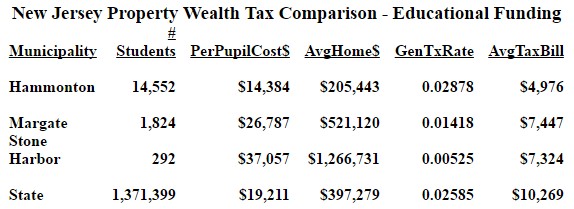
Hammonton and Margate are municipalities in Atlantic County and Stone Harbor is in Cape May County. In all three districts the average tax bill is below the state average. Hammonton does a pretty good job of keeping per pupil costs down so it’s residents can afford their property taxes. It is a town where the average home value of $205k is significantly below the state average of nearly $400k. It is not an affluent community like Margate, or a wealth district like Stone Harbor where the average home sells for over a million dollars.
The average tax bill in Hammonton is just under $5,000 per year, almost half the state average. The $14,384 annual per/pupil cost of education is also below the $19,211 state average. The low tax bill per resident is due, in part, to the fact that Hammonton receives $20 million dollars in State Aid.
Despite all of their frugal budgeting to keep tuition costs down, and despite a good amount of state assistance, look at Hammonton’s general property tax rate. It is double the tax rate in Margate and more than five time higher than the tax rate in Stone Harbor. Hammonton’s property tax rate is still well above the state average.
The residents of Margate and Stone Harbor pay a few thousand dollars more per year in property taxes, but they can well afford it. They pay less than the state average in property taxes yet spend far more than average in student tuition. Even so, Margate currently receives $2.5 million in State Aid while the very wealthy Stone Harbor receives nearly a half-million dollars in State Aid. Ironically, Under Governor Christie’s plan, each of these three districts would receive substantially more State Aid, but this would come at the expense of the very poor urban districts, the so call “Abbott” districts, where poverty levels are very high and property values are very low.
If instead of a flat State Aid rate for every student, Governor Christie proposed a flat property tax rate, and used additional revenue from wealth districts to fill funding gaps in poorer districts, how would that effect property taxes in these three communities?
Keeping in mind that a flat tax is still regressive, and that home values are not a good indicator of wealth ownership (it under represents the wealth of the wealthy) the table below shows what property taxes would look like if a flat property tax was implemented based on New Jersey’s average property tax rate.
Table 2

This exercise illustrates just how incredibly regressive the current property tax scheme is. More affluent towns are paying a lower property tax rate and middle class communities are paying a higher rate. Even a flat property tax rate would double Margate’s tax bill and more than quadruple Stone Harbors tax bill. A flat property tax rate would probably generate enough additional revenue to adequately fund and rehabilitate Abbott district schools and disadvantaged schools throughout the state. A progressive property tax formula would go even further to fully fund New Jersey’s public schools and give every child their constitutionally protected right to an equally good public education. Giving the same amount of state aid to both the rich and poor isn’t fair at all. A progressive wealth tax based on residential property values would be.
Below are the URL internet addresses for all of the data presented above.
_____________________________________________________________
http://www.nj.com/education/2015/04/nj_schools_how_much_is_your_district_spending_per.html
http://www.nj.gov/education/data/fact.htm
http://www.state.nj.us/education/data/enr/enr14/stat_doc.htm
http://www.state.nj.us/treasury/taxation/lpt/taxrate.shtml
http://www.state.nj.us/treasury/taxation/lpt/class2avgsales.shtml
http://www.joeshimkus.com/NJ-Tax-Rates.aspx
http://www.state.nj.us/dca/divisions/dlgs/resources/stateaidinfo.shtml
THE SPEECH BERNIE WAS NOT ALLOWED TO GIVE
All presidential candidates were invited to address this year’s AIPAC convention in Washington, D.C. Because of a previously scheduled event, Bernie Sanders offered to send a pre-recorded me…
Making Corrupt Politics Illegal
by Brian T. Lynch, MSW
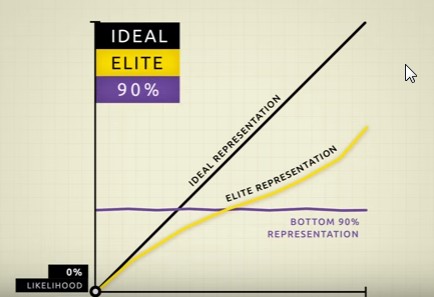
For most American’s, democracy is dead. A Princeton study found that if over 90% of us support a bill or policy idea in Congress, it has about a 30% chance of passing. BUT, if over 90% of us really hate a bill or policy idea in Congress… it has about a 30% chance of passing. Why? The system is corrupt. Our democracy is broken.
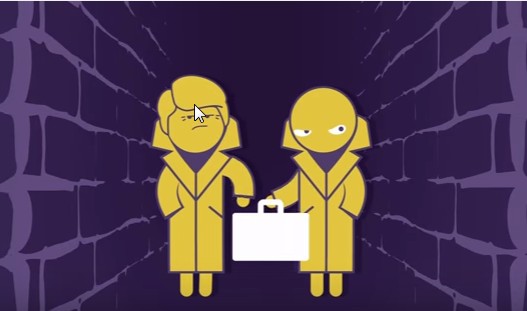
So here is a novel idea.Make corrupt political practices illegal. On the federal level alone the top 200 most politically active companies spend over $5.8 billion a year funding politicians (buying our democracy), often promising politicians high wage jobs after they leave office. All of this allows the lobbyists to write the laws that congress actually passes, sometime without even reading the bills first. In exchange for all this political cash, these 200 politically active corporations receive over $4.4 trillion in favorable tax supports. That is equal to a 75,900% return on their political investments. It’s a racket and it’s all perfectly legal.
As the video below explains so well, that mean that 90% of everyone in the lower economic groups in America has “a minuscule, near zero, statistically insignificant.” influence over what laws our representatives pass in the Federal Congress.
Watch this video that explains the finding of a scholarly study out of Princeton. [Note: prior link was incorrect. This is the corrected link]
Copy and paste link to your browser: https://www.youtube.com/watch?v=5tu32CCA_Ig&spfreload=1
The creator of the above video have a possible solution which they explain in their second video, How to Fix Corruption in America. The fix is to make political corruption illegal though passage of a simple law. But getting anything passed in the Federal Congress to fix the way they do business now is impossible. So the strategy is to start by passing the law locally and then statewide so that federal representatives elected from these states aren’t already tainted by corrupt politics. Once enough states pass the anti-corruption law, there will be enough congress people from those states to pass a federal anti-corruption law. Here below is the video:
Copy and paste link to your browser: https://www.youtube.com/watch?v=lhe286ky-9A
And so, like all politics, the solution to make our voice count once again is in our hands if we act locally while thinking globally. All politics is local. Let’s make local politics the place where we restore democracy in America.
If you are disturbed by these facts, please do your part in getting this information out to your friends across the internet. and get active locally to start turning things around. The level of political corruption is inversely proportional to the level of citizen involvement.
Mine Hill, New Jersey – Headwaters of the Lamington River
by Brian T. Lynch

Mine Hill is a geographically and environmentally important area in New Jersey because it is home to the headwaters of the North Branch of the great Raritan River which flows into Raritan Bay at Perth Amboy.
The Raritan River Basin is 1,100 square miles of some of the most beautiful land in Northern New Jersey. It is the largest river basin contained entirely within New Jersey. It provides drinking water to millions of residents, including those who rely on the Round Valley and Spruce Run Reservoirs. The Raritan basin is divided into three watershed management areas. To the South and East is the Raritan Watershed Area containing the Raritan River itself, and both Green Brook and Lawrence Brook. Due South is the Millstone Watershed Area where waters run North from the confluence of the Stony Brook and Millstone Rivers. But the bulk of the waters of the Raritan are from the Northwest, which is divided into two main flows, the North Branch and the South Branch. The South Branch starts in Budd Lake and flows south towards High Bridge. It then makes a big loop to the East and back North where it joins up with the North Branch just South of Somerville.
It is the North Branch of the Raritan River Basin that interests me, because it starts just West of Canfield Avenue. It floods some of the lush woodlands in the Green Acers area and the Rutgers track that forms the headwaters of the Lamington River.
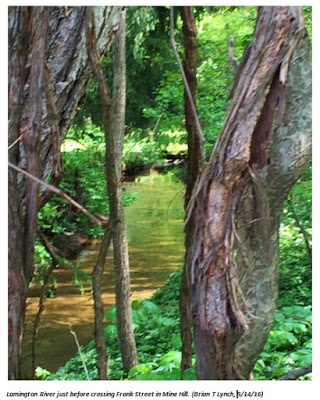
The Lamington may not be a household word for most of us. It is only a little noticed brook that runs out from the woods to cross Frank Street near George and First Streets. It then wanders behind some houses until it crosses Dickenson Mine Road to make a short passage into Mine Hill Lake.
If you are standing on the Mine Hill Beach and look to the right you will see a point of land jutting out into the water. You are looking to the North end of the lake. The Lamington River discharges into the lake a short ways up from that point.

Across the lake and due South is where water from the lake spills into Randolph Park. There is only a spit of land separating the two, as you know. But the Lamington River rejoins its bank earlier just West of that spillway into Randolph Park. The Lamington flows parallel to the far shoreline of the Southern tip of the lake.
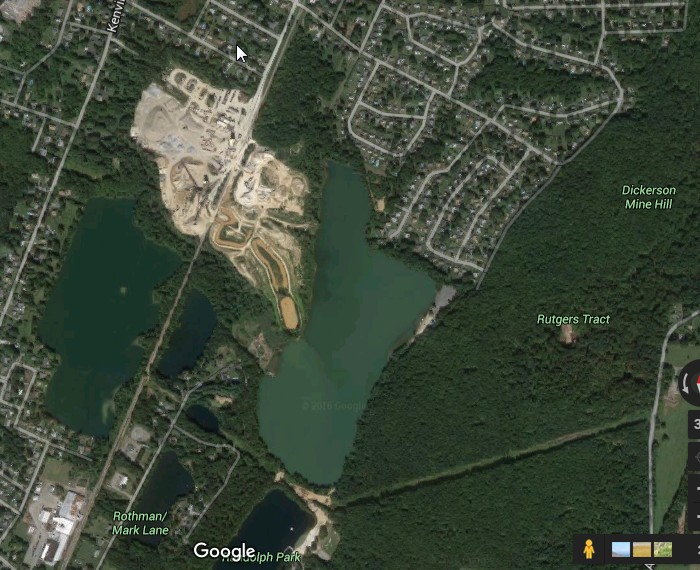
South satellite view of Mine Hill Lake where a spillway carries water into Randolph Park pond. Lamington Riverbed reforms to the left of the Mine Hill Lake shoreline on the bottom left of the lake. (Google Maps)
From there the waters of the Lamington form wetlands that are home to a number of small lakes and ponds, Silver Lake, Horseshoe Lake, Black River Pond and others. As the Lamington River passes by Horseshoe Lake, several branches combine to flow South towards Chester. At this point the Lamington is known as the Black River. The Lamington does not regain its name again until it leaves Chester and enters (or leaves) Hackelbarney State Park. From there it continue South towards Lamington, and beyond where it finally joint up with the upper Raritan River near the vicinity of White House.
Along the way, the Lamington (or Black River it is more commonly known in Morris County) passes through some of the most beautiful parts of the region and is home to wildlife refuge areas, lakes, ponds, state, county and municipal parks and beautiful walking trails. It is a favorite destination for game fishermen, kayakers and nature enthusiast.
For more pictures of the Lamington River, check out the Black River Wildlife Management website at: http://chestertownship.org/about-chester-nj/photo-gallery/


Why Bernie Sanders Must Fight for a Contested Convention
An Open Letter to Rachel Maddow in Response to Her May 2nd Segment on Why Bernie Should Bow Out of the Race.

Pictures of self-organized “movement” events supporting anti-establishment Bernie Sanders,
by Brian T. Lynch, MSW
Dear Dr. Maddow,
I’m a fan of yours, but I join those writing in opposition to your arguments against Bernie’s ideas of a contested Democratic Convention. The rules are set up to allow for this type of contested convention. Whether or not a trailing candidate for the Democratic nomination chooses to bring their fight to the floor has always been predicated on exigent circumstances of the times, not just institutional courteous or party loyalty.
In prior presidential party contests opposing, or insurgent candidates have fought for the support of their party with the goal of everyone unifying behind the candidate generating the most excitement with the best chance of winning against the other party candidate. In my 60 years these have always been intra-party contests, but these are different times. Party reformation has never played as large a roll as it does now.
This years election is a referendum on establishment politics itself. The pundits in both parties still fail to grasp this obvious fact.
The Republican Party is starting to wake up. Their primary season has been an expensive disaster. Their tuberous outcropping of so many weak presidential candidates, all casting about for a winning message, was an obvious sign that the GOP itself is in critical condition. The establishment elites of that party have abused their privileged status for years. They have made too many cynical promises to voters, promises they never intended to keep, They applied deceptive marketing to arouse their base and garner favor with an electorate that they secretly despise. Once in office, they cynically sold themselves to big business and big money interests while tossing crumbs to the people who elected them.
Donald Trump is the toxic chemotherapy that party needs to kill the cancerous grip big organized money has on the Republican establishment. The message couldn’t be any clearer. The Republican establishment has to go. The Trump candidacy, whether Trump wins or loses, will sweep many other establishment candidates out of office.
The Democratic Party suffers from the same disease as the Republican Party, but at an earlier stage. Party elites are caught in the death grip of powerful private interests. The will of their constituents have become secondary. Dwindling turnout over the past decade has been ignored as long as slick marketing techniques were still winning election.
But elections are not all about winning, they are ultimately about governing.
Money in the Democratic Party isn’t just a necessary evil anymore. It is now a growing tumor. The people who really hear what Bernie Sanders is saying recognize that he is proposing a cure that might prevent this cancer from metastasizing. Meanwhile the establishment media still thinks this election is only about a fight for progressive ideas.
Given the state of the two parties, a Sanders win would be a foregone conclusion. All the polls say as much, yet this is message isn’t seeping into the consciousness of the establishment. The Democratic Party is eager to put Hillary’s negatives up against Trump’s negatives any day, in yet another hold-your-nose-and-vote election.
And, they would be right if this election was only based on ideology. But it isn’t. It is a referendum on our political establishment. Not only will Hillary Clinton have disadvantages related to her high unfavorability, she will not win the support of youthful “movement” Democrats or disgruntled independents.
If the race is between Clinton and Trump it will be a race between an establishment and a non-establishment candidate. Given the anger and level of dissatisfaction around the country, all bets should be off as to how that contest might turn out.
A Silent Rage Approaching
by Brian T. Lynch, MSW
The rich are not like you and me. I can safely say that knowing they’ll never read this.
The massive leak of documents from the Panamanian law firm Mossack Fonseca shows the extent to which the global elite shield their wealth from us. They have no interest in sharing the cost of governing. We pay for the military, the courts, the police, the roads, the schools and all of our social and physical infrastructure. The wealthy mooch off of us by not paying their taxes. The system is rigged to benefit those who least need the benefits. Some of the tax dodges are written into the law by politicians deep within the pockets of the rich. But as the Panama Papers reveal, most of the unreported wealth is hidden illegal. All of it is underhanded and immoral.
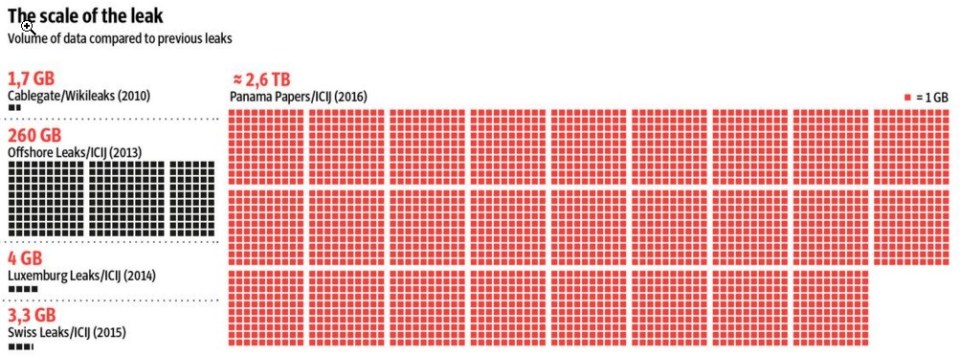
The sheer number of documents leaked is enormous. It covers 40 years of financial transactions and 2.6 terabytes of data. If media coverage of this scandal were proportional to the size of the document cashe, there would be no other news on television for weeks. Here below is a graphic depiction of the scale of the leak compared with other huge scandalous leaks.
As it stands, the owners and share holders of our corporate media are likely involved somewhere in this scandal. If not them directly, then surely their customers who buy advertizing are caught in this vast net of stinking fish. The hard working, front line journalists responsible for turning this data mountain into intelligible information have little control over how their work will be broadcast. For now, at least in the United States, coverage of the scandal is trumped by presidential politics.
If our society were healthy, if so many of us had not already given up on government’s lack of responsiveness to public demands, this would be a watershed moment. It would be a tipping point for righteous indignation and hot pursuit of substantial reforms.
The wealthy will tell you their fair share is in the paltry proportion they do pay in taxes, but the proof of the lie is the growing number of children living in poverty whose benefits are cut by the budget knife. The proof of the lie is in our crumbling bridges and crowed roads that we can’t fix without killing off other essential services. No matter how big some people say government is, it’s too small and corrupted to make these powerful people pay all their taxes.
It is all too depressing. All the more so if you believe, as I do, that a failure to mobilize for real change now puts the world on the path to real revolution, bloodshed and destruction. It is a well documented historical pattern, just as inevitable yet avoidable as global warming. It has happened countless times before, except this is different. This time tearing down our institutions in a murderous fit of rage would likely condemn the Earth to mass extinctions.
As much as we rail against the “system” we need it for the higher level of coordination and cooperation it will take to solve the global catastrophe we face. We can’t solve these challenges without reforming our current power structures and the eliminating the barriers created by greedy capitalists. Only the collective power of our vast social institutions can bring about the kind of changes we must make to survive. Radical reform is our best option for survival. How do we get a critical mass of people to understand this before it is too late?
 Data Driven Viewpoints