Home » Society (Page 2)
Category Archives: Society
“Serve and Protect” or “Enforce and Collect” The Changing Character of Local PD
by Brian T. Lynch, MSW
Police officers come in two basic flavors, the “serve and protect” peace officers and the “enforce and collect” enforcement officers. These represent (in the overly simplified terms used here) two fundamentally different and incompatible philosophies that are competing for the heart and soul of the profession. I needn’t mention which view is winning out since 9/11. Still, the drama playing out among departments also plays out within departments, which might help account for some of the reasons behind the article below. You might not see it at first, but so often the emotional motivations behind what seems like petty disputes are really underlying rifts involving fundamentally different world views. That’s what I suspect is happening here in New Jersey and elsewhere around the country.

Good Cop, Bad Cop: How Infighting is Costing NJ Taxpayers
In the opening account in this article a female officer in Camden is made Chief of Police. When she inspects the unmarked car that comes with the job she discovers that one of her fellow officers planted crack cocaine in the car to derail her promotion and her life. Incidents like this reveal just how serious the clash of ideologies can be within public police departments.
I had a good friend who spent his entire career in local police departments. He dedicated himself to serving the public. Sometimes that meant arresting people who endangered others or disturbed the peace, but it also meant going the extra mile to help out a resident in a pinch. In smaller towns and communities it isn’t all bad guys all the time. He was never cynical or jaded by his work, but his philosophy on small town policing set him at odds with a segment of his fellow officers. It played out in many internal conflicts and unfavorable personnel decisions over the course of his career. In the end he retired early in part because of the hostility he felt in the workplace.
I have other police officer friends, even some who are of the “enforce and collect” variety who received negative attention in their careers when they strayed a bit from that philosophy. Another person I know who aspires to be a police officer was turned off by the militancy and hardnosed cynicism that has been built into the police training curriculum. Just what does the current police training curriculum look like these days? The public has a right to know.
What all this really means is that the drama playing out in society as a whole between ultra-conservative ideologies and more liberal ideologies is also playing out in all our institutions, including police agencies. Local departments are not immune to what affects society as a whole. What’s different here is that even small, local police departments shun transparency. While they work for the public they tend to view us as civilians outside of their fraternity. It is hard to penetrate a Departments cultural view. At the same time, there is clearly money and military style equipment flowing into even local law enforcement agencies, which serves to alter the character of local policing.
These changes are real. What is missing, in addition to transparency, is a robust public debate on what role we want local police to play in our communities. Are we aware of the changes character of our local police departments and are we comfortable with those changes?
Understanding Intelligence – Essential for a Rational World
by Brian T. Lynch, MSW
What I really want to write about are the practical implications of a new theory of human intelligences, but this will have to wait. The problem is that emerging knowledge about the workings of our cerebral cortex has not yet been widely shared. It hasn’t caught the attention of the popular press. Whenever I start to make some connection between an experience and how it relates to how our brain functions, I have to backtrack and offer an explanation of the new theory. Whatever point I was trying to make gets lost and my friends grow impatient.

What’s needed are brief summaries explaining aspects of how intelligence works. The summaries need to be clear enough to spark interest and promote more understanding. I know I am hungry for this kind of knowledge. Understanding the brain is truly the last frontier of science. Our mind, with its trillions of neural connections, is the deepest mystery in the universe. Everything we know of the world outside ourselves is contained in this single organ. The research that I will try to summarize here relates only to human intelligence and not to other functions of the brain. It doesn’t specifically relate to the mysteries of self-awareness or personality. And yet, understanding the workings of this thin, convoluted layer of cerebral cortex covering our more primitive brain is essential to solving the bigger mysteries of who we are.
Our Intelligent Brain
So, how does our intelligent brain work? There are some good and important books on the subject. The one I rely on here is called “On Intelligence”, by Jeff Hawking’s and Sandra Blakeslee. It is lay account of a theory on intelligence, but beware, some of its chapters are a bit technical.
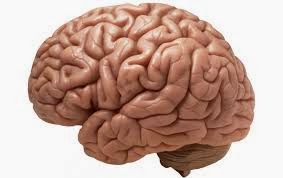
Here is just one aspect of how the cerebral cortex works that I found interesting. Our intelligent brain is constantly detecting and anticipating patterns. The cortex is a pattern maker. It organizes sensory and worldly experience into patterns at every level of detail from the smallest sensory inputs to the biggest concepts of how the world works. It integrates these patterns into ever larger concepts or images until, at the highest levels, our brain creates an enduring image of the world around us. This image of the world, while enduring, is also malleable and responsive to new insights and information. Importantly, our intelligent brain is constantly predicting what to expect next from our sensory field.
Our brain anticipates everything that we see, feel, hear, taste or smell. It expects that similar circumstances will produce the same or similar sensory experiences. The strength of these expectations grows stronger the more they are reinforced by past experiences. Our brains also have a higher expectation of seeing certain patterns when these patterns are well integrated into the bigger picture of the world created in our brains. So strong are these patterns that even when we only see portions of them our brain recognizes the whole. For example, if we only see the eye and nose of a friend in a picture we recognize that person as our friend. If we see three dots on a page we might recognize that they form a triangle without seeing any lines between the dots. Seeing part of an image is enough for our brains to know what the whole pattern or image looks like.
The Intelligent Sub-Conscious
What’s remarkable about brain pattern recognition is that most of it happens at the subconscious level. Here is a little experiment to demonstrate what I mean. Place your hand on a wooden door near you and then grabbed the doorknob. Nothing about this experience surprises you, right? It’s just an everyday experience. And until I mention that the metal doorknob feels cooler than the door, you may not have noticed. That’s because your brain expected that pattern. Your brain knows metal feels cooler than wood every time you touch them in a room. You might even know the scientific reason for this is that wood and metal have different rates of conduction. Your brain expected these to items to feel different, so there was no need to alert your conscious brain. If the doorknob had felt warmer or soft your brain would have alerted your conscious mind immediately.
During every waking moment our senses are continuously bombarded with stimuli. What we see, or hear is constantly changing and billions of impulses reach our brain every instant. If our intelligent brain had to analyze every electro-chemical pulse it would be overwhelmed with data. Instead, our brain only has to recognize challenges to the familiar patterns stored within our cortex. Computers, on the other hand, have to process every byte of informational every time it is presented or else it freeze.
How Our Cortex is Structured
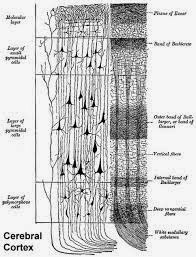
At every scale of human experience, our brain expects certain patterns to emerge from our sensory field. To accomplish this our cortex is made up of seven distinct layers on a horizontal axis and billions of distinct, hierarchical columns on the vertical axis. Additionally, each vertical column is connected to other vertical columns by a neural network, and information super highway system. The seven levels of each neural column is also connected to each other by neural pathways. This makes our cortex massively interconnected.
The first, or bottom layer of cortex only recognizes the electro-chemical patterns that come directly from the sense organs. The complexity of recognizable patterns grows with each ascending layer of cortex. For example, on the lowest level of the visual cortex area only specific geometric patterns will be recognized by particular columns. Combining this low level information from many nearby columns might cause the next level of cortex to recognize that these lower level patterns represent a human nose. At a subsequently higher layer of cortex the patterns represented by that nose and maybe an eye or other facial features recognized by still other columns might confirm that these patterns belong to the face of a friend. And so it goes until at the highest cortical levels our brain creates an enduring mental representation of the person we are visiting with, the room in which we are standing and all of the surroundings around us.
Another feature of our cerebral cortex is that it has more neural feedback connections then uptake, or feedforward connections. That means there are more neural connections from higher layers of the cortex to the lower layers of the cortex. This structure enables the higher levels of the cortex to tell lower levels what patterns they should expect to emerge from the sensory field. When columns in the lower cortex see an anticipated patterns, they signal back that they are satisfied. But when the lower levels of the cortex see something unexpected, they pass this additional information up the line to the next higher level. If that level of the cortex can’t resolve the pattern conflict, it passes these signals on to the next higher level, and so on, until some higher level of the cortex can make sense of the information. Most of these pattern conflicts are resolved subconsciously, but occasionally they pop into our highest executive level, which is our conscious mind. Our attention will suddenly focus on this unexpected thing that has disrupted our stream of conscious thoughts.
Intelligence and Consciousmess

As we move through the day our brain alerts our conscious self to only those things which need our attention. For example, we might slip on an old pair of shoes and walk around without thinking much about how they feel, but if a pebble suddenly gets caught in our shoe we become aware of the new sensation. (“Excuse me, self, but a pebble may have entered your shoe.”) If we put on a new pair of shoes we notice how differently they feel until we get use to them. If they don’t fit correctly we are annoyingly aware of them until we take them off. But for the most part we are not conscious of the millions of patterns, large or small, that our intelligent brain processes every day. Most of our intelligence activity is at work in our subconscious mind.
This ability to expect and process normal pattern activity without having to attend to everything we see or hear allows our brain to focus attention on the rapidly changing information that is most important to our survival. It allows us to listen and process what someone is saying while ignoring a passing car. It allows us to assess traffic movements at an intersection without being distracted by the radio. This is important because our capacity for consciousness is a limited resource. Our intelligent brain must conserve this executive function and use it for only the most salient and important aspects of our sensory field.
Introspection and Intentionality
But we are also able to focus attention on patterns of thought or behavior that are not otherwise calling for our conscious attention. We can introspectively direct our focus to examine the patterns and associations stored in our cortex. We are not a passive audience to our senses. We have a conscious mind with which we can look inwardly to examine our intelligent brain. We can learn things about how the real world is structured from the patterns created in our cortex. We can also rearrange or re-associate these patterns when we find errors in the way they have formed (cognitive therapy being one dramatic example). We can perceive gaps in our knowledge of things and direct our own behavior to gather more information.
Implications for Conscous Thoughts
Our brain forms patterns from sensory input whether we are aware of it or not. This leads me to one of the major implications that I would like to discuss further in a future post. Our intelligent brain is forming patterns and associations based on what we may be seeing or hearing even when we aren’t paying conscious attention. We know that repetition strengthens patterns and associations.

Advertisers and marketers know this as well. They choose words and images to invoke associations most favorable to their purposes and use repetition to reinforce and strengthen those associations within our cerebral cortex. The marketing of ideas and products is effective even when we aren’t paying conscious attention to the ads. Think about that the next time you are wandering around a supermarket. Think about it in connection with our political campaigns and the public dialogue we watch on TV or listen to on the radio.
When we commonly think about intelligence we usually limit our discussion to our conscious problem solving ability. We usually don’t consider that most of our brains intelligent activity happens at the subconscious level. We are not aware of the extent to which false patterns of information can subconsciously form to subsequently influence our conscious choices and opinions. In a future posting I hope to expand on this topic. I believe we can inoculate ourselves against propaganda and false advertising, but only if we have a better understanding of how our intelligent brain operates.
Obamacare – Is It For Good or Evil?
Like anything else, you can use a thing or abuse it. The Affordable Care Act is being shredded for political reasons in many states to create proof that it doesn’t work. It’s a shambles in the hands of those who want to use it as a cudgel with which to beat up Obama. More enlightened states are taking every advantage of the ACA and in doing so they are better serving their citizens and improving their state budgets. Here below is a snippet from an article in the Washington Post:
How we got Obamacare to work
By Jay Inslee, Steve Beshear and Dannel P. Malloy, Published: Washington Post, November 17, 2012
[snip] In our states — Washington, Kentucky and Connecticut — the Affordable Care Act, or “Obamacare,” is working. Tens of thousands of our residents have enrolled in affordable health-care coverage. Many of them could not get insurance before the law was enacted.
People keep asking us why our states have been successful. Here’s a hint: It’s not about our Web sites.
Sure, having functioning Web sites for our health-care exchanges makes the job of meeting the enormous demand for affordable coverage much easier, but each of our state Web sites has had its share of technical glitches. As we have demonstrated on a near-daily basis, Web sites can continually be improved to meet consumers’ needs.
The Affordable Care Act has been successful in our states because our political and community leaders grasped the importance of expanding health-care coverage and have avoided the temptation to use health-care reform as a political football.
In Washington, the legislature authorized Medicaid expansion with overwhelmingly bipartisan votes in the House and Senate this summer because legislators understood that it could help create more than 10,000 jobs, save more than $300 million for the state in the first 18 months, and, most important, provide several hundred thousand uninsured Washingtonians with health coverage.
In Kentucky, two independent studies showed that the Bluegrass State couldn’t afford not to expand Medicaid. Expansion offered huge savings in the state budget and is expected to create 17,000 jobs.
In Connecticut, more than 50 percent of enrollment in the state exchange, Access Health CT, is for private health insurance. The Connecticut exchange has a customer satisfaction level of 96.5 percent, according to a survey of users in October, with more than 82 percent of enrollees either “extremely likely” or “very likely” to recommend the exchange to a colleague or friend.
In our states, elected leaders have decided to put people, not politics, first.
[Read more here: http://www.washingtonpost.com/opinions/how-we-got-obamacare-to-work/2013/11/17/3f2532bc-4e42-11e3-be6b-d3d28122e6d4_story.html ]
_______________ … _______________
If you feel that the media isn’t doing a good job of covering the positive side this story and isn’t reaching the ACA doubters and haters you know, then do something about it. Point them to this article or refer them here to read something that is directly from the chief executives of states where the ACA is working.
Snippets: Toxic Stress and New Ways to Combat the Impact of Child Abuse and Neglect
What follows is a snip-it of an excellent article from the Opinionator section of the New York Times by David Bornstein. Within the article are hyperlinks to excellent source material on childhood toxic stress, its impact on children and new methods to prevent harm or treat children who are exposed to toxic stress. I have taken snippets of each of these hyperlinks to create an annotated index to the sources from Mr. Bornstein’s article. I hope that this will encourage further reading and understanding on this topic. Having spend 31 years as a social worker in child protective services it has been my experience that chronic and repetitive stress on children is both pervasive and incredibly damaging. It takes new protective service workers years of experience to recognize toxic stress and fully appreciate how damaging it truly is. The whole field of protective services is more oriented towards responding to physical abuse and acute safety risks than it is to chronic neglect or repetitive lower level trauma. – Brian T. Lynch, MSW
Protecting Children From Toxic Stress
New York Times – October 30, 2013
Imagine if scientists discovered a toxic substance that increased the risks of cancer, diabetes and heart, lung and liver disease for millions of people. Something that also increased one’s risks for smoking, drug abuse, suicide, teen pregnancy, sexually transmitted disease, domestic violence and depression — and simultaneously reduced the chances of succeeding in school, performing well on a job and maintaining stable relationships? It would be comparable to hazards like lead paint, tobacco smoke and mercury. We would do everything in our power to contain it and keep it far away from children. Right?
Well, there is such a thing, but it’s not a substance. It’s been called “toxic stress.” For more than a decade, researchers have understood that frequent or continual stress on young children who lack adequate protection and support from adults, is strongly associated with increases in the risks of lifelong health and social problems, including all those listed above.
[read more: http://opinionator.blogs.nytimes.com/2013/10/30/protecting-children-from-toxic-stress/?_r=0 ]
Toxic stress response: Occurs when a child experiences strong, frequent, and/or prolonged adversity—such as physical or emotional abuse, chronic neglect, caregiver substance abuse or mental illness, exposure to violence, and/or the accumulated burdens of family economic hardship—without adequate adult support. This kind of prolonged activation of the stress response systems can disrupt the development of brain architecture and other organ systems, and increase the risk for stress-related disease and cognitive impairment, well into the adult years.
When toxic stress response occurs continually, or is triggered by multiple sources, it can have a cumulative toll on an individual’s physical and mental health—for a lifetime. The more adverse experiences in childhood, the greater the likelihood of developmental delays and later health problems, including heart disease, diabetes, substance abuse, and depression. Research also indicates that supportive, responsive relationships with caring adults as early in life as possible can prevent or reverse the damaging effects of toxic stress response.
[read more: http://developingchild.harvard.edu/topics/science_of_early_childhood/toxic_stress_response/ ]
Centers For Disease Control and Prevention
http://www.cdc.gov/ace/index.htm
Survey shows 1 in 5 Iowans have 3 or more adverse childhood experiences
October 14, 2013By Jane Ellen Stevensin
Iowa’s 2012 ACE survey found that 55 percent of Iowans have at least one adverse childhood experience, while one in five of the state’s residents have an ACE score of 3 or higher.
In the Iowa study, there was more emotional abuse than physical and sexual abuse, while adult substance abuse was higher than other household dysfunctions.
This survey echoed the original CDC ACE Study in that as the number of types of adverse childhood experiences increase, the risk of chronic health problems — such as diabetes, depression, heart disease and cancer — increases. So does violence, becoming a victim of violence, and missing work days.
[read more: http://acestoohigh.com/2013/10/14/survey-shows-1-in-5-iowans-have-3-or-more-adverse-childhood-experiences/ ]
From the American Academy of Pediatrics
Technical Report
The Lifelong Effects of Early Childhood Adversity and Toxic Stress
- 1. Benjamin S. Siegel, MD,
- 2. Mary I. Dobbins, MD,
- 3. Marian F. Earls, MD,
- 4. Andrew S. Garner, MD, PhD,
- 5. Laura McGuinn, MD,
- 6. John Pascoe, MD, MPH, and
- 7. David L. Wood, MD
ABSTRACT
Advances in fields of inquiry as diverse as neuroscience, molecular biology, genomics, developmental psychology, epidemiology, sociology, and economics are catalyzing an important paradigm shift in our understanding of health and disease across the lifespan. This converging, multidisciplinary science of human development has profound implications for our ability to enhance the life prospects of children and to strengthen the social and economic fabric of society. Drawing on these multiple streams of investigation, this report presents an ecobiodevelopmental framework that illustrates how early experiences and environmental influences can leave a lasting signature on the genetic predispositions that affect emerging brain architecture and long-term health. The report also examines extensive evidence of the disruptive impacts of toxic stress, offering intriguing insights into causal mechanisms that link early adversity to later impairments in learning, behavior, and both physical and mental well-being. The implications of this framework for the practice of medicine, in general, and pediatrics, specifically, are potentially transformational. They suggest that many adult diseases should be viewed as developmental disorders that begin early in life and that persistent health disparities associated with poverty, discrimination, or maltreatment could be reduced by the alleviation of toxic stress in childhood. [snip]
[read more: http://pediatrics.aappublications.org/content/129/1/e232.full ]
WORKING PAPER #3
Excessive Stress Disrupts the Architecture of the Developing Brain
New research suggests that exceptionally stressful experiences early in life may have long-term consequences for a child’s learning, behavior, and both physical and mental health. Some types of “positive stress” in a child’s life—overcoming the challenges and frustrations of learning a new, difficult task, for instance—can be beneficial. Severe, uncontrollable, chronic adversity—what this report defines as “toxic stress”—on the other hand, can produce detrimental effects on developing brain architecture as well as on the chemical and physiological systems that help an individual adapt to stressful events. This has implications for many policy issues, including family and medical leave, child care quality and availability, mental health services, and family support programs. This report from the National Scientific Council on the Developing Child explains how significant adversity early in life can alter—in a lasting way—a child’s capacity to learn and to adapt to stressful situations, how sensitive and responsive caregiving can buffer the effects of such stress, and how policies could be shaped to minimize the disruptive impacts of toxic stress on young children.
Suggested citation: National Scientific Council on the Developing Child (2005). Excessive Stress Disrupts the Architecture of the Developing Brain: Working Paper No. 3. Retrieved from http://www.developingchild.harvard.edu
Strengthening Adult Capacities to Improve Child Outcomes: A New Strategy for Reducing Integenerational Poverty
Jack P. Shonkoff, Harvard University – Posted April 22, 2012
[snip]
It’s clear that high-quality early childhood programs can make a measurable difference for children in poverty, but we must do more. Advances in neuroscience, molecular biology, and the behavioral sciences provide the evidence needed to build on best practices and to forge new ideas that can address the factors that contribute to intergenerational poverty. One promising path is to focus on fostering the skills in adults that allow them to be both better parents and better employees.
Science tells us that children who experience significant adversity without the buffering protection of supportive adults can suffer serious lifelong consequences. Such “toxic stress” in the early years can disrupt developing brain architecture and other maturing biological systems in a way that leads to poor outcomes in learning, behavior, and health. [snip] …[T]he goal is to prevent or mitigate the consequences of toxic stress by buffering young children from abuse or neglect, exposure to violence, parental mental illness or substance abuse, and other serious threats to their well-being.
Success in this area requires adults and communities to provide sufficient protection and supports that will help young children develop strong, adaptive capacities. Since many caregivers with limited education and low income have underdeveloped adaptive skills of their own, interventions that focus on adult capacity-building offer promising opportunities for greater impacts on children.
One area of development that appears to be particularly ripe for innovation is the domain of executive functioning. These skills include the ability to focus and sustain attention, set goals and make plans, follow rules, solve problems, monitor actions, delay gratification, and control impulses.[snip]
[ See more at: http://www.spotlightonpoverty.org/ExclusiveCommentary.aspx?id=7a0f1142-f33b-40b8-82eb-73306f86fb74#sthash.4XsuGXPI.dpuf ]
Stress reactivity and attachment security.
Gunnar MR, Brodersen L, Nachmias M, Buss K, Rigatuso J.
Source
Institute of Child Development, University of Minnesota, Minneapolis 55455, USA.
Abstract
Seventy-three 18-month-olds were tested in the Ainsworth Strange Situation. These children were a subset of 83 infants tested at 2, 4, 6, and 15 months during their well-baby examinations with inoculations. Salivary cortisol, behavioral distress, and maternal responsiveness measures obtained during these clinic visits were examined in relation to attachment classifications. In addition, parental report measures of the children’s social fearfulness in the 2nd year of life were used to classify the children into high-fearful versus average- to low-fearful groups. In the 2nd year, the combination of high fearfulness and insecure versus secure attachment was associated with higher cortisol responses to both the clinic exam-inoculation situation and the Strange Situation. Thus, attachment security moderates the physiological consequences of fearful, inhibited temperament. Regarding the 2-, 4-, and 6-month data, later attachment security was related to greater maternal responsiveness and lower cortisol baselines. Neither cortisol nor behavioral reactivity to the inoculations predicted later attachment classifications. There was some suggestion, however, that at their 2-month checkup, infants who would later be classified as insecurely attached exhibited larger dissociations between the magnitude of their behavioral and hormonal response to the inoculations. Greater differences between internal (hormonal) and external (crying) responses were also negatively correlated with maternal responsiveness and positively correlated with pretest cortisol levels during these early months of life.
[read more: http://www.ncbi.nlm.nih.gov/pubmed/8666128 ]
Child FIRST
HIGHLIGHTS
- Intervention: A home visitation program for low-income families with young children at high risk of emotional, behavioral, or developmental problems, or child maltreatment.
- Evaluation Methods: A well-conducted randomized controlled trial.
- Key Findings: At the three-year follow-up, a 33% reduction in families’ involvement with child protective services (CPS) for possible child maltreatment. At the one-year follow-up, 40-70% reductions in serious levels of (i) child conduct and language development problems, and (ii) mothers’ psychological distress.
- Other: A study limitation is that its sample was geographically concentrated in Bridgeport, Connecticut. Replication of these findings in a second trial, in another setting, would be desirable to confirm the initial results and establish that they generalize to other settings where the intervention might be implemented.
Download a printable version of this evidence summary (pdf, 4 pages)
Effects of Child FIRST one year after random assignment:
Compared to the control group, children in the Child FIRST group were –
- 68% less likely to have clinically-concerning language development problems, as measured by a trained assessor (10.5% of Child FIRST children had such problems versus 33.3% of control group children).
- 42% less likely to have clinically-concerning externalizing behaviors, such as aggression or impulsiveness, as reported by their mothers (17.0% of Child FIRST children versus 29.1% of control group children).
Compared to the control group, mothers in the Child FIRST group were –
- 64% less likely to have clinically-concerning levels of psychological distress, based on self-reports (14.0% of Child FIRST mothers versus 39.0% of the control group mothers).
- The study did not find statistically-significant effects on (i) the percent of children with clinically-concerning internalizing behaviors (e.g., depression or anxiety); (ii) the percent of children with clinically-concerning dysregulation (e.g., sleep or eating problems); (iii) the percent of mothers with clinically-concerning parenting stress; or (iv) the percent of mothers with clinically-concerning depression.3
[read more: http://toptierevidence.org/programs-reviewed/child-first ]
Research Finds a High Rate of Expulsions in Preschool
By TAMAR LEWIN
New York Times – Published: May 17, 2005
So what if typical 3-year-olds are just out of diapers, still take a daily nap and can’t tie their shoes? They are plenty old enough to be expelled, the first national study of expulsion rates in prekindergarten programs has found.
In fact, preschool children are three times as likely to be expelled as children in kindergarten through 12th grade, according to the new study, by researchers from the Yale Child Study Center.
[read more: http://www.nytimes.com/2005/05/17/education/17expel.html?_r=0 ]
Preschool and child care expulsion and suspension: Rates and predictors in one state.
Gilliam, Walter S.; Shahar, Golan
Infants & Young Children, Vol 19(3), Jul-Sep 2006, 228-245. doi: 10.1097/00001163-200607000-00007
ABSTRACT : Rates and predictors of preschool expulsion and suspension were examined in a randomly selected sample of Massachusetts preschool teachers (N = 119). During a 12-month period, 39% of teachers reported expelling at least one child, and 15% reported suspending. The preschool expulsion rate was 27.42 per 1000 enrollees, more than 34 times the Massachusetts K-12 rate and more than 13 times the national K-12 rate. Suspension rates for preschoolers were less than that for K-12. Larger classes, higher proportion of 3-year-olds in the class, and elevated teacher job stress predicted increased likelihood of expulsion. [snip]
[read more: http://psycnet.apa.org/psycinfo/2009-04570-007 ]
Traumatic and stressful events in early childhood: Can treatment help those at highest risk?
Chandra Ghosh Ippen, William W. Harris, Patricia Van Horn, Alicia F. Lieberman
ABSTRACT: This study involves a reanalysis of data from a randomized controlled trial to examine whether child–parent psychotherapy (CPP), an empirically based treatment focusing on the parent–child relationship as the vehicle for child improvement, is efficacious for children who experienced multiple traumatic and stressful life events (TSEs)
[read more: http://www.sciencedirect.com/science/article/pii/S0145213411001499 ]
Listening to a Baby’s Brain: Changing the Pediatric Checkup to Reduce Toxic Stress
Listening to a baby’s heartbeat. Examining a toddler’s ears. Testing a preschooler for exposure to lead. These critical screenings have long been the hallmarks of early childhood checkups. Now, leading pediatricians are recommending major changes to the checkups of the future. The American Academy of Pediatrics (AAP) wants primary care doctors to screen their youngest patients for social and emotional difficulties that could be early signs of toxic stress. Read more >>
[read more: http://developingchild.harvard.edu/resources/stories_from_the_field/tackling_toxic_stress/ ]
From the American Academy of Pediatrics
Policy Statement
Early Childhood Adversity, Toxic Stress, and the Role of the Pediatrician: Translating Developmental Science Into Lifelong Health
Andrew S. Garner, MD, PhD, Jack P. Shonkoff, MD, Benjamin S. Siegel, MD, Mary I. Dobbins, MD, Marian F. Earls, MD, Andrew S. Garner, MD, PhD, Laura McGuinn, MD, John Pascoe, MD, MPH, David L. Wood, MD
ABSTRACT : [snip] To this end, AAP endorses a developing leadership role for the entire pediatric community—one that mobilizes the scientific expertise of both basic and clinical researchers, the family-centered care of the pediatric medical home, and the public influence of AAP and its state chapters—to catalyze fundamental change in early childhood policy and services. AAP is committed to leveraging science to inform the development of innovative strategies to reduce the precipitants of toxic stress in young children and to mitigate their negative effects on the course of development and health across the life span.
[read more: http://pediatrics.aappublications.org/content/129/1/e224.full.html ]
Top of Form
aces connection
HEALTHY, HAPPY KIDS GROW UP TO CREATE A HEALTHY, HAPPY WORLD.
This is a community of practice network. We use trauma-informed practices to prevent ACEs & further trauma, and to increase resilience.
[read more: http://acesconnection.com/ ]
ABOUT DAVID BORNSTEIN:
David Bornstein is the author of “How to Change the World,” which has been published in 20 languages, and “The Price of a Dream: The Story of the Grameen Bank,” and is co-author of “Social Entrepreneurship: What Everyone Needs to Know.” He is a co-founder of theSolutions Journalism Network, which supports rigorous reporting about responses to social problems.
A Passionate Call for an Alternative to Poliltics
What follows is the very essence of passion and disphoric expression by the next generation towards today’s intractable political systems that serve the interests of the rich and powerful. Russel Brand’s passion and rejection of establishment processes to bring about change mirror the essence of the Occupy movement. The outragiously disparate distribution of wealth and power has so distorted and hoplessly incumbered politics and democracy that he and many young people today are repulsed by it all. They struggle for an alternative that doesn’t yet exist and may never exist. The rant is perhaps a glimps into the hearts and minds of the coming generation. Through the social media an emotional consensus is building which has no clear expression or pathway to change.
Actor Russell Brand reduces BBC newsman to stunned silence with diatribe against corporate oligarchy
By Travis Gettys
Thursday, October 24, 2013
Actor and comedian Russell Brand is calling for a political and philosophical revolution in his guest editorship of the New Statesman magazine, and he explained what he wants to see in a passionately argued interview on BBC’s “Newsnight.”
Combative host Jeremy Paxson asked the British actor, who’s known for his past drug use and his brief marriage to pop singer Katy Perry, what gave him the right to promote his political beliefs, particularly since he’s never voted.
“I don’t get my authority from this preexisting paradigm, which is quite narrow and only serves a few people,” Brand said. “I look elsewhere for alternatives that might be of service to humanity.”
Darwin, Religion and the Rise of a Secular World
By Brian Lynch, MSW
During most of human history divine creation was the only paradigm for understanding our place in the universe. It was the grand context, the social ocean in which we lived out our lives. Human beings were divinely created in a special way that set us apart from the rest of God’s creatures. We were born, we lived and died in God’s world. There were no alternative perspectives. Our frame of reference, world view and the society in which we lived were profoundly influence by this inescapable constant. There were always questions and great disputes about nature, especially with the rise of science, but nobody seriously doubted our divine creation. Religion, and therefore religious leaders, held sway over every aspect of our social and intellectual development… that is until one reluctant scientist came to see that human beings arrived here by natural evolution and not a single act of divine creation. Charles Darwin glimpsed the profound impact his discovery would have on the world. He knew there would be unintended consequences and a contemporary backlash that would make his life difficult. He waited as long as possible before publishing “On the Origin of Species.”
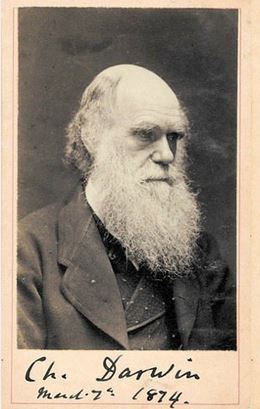
At that moment a new paradigm for human understanding became inevitable. It spawned a natural view of creation and the universe that would successfully compete with mystical beliefs in a god-centered universe. It eventually opened up a vast new social space that could be occupied by those seeking an alternative to a religious view. Today we call this vast social space a secular society, but nothing like it ever existed before. It was (and can still be) liberating and wide open with possibilities that were unimaginable under the divine paradigm. It was a space where science and technology thrived. A new sense of objectivity was a direct outcome. Ethics and morality could be studied from perspectives that were independent from specific religious texts. New philosophies sprung up and took root. It allowed us to create secular institutions of learning, medicine and other scholarly disciplines . We created secular governments, secular economies, secular business corporations and all manner of social organizations not immediately related to religion. It allowed for the creation of truly pluralistic societies and more religious tolerance than the world had ever known. But it also challenged and diminished the power of religions across the globe.
The secular paradigm that has emerged is not antithetical to God or a rejection of religion or spirituality. It is just a social framework. It is a religion neutral space where individuals are free to explore spirituality, question their beliefs or challenge tenants of their faith traditions without fear of social reprisals. It also allows citizens to accept or reject a creator god. In these ways it undermines priestly traditions and the central authority of many world religions. Religious fundamentalists who view the world as either good or evil are prone to see secularism as evil.
It is almost unimaginable today to conceive of a world without a secular alternative to a totally faith based society, especially when the fault lines separating the secular and religious worlds are still so active. In my view, the growing religious fundamentalist movements around the globe are just the most recent reactions to the declining power of organized religions to effect social change. Among Christian fundamentalists, at least, Darwin’s theory of evolution still remains at the epicenter of competing beliefs, especially with respect to the belief systems to which children are exposed. So much of the polarity and apparent disconnect found in our current politics derives from these underlying tensions between the religious and the secular. In fact, many of the global conflicts today share these same roots. The denial of climate change and the mistrust of science by conservative or fundamentalist constituents are a further manifestation of this divide.
The 19th Century saw the rise of civil secularism and the 20th Century was its flowering period. Secular societies refer to themselves as the “modern world.” They are associated with the rise of free markets, powerful business corporations and the technological revolution that has transformed every aspect of modern life. The global rise of religious fundamentalism is a rejection of modernity and secularism. It is easy to see this play out in the Middle-East where Muslim fundamentalist have resorted to violence in efforts to regain control over their people and establish Shari law. Islamist groups openly reject modernity and refer to the United State, that great exporter of secular culture, as “the Great Satin.”
Here at home these same underlying tensions are hidden in plain view because our fundamentists happen to share America’s dominant religion. The rise of politically active religious conservatism should also be seen as a rejection of modernity and secularism, just as it is in the Arib world. In many Christian communities there is strong peer pressure for Christians to conform to social norms that most resemble 18th Century America. There is also a strong distrust of secular media, secular science and especially secular government. Christian fundamentalist often view the government as corrupt because it is non-thestic and therefore evil. Secular society is evil because individuals are free to reject God’s authority. They seek to change that and establish the centrality of God in government and all aspect of American life. A theocracy would not be out of the question for them. Theirs is a direct assualt on our constitutional government as it was originally intended. Out of “Christian love” the majority of American’s continue to tolerate the increasingly intolarent Christian Right.
Ironically, most Christian fundamentalists have no problem embracing godless corporations and the free market economy. Secular society has allowed capitalism to slip the bonds of religious morality. This launched a corporate movement that is currently challenging and overpowering civil control of government. Part of the reason for its success is this alliance with the Christian right. The dynamics between secular society, fundamentalist religious society and the corporate, free market elite account for most of the forces driving today’s social changes. The current government shutdown might signal the first crack in the corporate/fundamentalist alliance.
This conceptual outline of underlying social forces has helped me make sense of current events and today’s social movements. I find myself returning to these themes whenever I need to place new developments into context. I hope that other readers might find this framework as useful.
Look at the Progress We’ve Made
I started thinking about part of a lyric from a song about the progress we have made and looked up the rest of the lyrics. I was struck by how well the words capture aspects of our social condition. Take a look –
The Progress Suite
Editorial (lyrics)
“Look at the progress we’ve made
Get your vitamin quota
In your soup ready-made
Forget that there’s hunger around you
Look at the progress we’ve seen
Perhaps you should cut down
On sugar and cream
You can’t button your jacket around you
Overcrowded world
What happens now
Better pray to your gods
And hope that somehow
Far from the shack you call home
They aren’t burning the grain
That has ripened and grown
‘Cause the prices have fallen again, so
Eat up your rice, Billy dear
They’re starving in India
At least that’s what I hear
Come on, my child, cram it down you
But we are okay
In our shiny new car
Look at us now
You can see we’ve come far
Here I am playing electric guitar
Look at the progress we’ve made”
Now consider that this song was first released in 1967, that’s 46 years ago. Sadly, little has changed that can really be called progress. The artists were Chad and Jeremy. The ablum influenced my early social development and political outlook.
The Tic Tock of Social Change
How do social problems that may have exist for generations suddenly become urgent public issues and the subject of broad public debate (child labor ? How is it that a public consensus can suddenly coalesce around an issue that has been clouded by uncertainty and discordant opinions for years (gay marriage comes to mind as a recent example, or the drum beat of war leading up to the invasion of Iraq).
Everyone should watch this video and see it as a possible model to explain how public consensus or spontaneous collective perception is achieved in human society. It solves, at least in an abstract way, the mystery of the 99 monkeys, otherwise known as the 100th monkey effect.http://en.wikipedia.org/wiki/Hundredth_monkey_effect
Of course the 100 monkey effect has not been empirically confirmed in the primate world, however it still serves as a parable that highlights a real phenomenon involving our collective cognition. Before I go on, please see the amazing video below.
Watch 32 discordant metronomes achieve synchrony in a matter of minutes
If you place 32 metronomes on a static object and set them rocking out of phase with one another, they will remain that way indefinitely. Place them on a moveable surface, however, and something very interesting (and very mesmerizing) happens.
The metronomes in this video fall into the latter camp. Energy from the motion of one ticking metronome can affect the motion of every metronome around it, while the motion of every other metronome affects the motion of our original metronome right back. All this inter-metranome “communication” is facilitated by the board, which serves as an energetic intermediary between all the metronomes that rest upon its surface. The metronomes in this video (which are really just pendulums, or, if you want to get really technical, oscillators) are said to be “coupled.”
The math and physics surrounding coupled oscillators are actually relevant to a variety of scientific phenomena, including the transfer of sound and thermal conductivity. For a much more detailed explanation of how this works, and how to try it for yourself, check out this excellent video by condensed matter physicist Adam Milcovich.
_http://io9.com/5947112/watch-32-discordant-metronomes-achieve-synchrony-in-a-matter-of-minutes?
________________________________________________________
While the math and physics of coupled oscillators may be relevant to other aspects of physics, is it possible that it is relevant to some social phenomenon as well?
To help us see what’s going on, imagine the metronomes are sitting on a pool of water. With each tic the device sends a small wave traveling in the opposit direction. In the beginning, the water’s surface would appear chaotic as the metronomes are all out of sync. Over time some waves will start to cancel out others while some waves will reinforce others. The reinforced waves impart subtle resistance forces on the out-of-sync metronomes gradually stretching the swing in one direction and shortening it in the other until all the pendlums are in sync with the ever strengthening wave patterns beneth them. It is this interaction of forces between the metronomes and the movable surface on which they sit that is referred to above as “inter-metronome communication.”
I suggest that all human communications and actions are similarly played out on a movable social fabric capable of transmitting social forces that resist or reinforce an individuals cognitive perceptions. We are all influence by the strength and direction of these pre-cognitive social forces.
To illustrate, there is an old joke about a British mother watching a large military parade and upon seeing her son marching declared, “Look at that? Everyone is out of step but my Aire!”
Now imagine that Aire is highly regarded among his peers, so much so that they feel badly for him. Some of his friends might decide to provide cover for Aire by adopting his step. Other colleagues near by might see this a funny and join in while still others might become confused, thinking they are out of step. At some point Aire’s stride and the impact on those around him could become self-reinforcing, particularly in his units formation. Soon others begin falling into step adjusting their stride thus strengthening the pattern until a “tipping point” is reach and the rest of the marchers fall in step with Aire. Suddenly that British mother is proven correct!
This is only an analogy, but it is worth considering. I suspect that the physics behind coupled oscillators may point the way to actual solutions to certain unexplained social phenomenon that has perplexed social researchers for years.
Higher Wages – Good for Families, Good for Economy & Good for Business
Below is another graphic that speaks for itself. Not only does paying higher wages improve the US economy and the lives of every citizen, it also makes good business sense.
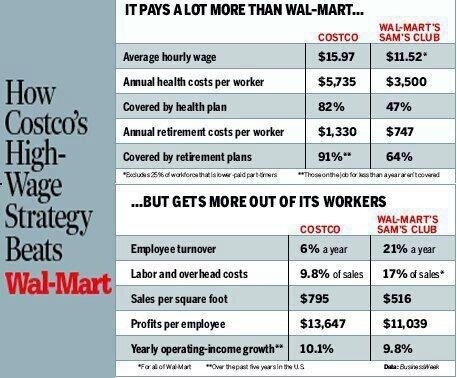
I have written extensively on wage history and the case for a living wage, wealth distribution in America, our global business competitiveness, the dangers of our growing wealth inequality, and many other issues effecting middle and working class Americans, including and post on class warfare.
In a Labor Day message from former Secretary of Labor, Robert Reich, he, ” breaks down what it’ll take for workers to get a fair share in this economy — including big, profitable corporations like McDonald’s and Walmart to pony up and finally pay fair wages.
There is a petition that you can sign if you click on the above link. Please consider it your Labor Day obligation to those who struggled and even died to give you the benefits we still have today.
Helen Thomas – R.I.P.
A wonderful person and a journalist of historic significance
It is sad to read of Helen Thomas’ passing. She lead an exemplary life as a journalist and a woman. She has had a very positive impact on journalism. The nation’s history during her time with us is a bit more honest and open because of her. She asked the tough questions that her male colleagues didn’t think or dare to ask. Presidents were forced to anticipate her questions when planning what to say. Which Washington pool reporter today has that impact on the White House?
Ms. Thomas would find it a fitting tribute if in reviewing her life, career, and her impeachable integrity as a journalist, that we use her example to deepen our examination of journalism as it is practiced today. This is especially opportune at a time when whistle blowers are pursued as traitors, telephones at news agencies are bugged and journalists turn on their own for printing what every American has a right to know about what government is doing. I hope some of the young journalists coming up today will take some lessons from Helen Thomas and show the courage that she displayed over her career. And I hope that news organizations find the courage to challenge their corporate over lords and empower journalists to uncover what is true and important for the rest of us know.
On a more personal note, while I never met Ms. Thomas, she was very kind and welcoming to two young journalists in my familly when they first arrived in Washington. She was, and remains an inspiration for many. Knowing how much I admired her my family gave me a copy of her book, “Watchdogs of Democracy” which she very kindly signed for me. Thank you, Helen.
 Data Driven Viewpoints