Home » Uncategorized (Page 5)
Category Archives: Uncategorized
Let’s Elect.. The Democratic Party Platform!
I decided it would be a good thing to draft a condensed version of the Democratic Party Platform. I reasoned that a concise version of the document would benefit people who don’t have time to sit down and read it all, and it might help us keep Democrats accountable to what they say the stand for in the Platform. I didn’t realize what a daunting task it would be, or how little time I had to finish the job.
What I learned while doing this is that this is a pretty good document. If achieved, it would significantly improve the lives of most Americans. It doesn’t address Democratic Party reform issues or primary voting reforms, but it does lay out a decent course of actions that most of us can rally behind. More importantly, it gives activist citizens a template by which we can judge the performance of Democratic office holders, including Hillary Clinton if she doesn’t loose.
So while I am still upset with the DNC, the establishment Democrats and Hillary for fixing the primary against all others, including Bernie Sanders specifically, I think I can in good conscious vote for the Democratic Party Platform with a self-made promise to hold Hillary and every other Democrat to task in carrying out the Party Platform.
So without further delay, here is the incomplete, condensed version of the Democratic Party Platform:
2016 Democratic Platform (condensed version)
Democrats believe cooperation is better than conflict, unity is better than division, empowerment is better than resentment, and bridges are better than walls. We are stronger together.
Today’s extreme level of income and wealth inequality makes our economy weaker, our communities poorer, and our politics poisonous. We need an economy that works for everyone. We can have more economic fairness, so the rewards are shared broadly, not just with those at the top. An economy that:
- prioritizes long-term investment over short-term profit-seeking,
- rewards the common interest over self-interest
- promotes innovation and entrepreneurship
- guarantees equal pay for women.. particularly women of color
- protects every American’s right to retire with dignity
- [create] jobs and security that come from [transitioning to] clean energy
- incentivize companies to share profits with their employees on top of wages and pay increases
Race still plays a significant role in determining who gets ahead in America and who gets left behind. We must face that reality and we must fix it.
A good education is a basic right of all Americans. We will end the school-to-prison pipeline and build a cradle-to-college pipeline instead.
Greed, recklessness, and illegal behavior on Wall Street must be brought to an end. Wall Street must never again be allowed to threaten families and businesses on Main Street.
Democrats protect citizens’ right to vote, while stopping corporations’ outsized influence in elections. We will:
- end the broken campaign finance system
- overturn the disastrous Citizens United
- restore the the Voting Rights Act
- return control of our elections to the American people
Climate change poses a real and urgent threat to our economy, our national security, and our children’s health and futures.
The United States can mobilize common action on a truly global scale, to take on the challenges that transcend borders, from international terrorism to climate change to health pandemics. We are stronger and safer when America brings the world together and leads with principle and purpose [and] strengthen our alliances. We believe in the power of development and diplomacy. Our military should be the best-trained, best-equipped fighting force in the world.
We must honor and support our veterans.
We respect differences of perspective and belief, and pledge to work together to move this country forward [and] strive to reach higher ground. We are proud of our heritage as a nation of immigrants.
We believe in protecting civil liberties and guaranteeing civil rights and voting rights, women’s rights and workers’ rights, LGBT rights, and rights for people with disabilities.
support workers through higher wages, workplace protections, policies to balance work and family, and other investments will help rebuild the middle class
Raising Workers’ to a living wage… at least $15 an hour [and]… and index it [to inflation]. [Establish] one fair wage for all workers by ending the sub-minimum wage for tipped workers and people with disabilities.
Support a model to leverage federal dollars to support employers who provide their workers with a living wage, good benefits, and the opportunity to form a union without reprisal.
Have the right to form or join a union – give all Americans the ability to join a union regardless of where they work, and create new ways for workers to have power in the economy and to:
- make it easier for workers, public and private, to exercise their right to organize and join unions
- direct the National Labor Relations Board to certify a union if a simple majority of eligible workers sign valid authorization cards
- bring companies to the negotiating table
- support binding arbitration to help workers who have voted to join a union reach a first contract.
[We will oppose] “right to work” laws are wrong for workers [and] vigorously oppose laws [or] efforts that:
- eliminate dues check-off procedures
- roll-back prevailing wage standards
- abolish fair share requirements
- restrict the use of voluntary membership payments for political purposes
- attack seniority
- restrict due process protections
- require annual recertification efforts
- legislation and lawsuits that would strike down laws protecting the rights of teachers and other public employees
We will support efforts to limit the use of forced arbitration clauses in employment and service contracts, which unfairly strip consumers, workers, students, retirees, and investors of their right to their day in court.
Make sure that the United States enacts national paid family and medical .. that provide[s] at least 12 weeks of paid leave to care for a new child or address a personal or family member’s serious health issue. [Establish a] workers the right to earn at least seven days of paid sick leave [and] encourage employers to provide paid vacation.
We must help family caregivers.. to ensure family caregivers have the support, respite care, and training they need to support their loved ones. We will [do this by]:
- creating a strong stable paid caregiving workforce by raising wages
- improving access to training
- giving workers the opportunity to come together to make their voices heard
- address[ing] conditions that make it hard for workers with unpredictable or inflexible schedules to meet caregiving responsibilities.
We will take steps to:
- expand and strengthen the home care workforce
- increase investments to make quality childcare more affordable
- boost wages for childcare workers, and
- support the millions of people paying for, coordinating, or providing care for aging relatives or those with disabilities
We will preserve and increase the supply of affordable rental housing and:
- substantially increase funding for the National Housing Trust Fund to construct, preserve, and rehabilitate millions of affordable housing rental units
- provide more federal resources to the people struggling most with unaffordable housing: low-income families, people with disabilities, veterans, and the elderly
We will address the lingering effects of the foreclosure crisis through [expanding] programs like the federal Neighborhood Stabilization Program. We will expand programs to
- prevent displacement of existing residents, especially in communities of color
- create affordable and workforce housing
- preserve neighborhood-serving nonprofit organizations and small businesses
- reinvigorate housing production programs
- repair public housing
- increase funding for the housing choice voucher program and other rental assistance programs
- [provide] robust funding to end homelessness through targeted investments to provide the necessary outreach, social services, and housing options for all populations experiencing homelessness.
- engage in a stronger, more coordinated, and better funded partnership among federal, state, and local governments to end chronic homelessness
- build on and expand initiatives to end veteran and family homelessness
- support more first-time homebuyers preserve the 30-year fixed rate mortgage
- modernizing credit scoring
- clarify lending rules
- expand access to housing counseling
- defend and strengthening the Fair Housing Act
- ensure that regulators have the clear direction, resources, and authority to enforce those rules effectively.
- prevent predatory lending by defending the Consumer Financial Protection Bureau (CFPB).
Social Security
- fight every effort to cut, privatize, or weaken Social Security, including attempts to raise the retirement age, diminish benefits by cutting cost-of-living adjustments, or reducing earned benefits. expand Social Security.
- cost-of- living adjustments may not reflect the spending patterns of seniors. We are committed to exploring alternatives that could better serve seniors.
- make sure Social Security’s guaranteed benefits continue by taxing some of the income of people above $250,000.
Retirement
- defend the right of workers to collect their defined benefit pensions and make sure workers get priority and protection when pension plans are in distress.
- enact legislation to make sure that the earned pension benefits of Americans will not be cut
- pay for it by closing tax loopholes that benefit millionaires and billionaires
- fight attempt to roll back the Conflict of Interest Rule which requires that retirement advisors put the best interests of their clients above their own financial gain
- support the Older Americans Act.
US Postal Service
- eliminating the unsustainable mandate to “pre-fund” retiree health costs.
- restore service to appropriate levels, including overnight delivery of first-class mail and periodicals within the same metropolitan area,
- maintaining six-day and door-to-door delivery
- expanding postal services [to include] basic financial services such as paycheck cashing
- vote-by-mail to increase voter participation
Create Good-Paying Jobs
Build a full-employment economy, where everyone has a job that pays enough to raise a family and live in dignity:
- rebuild our crumbling infrastructure.. expanding our roads, bridges, public transit, airports, and passenger and freight rail lines
- build 21st century energy and water systems.. modernizing drinking and wastewater systems
- modernize our schools
- support the expansion of high-speed broadband networks
- protect communities from the impact of climate change
- address the backlog of deferred maintenance in our four key public land management agencies
- create an independent, national infrastructure bank
- support the interest tax exemption on municipal bonds..make permanent [a] version of Build America Bonds
- revitalize hard-hit manufacturing communities
- claw back tax breaks for companies that ship jobs overseas
- defend the Export-Import Bank
- investing in industrial energy efficiency
Science, Research, Education, and Technology
- educate our people and train our workforce; support entrepreneurship
- invest in research and development, innovation hubs, as well as in getting ideas to market
- [provide opportunities for all students] opportunity to learn computer science by the time they graduate from high school.
- High-speed internet connectivity is not a luxury; it is a necessity
- connect every household in America to high-speed broadband
- increase internet adoption
- hook up anchor institutions so they can offer free WiFi to the public.
- take action to widely deploy 5G technology
- support a free and open internet at home and abroad
- oppose any effort to roll back the historic net neutrality
- protect the intellectual property rights of artists, creators, and inventors at home and abroad
- increase access to global markets for American intellectual property and other digital trade by opposing quotas, discriminatory measures, and data localization requirements
- strengthen support for NASA and work in partnership with the international scientific community to launch new missions to space
Small Businesses
- cut the red tape that holds back small businesses and entrepreneurs
- open up access to credit
- provide tax relief and tax simplification
- expand access to new markets
- make Wall Street work for the job-creating, productive economy—including by making loans more affordable for small- and medium-sized businesses
Jobs for America’s Young
- make investments to spur the creation of millions of jobs for our young people
- provide direct federal funding for a range of local programs that will put young people to work and create new career opportunities
Fight for Economic Fairness and Against Inequality
Reining in Wall Street and Fixing our Financial System
- prohibit Wall Street from picking and choosing which credit agency will rate its products
- [prohibit Wall Street] from imposing excessive fees on consumers
- hold both individuals and corporations accountable when they break the law
- stronger criminal laws and civil penalties for Wall Street criminals who prey on the public trust
- extend the statute of limitations for prosecuting major financial fraud
- providing the Department of Justice, the Securities and Exchange Commission, and the Commodity Futures Trading Commission more resources to prosecute wrongdoing
- vigorously implement, enforce, and build on President Obama’s landmark Dodd-Frank financial reform law
- stop efforts to hamstring our regulators through budget cuts
- oppose any efforts to change the CFPB’s structure from a single director to a partisan[or] to remove the Bureau’s independent funding and subject it to the appropriations process
- [enact] a financial transactions tax on Wall Street to curb excessive speculation and high-frequency trading
- use and expand existing authorities [and]empower regulators to downsize or break apart financial institutions when necessary
- new authorities to go after risky shadow-banking
- support.. an updated and modernized version of Glass-Steagall
- nominate and appoint regulators and officials who are not beholden to the industries they regulate
- crack down on the revolving door between the private sector—particularly Wall Street—and the federal government.
- ban golden parachutes for those taking government jobs
- limit conflicts of interest by requiring bank and corporate regulators to recuse themselves from official work on particular matters that would directly benefit their former employers
- bar financial service regulators from lobbying their former colleagues for at least two years
- [make] the Federal Reserve more representative of America as a whole
- enhance its independence by ensuring that executives of financial institutions are not allowed to serve on the boards of regional Federal Reserve banks or to select members of those boards
Stop Corporate Concentration
- stop corporate concentration in any industry where it is unfairly limiting competition
- make competition policy and antitrust stronger and more responsive to our economy today
- enhance antitrust enforcement [at] the Department of Justice (DOJ) and the Federal Trade Commission (FTC)
- encourage other agencies to police anti-competitive practices in their areas of jurisdiction
Making the Wealthy Pay Their Fair Share of Taxes
- claw back tax breaks for companies that ship jobs overseas
- eliminate tax breaks for big oil and gas companies
- crack down on inversions and other methods companies use to dodge their tax responsibilities
- make sure that our tax code rewards businesses that make investments and provide good-paying jobs here in the United States
- end deferrals so that American corporations pay United States taxes immediately on foreign profits and can no longer escape paying their fair share of U.S. taxes by stashing profits abroad.
- establish a multimillionaire surtax to ensure millionaires and billionaires pay their fair share
- close egregious loopholes
- restore fair taxation on multimillion dollar estates
- tax relief to middle-class families
- crack down on tax evasion and promote transparency to fight corruption and terrorism
- tax relief to hard working, middle-class families
Promoting Trade That is Fair and Benefits American Workers
- develop trade policies that support jobs in America
- review agreements negotiated years ago to update them to reflect [Democratic Party] principles.
- Any future trade agreements must make sure our trading partners cannot undercut American workers by taking shortcuts on labor policy or the environment.
- [trade agreements] must not undermine democratic decision-making through special privileges
- [trade agreements] must not undermine democratic decision-making private courts for corporations
- trade negotiations must be transparent and inclusive
- use all our trade enforcement tools to hold China and other trading partners accountable
- These are the standards Democrats believe must be applied to all trade agreements, including the Trans-Pacific Partnership (TPP)
Bring Americans Together and Remove Barriers to Opportunities
Ending Systemic Racism
- dismantle the structures that define lasting racial, economic, political, and social inequity
- promote racial justice through fair, just, and equitable governing of all public-serving institutions and in the formation of public policy
- remove the Confederate battle flag from public
- make it clear that black lives matter and that there is no place for racism in our country.
Closing the Racial Wealth Gap
- close this racial wealth gap
- eliminat[e] systemic barriers to wealth accumulation for different racial groups
- improv[e] opportunities for people from all racial and ethnic backgrounds to build wealth.
- remove barriers to achieving sustainable homeownership
- provide for greater diversity in federal and state contracting practices
- incentivize and expand access to retirement investment programs
- increase opportunities for quality jobs and education
- challenge the deeply rooted structures that perpetuate and exacerbate current disparities and ultimately stagnate the nation’s economic growth and security
Reforming our Criminal Justice System
Democrats are committed to reforming our criminal justice system and ending mass incarceration. Something is profoundly wrong when almost a quarter of the world’s prison population is in the United States, even though our country has less than five percent of the world’s population. We will reform mandatory minimum sentences and close private prisons and detention centers. Research and evidence, rather than slogans and sound bites, must guide [reforms].
(PS: Notice that the person whose name is plastered everywhere is not mentioned here. What a relief, right?)
Gov. Chris Christie’s “Fairness Formula” to Fund Public Education.
The following is my letter to the Star-Ledger Editor sent August 24, 2016. Governor Chris Christie has been pushing a plan to reduce the state’s educational funding to distressed school districts and increase funding to more affluent districts. He calls this his “Fairness Formula”. Each student in New Jersey would get the exact same amount of state aid, $6,599. The rest of the per/pupil cost, nearly $19,000 in this state, would have to come from local property taxes. Here is my response to his recent comments:
Dear Starledger Editor:
“The day of reckoning has come,” Gov. Christie says. He thinks it’s time that wasteful urban schools and poor districts pulled their own weight. He wants them to pay the full cost to educate their kids from property tax revenue. His one size fits all state aid plan will bring tax relief to wealthy (mostly Republican) suburbia. Here’s what he doesn’t say:
- · The 10 largest urban districts and 10 wealthiest school districts have virtually the same per pupil costs ($20.0k vs. $20.5k by my calculations)
- · The average median income in these 10 urban districts is around $45,000 vs. $159,000 in the wealthiest districts
- · More money is spent in urban districts on remediation to overcome the impact of poverty; while more money is spent in wealthy districts on advanced educational programs and high end sports
- · Property taxes are based on home values, which are 4.7 times higher in the wealthiest districts
- · Even with little state aid to offset costs, the average property tax rate in the wealthiest districts is 67% lower than in the largest urban districts
Instead of proposing a flat state aid rate per child Governor Christie should be proposing a flat property tax rate collected by each county and distributed according to need. As regressive as a flat tax is it would still be less regressive than what we have now.
Brian T Lynch, MSW
(for more detail on my analysis, go to:
| Rich School, Poor School and Distributive Justice in New Jersey |
No Bias in Police Shootings? NYTimes gets it wrong.
by Brian T. Lynch, MSW
Recently, a single researcher found no racial disparity in the “extreme use of force-officer involved shootings” in Huston, Texas, based on that police departments self-reporting of incidents in which officials believe a police shooting was justified. Roland G. Fryer, Jr., the researcher, admits his data set is not “ideal”.
Incredibly, police in the United States are not required to file any uniform reports when their actions result in civilian fatalities. The FBI compiles voluntary reports of “justifiable police homicides” but the most agencies don’t participate. With no uniform reporting a detailed analysis of a single department has limited value. You can’t conclude much from this study and you certainly can’t generalize the findings nationally. But that is exactly what the New York Times did.
In an article published today, July 11, 2016, the Times headline reads, “Surprising New Evidence Shows Bias in Police Use of Force but Not in Shootings.” The article goes on to say the findings, “contradicts the mental image of police shooting that many Americans hold…”
The more robust and pertinent question is whether there is a pattern of racial disparity in all civilian deaths that result from police actions. When reports of civilian deaths are compiled from local news accounts the answer is yes. The bias is stricking nearly everywhere.
I was among the first to analyse these local news reports data last April. In a region-by-region and state-by-state analysis there was clear evidence of a racial disparity in police involved civilian deaths. (See http://aseyeseesit.blogspot.com/2015/04/new-data-exposes-racial-bias-in-fatal.html)
The grossly over-generalized reporting on the Fryer study by the New York Times isn’t worthy of their reputation.
THE SPEECH BERNIE WAS NOT ALLOWED TO GIVE
All presidential candidates were invited to address this year’s AIPAC convention in Washington, D.C. Because of a previously scheduled event, Bernie Sanders offered to send a pre-recorded me…
Why Bernie Sanders Must Fight for a Contested Convention
An Open Letter to Rachel Maddow in Response to Her May 2nd Segment on Why Bernie Should Bow Out of the Race.

Pictures of self-organized “movement” events supporting anti-establishment Bernie Sanders,
by Brian T. Lynch, MSW
Dear Dr. Maddow,
I’m a fan of yours, but I join those writing in opposition to your arguments against Bernie’s ideas of a contested Democratic Convention. The rules are set up to allow for this type of contested convention. Whether or not a trailing candidate for the Democratic nomination chooses to bring their fight to the floor has always been predicated on exigent circumstances of the times, not just institutional courteous or party loyalty.
In prior presidential party contests opposing, or insurgent candidates have fought for the support of their party with the goal of everyone unifying behind the candidate generating the most excitement with the best chance of winning against the other party candidate. In my 60 years these have always been intra-party contests, but these are different times. Party reformation has never played as large a roll as it does now.
This years election is a referendum on establishment politics itself. The pundits in both parties still fail to grasp this obvious fact.
The Republican Party is starting to wake up. Their primary season has been an expensive disaster. Their tuberous outcropping of so many weak presidential candidates, all casting about for a winning message, was an obvious sign that the GOP itself is in critical condition. The establishment elites of that party have abused their privileged status for years. They have made too many cynical promises to voters, promises they never intended to keep, They applied deceptive marketing to arouse their base and garner favor with an electorate that they secretly despise. Once in office, they cynically sold themselves to big business and big money interests while tossing crumbs to the people who elected them.
Donald Trump is the toxic chemotherapy that party needs to kill the cancerous grip big organized money has on the Republican establishment. The message couldn’t be any clearer. The Republican establishment has to go. The Trump candidacy, whether Trump wins or loses, will sweep many other establishment candidates out of office.
The Democratic Party suffers from the same disease as the Republican Party, but at an earlier stage. Party elites are caught in the death grip of powerful private interests. The will of their constituents have become secondary. Dwindling turnout over the past decade has been ignored as long as slick marketing techniques were still winning election.
But elections are not all about winning, they are ultimately about governing.
Money in the Democratic Party isn’t just a necessary evil anymore. It is now a growing tumor. The people who really hear what Bernie Sanders is saying recognize that he is proposing a cure that might prevent this cancer from metastasizing. Meanwhile the establishment media still thinks this election is only about a fight for progressive ideas.
Given the state of the two parties, a Sanders win would be a foregone conclusion. All the polls say as much, yet this is message isn’t seeping into the consciousness of the establishment. The Democratic Party is eager to put Hillary’s negatives up against Trump’s negatives any day, in yet another hold-your-nose-and-vote election.
And, they would be right if this election was only based on ideology. But it isn’t. It is a referendum on our political establishment. Not only will Hillary Clinton have disadvantages related to her high unfavorability, she will not win the support of youthful “movement” Democrats or disgruntled independents.
If the race is between Clinton and Trump it will be a race between an establishment and a non-establishment candidate. Given the anger and level of dissatisfaction around the country, all bets should be off as to how that contest might turn out.
On the Passing of Justice Scalia
by Brian T. Lynch, MSW
This is my sense of what just happened and my prediction of how history will view this moment. (It is also my shortest blog post ever.)

My deepest sympathies for the Scalia family, his friends and closest colleagues.
Bernie vs. Hillary – The Clearest Distinction in a Generations

Part I, The Progressive Era
by Brian T. Lynch, MSW
The distinction between Democratic presidential candidates Bernie Sanders and Hillary Clinton couldn’t be sharper. If this doesn’t seem obvious, it is because Beltway media coverage of the candidates obscures more than reveals. Financial considerations of the for-profit news media creates short time horizons and shallow perspectives. The historical context of current events is often lost. To clearly see how different our choices are between these two Democratic Party candidates we need a little more information.
The two biggest areas of contrast between Bernie Sanders and Hillary Clinton are centered around two words that are very much in the public debate. These words are, “progressive” and “electability.” This essay is broken into two parts, each dedicated to these significant differences.
The Progressive Era
The term “progressive” as it relates to politics is not as vague a term as current usage suggests. The “Progressive Movement” was an historical development leading to a particular political philosophy. Born out of the Gilded Age, it held that the irresponsible actions of the rich were a corrupting influence on public and private life in America. It’s most influential period was between 1900 and 1920, although its influence continued throughout the 20th century. Progressivism was both a political and a social movement. It held that advances in science, technology, economics, and social organization could improve the conditions in which most citizens live, and that government had a role to play in promoting these advances.
Progressivism was a rejection of Social Darwinism (arguably a forerunner of Aya Rand’s Objectivism). It was a reform movement with goals considered radical in their time. Progressives sought to curb the power of big business and US corporations. It brought about laws to regulate fair commerce and break up monopolies. It fought to eliminate bribery and corruption in politics and to bring about political reforms. It fought against the extreme social injustice and inequality of that time, including opposition to child labor, widespread illiteracy, and horrible working and living conditions. It sought to improve lifestyles and living condition of all Americans and to establish health and safety standards both in the workplace and the communities where people lived. The progressive movement was also for the conservation and protection of our natural resources.
Among the activists in the movement were people such as Thomas Nast, Upton Sinclair, Charlotte Perkins Gilman, Eugene Debs, Jane Addams, who founded Hull House and pioneered the field of social work, Booker T Washington, W. E. B. DuBose and many more. They and the muckrakers of the day found a sympathetic ear in Theodore Roosevelt, a Republican President. This is an important point as Progressivism was a sweeping and transformational movement supported by candidates in both political parties. The Progressive Movement ushered in the modern, middle-class oriented society we enjoy today.
Rise of Conservative Movement
Fast-forwarding for the sake of brevity skips a lot of important history, but it is fair to say that a strain of Progressive Movement philosophy has been baked into our political DNA. It remains most prominent in the Democratic party while largely disappearing from the establishment wing of the GOP. It’s disappearance is roughly correlated with the rise of our current income inequality and the growing power of the super rich. But a progressive element within the GOP is still not entirely absent even in conservative voters as evidenced by the continuing popularity of Medicare and Social Security among Tea Party Republicans.
On the Democratic side, the progressive vein of the party suffered though a crushing political loss with the landslide victory of Richard Nixon over George McGovern in 1972, followed a decade later by the rise of the conservative movement capped by the landslide election of Ronald Reagan in 1980.
President Reagan’s election marked the beginning of a successful and synergistic partnership between the Republican Party and private corporate wealth. This partnership began a decade earlier with the conscious decision to create ideologically conservative public media platforms and apply modern business marketing techniques to promote conservative causes, including a successful anti-union marketing campaign that turned workers against unions. The power of organized labor was also challenged by newly organized industry advocacy groups. These industry trade groups gave rise to the powerful corporate lobbies we have today. Among the early successes of industry trade groups was a law that created political action committees, or PAC’s where corporations were able to provide substantial campaign contributions to political candidates of their choosing, and their candidates were all conservative and mostly Republican. The influx of money, the marketing prowess and the organizing clout of this marriage between the GOP and big business overwhelmed the Democratic Party. The effectiveness of massively coordinated conservative messaging cannot be overstated. It began the shift of America’s political center to the right. The power of this massively coordinated messaging, rather than the strength of conservative ideas, continues to power this rightward movement of our electoral center today.
DLC Transforms The Democratic Party
To many Democrats it was clear that the Party had to change strategy. Progressive causes were no longer winning elections. The diagnosis, unfortunately, was that the progressive agenda was the problem rather than copious amounts of corporate money, more effective marketing techniques, and the rise of conservative funded media outlets with their focus group tested propaganda.
A Democratic political operative name Al From believed that economic populism was no longer politically viable. He founded an organization named the Democratic Leadership Council (DLC) to move the Democratic Party away from progressive and socialist influences. The DLC sought more conservative alternatives that could appeal to the rightward shifting center of the American electorate. This required a willingness to compromise progressive values and embrace some conservative ideas. It was a strategy that triangulated politicians and the political party base on both the right and the left to win broad appeal for more “centrist” proposals. It also meant shifting Democratic Party allegiance towards big business interests and away from the poor and working classes. (The impact that this shifting focus had on the Democratic electorate will be explored more in Part 2).
More and more Democrats joined the DLS and adopted its ideas, which became known as the Third Way. It’s adherents became known as New Democrats. Their willingness to compromise and pass corporate friendly legislation, in combination with corporate lobbying, brought in the donation needed to fund successful campaigns. The crowning success of the New Democrats was the popular election of their candidate, President Bill Clinton. From then till now Democratic Party has hitched a ride on the shifting center of the American electorate. The DLC’s New Democrats became the establishment wing of the party.
Under Bill Clinton the New Democrats schemed and compromised their way with Republicans to pass a mixed bag of legislation, from a progressive stand point. Clinton got passed a the Family and Medical Leave Act, welfare reform legislation, legislation to deregulate banks and insurance companies so they can compete with investment banks, to list a few accomplishments. The DLC’s had to push ever further to the right to follow the shifting electoral center, but it was winning elections again. To better compete with GOP success, the Democratic party began adopting Republican style marketing strategies and ever closer ties to big corporate donors. Still, the electorate slide to the right continued. The Party was locked into a strategy that kept Democratic candidate competitive but left no room to challenge the conservative movement or corporate media more broadly. There was always the danger that directly confronting the right wing conservatives would dry up the corporate donation that Democratic candidates came to rely on.
It’s work on transforming the Democratic Party done, the DLC dissolved in early 2011, and on July 5 of that year, DLC founder Al From announced on the organization’s website its historical records had been purchased by the Clinton Foundation. The DLC had become the Democratic Party establishment.
Democratic Establishment Today
Today, New Democrats are simply called Democrats. They still claim the title of progressives, but it is a more relative term today. Those most closely associated with the former DLC, however, hold important policy positions that are considerably more conservative than before the DLC was founded. For example, former DLC activist oppose single-payer universal healthcare. They are more hawkish. They supported the Iraq War and are in favor of stronger military interventions in areas of active conflict. They are in favor of charter schools and “No Child Left Behind”. They are more aligned with Wall Street and market-based solutions to economic problems. They support free-trade agreements including NAFTA, and now the Trans-Pacific Partnership Agreement (TPP). They continue to fear that economic populism is not politically viable and while they have come late to addressing income and wealth inequality, their are less aggressive in their approach
This is the current state of the Democratic Party establishment, of which Hillary Clinton is the heir apparent. If she doesn’t see that she is an establishment Democrat, it is because a true progressive alternative has not presented itself in a long time. Today’s Democratic Party is progressive in name only. Hillary Clinton revealed more than she realized when she recently said some call her a centrist and she is proud to wear that label. Capturing the electoral center remains at the heart of her campaign strategy.
What she and other establishment Democrats haven’t realized is that they have chased the electoral political center far to the right of actual political sensibilities of most ordinary citizens. For decades Democratic and independent voters have given up on the electoral process. They are not among the likely voters the Party targets to win elections. And the Party has stopped listening to the families they represent. They haven’t notice just how rigged the economy has become. They have stopped talking about the poor and the term “working class” has disappeared from the Party’s vocabulary. They compete instead, with Republicans on the issues of the GOP’s own choosing while conservative operatives successfully frame every debate to benefit wealthy donors. Establishment Democrats have not stopped to notice just how painful the nearly 40 year decline in wages has been for the middle-class .
The Contrast
Bernie Sanders, on the other hand, has never stopped listening to the people or noticing what is happening to poor and middle class Americans. He retained his progressive values as an independent representative from Vermont. His record on this is clear. He continues to to promote progressive values and even retains the “socialist” tag that became associated with progressive philosophy in the 1960’s. When Hillary Clinton challenged him in the recent debate by asking what made him the gatekeeper of who is a progressive, Bernie couldn’t reduce his answer to a pithy sound byte. The question is breathtaking for those familiar with the transformation of the Democratic Party over the decades. There are very few champions of true progressives left in politics today. How could anyone answer her in question in a short few words? It requires too much context because so much of the history of the Party has been lost. But once the context is understood, the stark contrast between Clinton and Sanders is between:
1. A candidate who will continue to ride the electoral center wave to the right in exchange for small but more certain gains that improve our lives, or
2. A candidate who awakens the vast number of disaffected voters to challenge right-wing ideology directly, sweep conservatives from office and make way for bold ideas that will greatly benefit most people.
A Good Day for American Deplomacy
by Brian T. Lynch, MSW
Diplomats are our solders for peace. They should be treated like the great patriots and heroes that they are. For too long they have been put on the shelf or forgotten. President Obama set them to work again for America, for all of us.
Today Iran released the American journalists and others that it held hostage in Iran for months. And now the NY Times says Iran has dismantled major parts of its nuclear program, paving the way for sanctions to be lifted. The UN Nuclear Agency is reporting that Iran has met all of its commitments in the Landmark nuclear deal with six world powers. This appears to be a major triumph of American diplomacy and for world deplomacy. Let’s celebrate and see who cares to joins in the celebration!!!
Sowell on What Makes Poor Folks Poor – Liberal Racism and Inferior Culture
by Brian T. Lynch, MSW
Thomas Sowell is a conservative “scholar” at the Hoover Institute and author of a new book, Intellectuals and Race. I haven’t read his book yet, but I did watch Sowell’s interview with Peter Robinson of the Wall Street Journal. I found Thomas Sowell’s interview disturbing in that it seems to boil down to an old conservative argument that the poor have no one to blame but themselves and the liberals who made them helpless. You can watch his WSJ interview on You Tube.
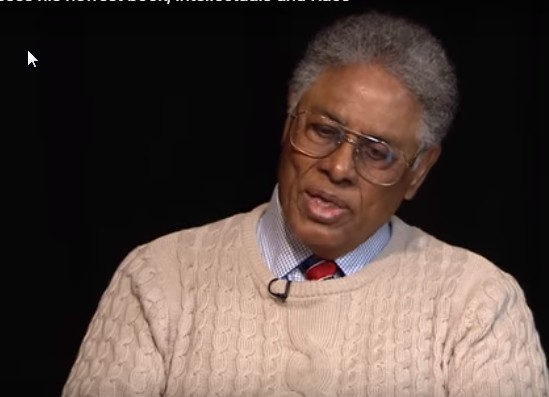
https://www.youtube.com/watch?v=H6ImP-gJvas
Several points stand out in Sowell’s arguments on the negative impact that ” liberal/progressive” intellectuals have had on our attitudes towards race vs. racism. First, he conflates liberalism with progressivism. These are two separate dynamics in their scholarly meaning. The opposite of progressive is conservative, but the opposite of liberal, in its classical meaning, is totalitarian. Within the actual social context of these two dynamics it is entirely possible to hold both liberal and conservative policy positions or progressive and totalitarian positions. For example, it would not have seemed inconsistent during the Progressive Era, in the early twentieth-century, to be for union rights but opposed to woman’s suffrage, Progressives then were not as liberal as most progressives are today. By treating these terms interchangeably, in their current colloquial sense, he maligns the liberal movement that seeks to empower today’s poor or marginalized people and make America more inclusive.
Secondly, he seems to conflate race with culture. These are also separate elements of sociology. The former is a largely subjective classification system based on superficial physical attributes associated with continent of origin. The latter is a complex set of rituals, customs, values, norms and shared history by loosely associated clans or social groups. There are as many different cultures within each race as there are among the races, even just within North America. Generalizations based on race as a culture are inherently flawed.
Thirdly, when distinguishing this amalgam of race based culture from “racism” he incorrectly identifies racism as primarily perceptual in nature. His concept of racism doesn’t incorporate the many physical racist acts that socially marginalized people endure every day. These foundational fallacies allow Sowell to make his larger points, the same ones often raised by other conservative thinkers. The first is that there are, and have always been, better and more adaptable cultures in the world. This is an accurate statement but he leaves it there, as if it were an immutable law. He offers no hint as to why this is so. He fails to mention our human capacity to alter social institutions in ways that improve the outcomes of individuals from variant cultures.
The other major point he raises is that marginalized people allow themselves to be defined by the racist perceptions against them by others. The “others”, he argues in his example, are liberal intellectuals, especially during the “progressive era”, who blamed the economic plight of African-Americans (among other groups) on broad social factors and government policies, rather than on the their mal-adaptive culture. This shift in the causal roots of their less successful living standards, according to Sowell, absolves the marginalized from responsibility for their own self-improvement and causes them to see themselves as helpless victims of a society organized against them.
The explicit argument here is that every person has within themselves the power to rise above all obstacles and prejudices set against them. It is the familiar argument of taking personal responsibility as the only condition for economic or personal success. The proof offered (as is so often the case) is the personal experiences of the writer and anecdotal examples of other success stories. The obvious logical fallacy is that these exceptions prove that everyone else can do what these few have done. Unfavorable social conditions are only controlling factors if individuals allow it to be so. The failing is theirs. It is their own fault. It is a weakness in their character or collective culture.
The empirical truth is that for the vast majority of those who are subjected to social or institutional discrimination, their chances for success in life are seriously harmed. All the physical racist acts they suffer cause immeasurable personal damage and have an accumulating effect on them as individuals. That there are rare exceptions who become successful doesn’t prove that the majority of marginalized people are flawed individuals. In fact, it proves the opposite, that the infrequency of exceptions is a measure of the extent of the damage discrimination causes.
If equal opportunity can’t produce equal personal outcomes under the best of circumstances, as most would agree, then why would unequal opportunity offer the same chances of success? And if policy can benefit one group of individuals (as is certainly true), why is it an individual’s personal failing when policy choices disadvanges then. It makes no sense.
Poisoning the Postal Service
by Brian T. Lynch, MSW
Article 1, Sec.8, Clause 7: [The federal government] is to provide for naturalization, standards of weights and measures, post offices and roads, and patents.
Citizen access to personal or business communications, and an adequate means to distribute goods and communications from anyone to everyone were central concerns of the founding fathers. They understood that healthy commerce and a free and healthy democracy require every citizen to have access to these vital services. It was an article of faith that the states would mostly provide these services for their own citizens, but it may have been less clear whether competition between states would restrict communications or transportation between states. This outcome would weaken us as a nation, and threaten democracy in our Republic. So the founders made it explicit in our Constitution that the federal government would provide for post offices and roads.
If you need a reminder of just how the US Postal Service makes America great, read the great Op Ed piece in today’s New York Times written by a Turkish immigrant. Zeynep Tufekci wrote:
“I WAS transported recently to a place that is as enchanting to me as any winter wonderland: my local post office.
In line, I thought fondly of the year I came to this country from Turkey as an adult and discovered the magic of reliable mail service. Dependable infrastructure is magical not simply because it works, but also because it allows innovation to thrive, including much of the Internet-based economy that has grown in the past decade. “
Today, the great national infrastructure we call the US Postal Service, which delivers mail to every citizen, without regard to what it cost to deliver mail to citizens living in remote regions, is under attack by commercial interest lobbyists. Capitalists don’t want the US Postal Service competing with UPS or FedEx or Amazon’s delivery services. Government competition, they argue, reduces potential corporate profits.
Wealthy corporate owners are intent on killing off the US Postal Service. Their methods are to funnel campaign cash to federal elected officials and encourage them to pass laws and regulations designed to impede the Postal Service operations. The US Postal service costs taxpayers zero dollars in taxes, yet the once financially viable Postal Service is made to pre-fund their retirement system. This is unprecedented in business. It causes the post office to operate in the red so politicians can point to it as a model of government inefficiency.
Politicians also appoint cronies into upper management positions to advocate draconian cuts and adopt policies that undermine employee morale and weaken customer services. In many parts of the country you can no longer call your local post office and speak directly with the post master if you have a question. When I call my local post office phone number the call is redirected to a national call center that tends to screw up the processing of even simple complaints. Still the postal system survives and most of us don’t want to see it go away.
What would mail delivery look like if the Postal Service closed? We don’t have to guess because we have many examples to learn from. The principle obligation of private corporations is to their shareholders. More specifically, it is to maximize profits. Whatever business model or corporate mission statement, shareholder profits come first in law and practice.
The impact of competition between corporations to maximize profits naturally causes them to focus more on profitable segments of their business and spend less time and resources on unprofitable segments of their business. In the package delivery business, as is true with Amtrak in the transportation business, there is a competitive advantage to reconfigure routes in ways the optimize profits. Some routes in less profitable areas become under-served while others are more than amply served. Eventually corporate executives come to see beyond competing interests to areas where mutual interests would be better served if service to certain segments could be dropped altogether, The government would then steps in to insist that service must be maintained for people living in unprofitable segments of the “market.” Private corporations then complain that government is on their backs and insist that if the government wants those citizens to have the service, government must subsidize their corporation to make up for the unprofitable routes they are forced to maintain.
So in effect, if applied to the US Postal Service, we would go from a nationwide, person to person delivery system that costs the US taxpayers nothing, to a private corporation system that would require taxpayer assistance in order to maintain the most unprofitable routes. And once the corporations start engaging in high level collusion, the cost of postal services would creep up and up.
Capitalism does best when distributing benefits based on merit, provided the rules of the market are structured to encourage honest competition. This capitalist model does not work well when distribution of benefits is based vital human needs or open, universal access. This seems to be a natural law. We need to resist the capitalists call for privatization of essential government services and recognize the US Postal Service in particular as the national treasure it really is.
 Data Driven Viewpoints