Home » Uncategorized (Page 7)
Category Archives: Uncategorized
America Workers Needs a Raise!
by Brian T. Lynch, MSW

The growing gap between the economy on Main Street and Wall Street, a declining standard of living, the shrinking middle class, the rise in the need for government subsidized supplemental income and social services for so many, the sense that our children won’t be better off than we are today, all of this has a common origin. They are all connected! They are all the result of wage stagnation (or suppression as I see it.)
In the period of just a few short years, beginning in 1973, employers stopped giving workers productivity raises. Since then, almost all the raises workers have received were merely inflation adjustments, not rewards for their growing productivity. All those rewards suddenly went to those at the top. The effects of this on the economy are compounded over time. Forty years of this nonsense has brought us most of the economic ills we experience today.
The fact that “growing the economy” no longer results in rising worker compensation has been lost on politicians in both political parties. In fact, almost every policy initiative to “grow the economy” has made matters worse. It has often meant slashing taxes for the wealthy (trickle down theory), granting tax breaks for big businesses, and creating tax loopholes for the “job creators” so they can do their thing. Well, their thing is to get substantially wealthier. Almost all new wealth has gone to the top while the wealthy hide more and more of their assets in tax havens. State and local governments can hardly manage to patch up the potholes on our streets because of the combination of tax breaks for businesses and subsidies for the expanding numbers of working poor families.
The Economic Policy Institute has released yet another report on why most of us are not feeling the love from the Wall Street economy. I have take liberties with their findings to condense them a bit so their impact is clearer.
The Economic Policy Institute has released yet another report on why most of us are not feeling the love from the Wall Street economy. I have take liberties with their findings to condense them a bit so their impact is clearer. For the full report, go to:
Understanding the Historic Divergence Between Productivity and a Typical Worker’s PayWhy It Matters and Why It’s Real
By Josh Bivens and Lawrence Mishel | September 2, 2015
Here is my summary of their summary of findings:
- From the end of World War II until the mid-70’s, inflation-adjusted hourly wages and benefits rose in step with increases in our growing hourly GDP, which measures our economy-wide productivity. This parity between wages and productivity created the middle class.
- Since around 1973, hourly compensation has not risen with productivity grown. In fact it almost stopped very abruptly. Net productivity grew 72% between 1973 and 2014 while inflation-adjusted hourly compensation for most of us rose just 8.7%.
- America’s Net productivity grew 1.33%annually between 1973 and 2014 while hourly worker compensation grew at just 0.20%. Since 2000, the gap between productivity and pay has risen even faster ( 21.6% from 2000 to 2014 vs. just 1.8 % rise in inflation-adjusted compensation).
- Since 2000, more than 80 % of the gap between a typical worker’s pay growth and overall net productivity growth has been driven by rising inequality. Between 1973 and 2014, rising inequality explains over two-thirds of the gap between productivity and worker compensation.
- If the hourly pay of typical American workers had kept pace with rising productivity since the 1970’s, there would have been no rise in income inequality during that period.
- Our rising productivity in recent decades provided the potential for substantial growth in wages for most American workers but this new wealth went instead to the riches segment of society.
- Policies to encourage wage growth must not only encourage productivity growth (the “we must grow our economy” argument) but also restore the link between economic growth wage compensation. Just growing the economy by itself doesn’t fix the economy for most working Americans.
Finally, economic evidence shows that the rising gap between productivity and pay is unrelated to the typical worker’s individual productivity, which has also been rising.
For the full report please go to: http://www.epi.org/publication/understanding-the-historic-divergence-between-productivity-and-a-typical-workers-pay-why-it-matters-and-why-its-real/?utm_source=Economic+Policy+Institute&utm_campaign=019280809d-EPI_News_09_04_159_4_2015&utm_medium=email&utm_term=0_e7c5826c50-019280809d-57319413#introduction-and-key-findings
Covering Politics For Profit Has Warped Our Democracy
by Brian T. Lynch, MSW
The corporate mainstream media loves those pithy and outlandish sound bites from politicians. They like candidates’ comments that slime other candidates running for office. They like covering candidates that say crazy things or react dramatically. And they especially like to cover politics from an insider perspective, reporting mostly on campaign strategies, internal intrigues and the scramble for resources. In short, they approach political coverage as if it were a spectator sport.
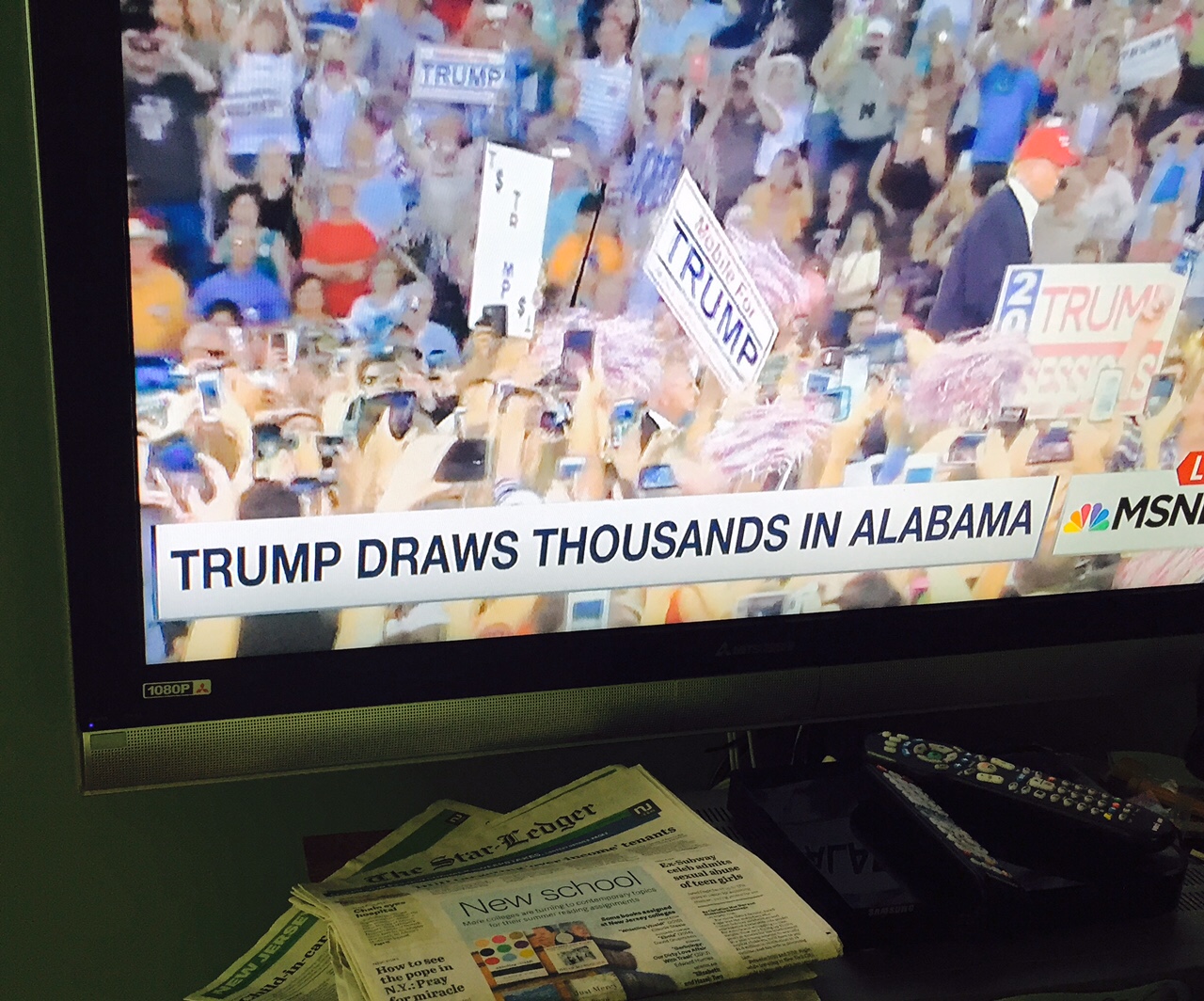
In truth, the more an electoral contest can be framed as a battle between rival personalities, the better it is for the corporate bottom line. It is also true that most TV viewers would rather be entertained than enlightened, and people who still buy newspapers often skip to the sports or lifestyle page if there is no hook in the headlines to catch their attention. Media companies blame the public for not caring about substance in political debate.
When pressed, media owners will admit their company is, after all, an advertizing business. The greater their viewership or readership, the more they can charge their business clients for advertizing. The business model is simple. Give the masses more of what they like to read or watch and you get a bigger audience for your business clients who will pay more to advertize on your network or in your publication.
Despite what they say to defend the integrity of their news organizations, corporate owned news outlets are deeply impacted by the drive to be more profitable. So they report more of what sells and less of what matters (not to mention what they might conceal on behalf of their sponsors).

There are reasons why Donald Trump’s entertaining campaign seems be working. Politics has become a gladiatorial blood sport. An election is just another cultural event where entertainers like Trump can appear as a serious contender for President. Mass media’s profit motive has turned elections into sophomoric popularity contests while our civic consciousness is systematically anesthetized by the shock and awe by which sports and culture are marketed to us every day. The corporate media both satisfies our need to be entertained while stoking our need to be entertained at the same time. It’s almost an addiction. Meanwhile trivialities have replaced real journalism in the name of profit.

In contrast, so far at least, the Bernie Sanders campaign seems to be different. He refuses to comment on Hillary’s hair style or entertain any questions that aren’t about issues of consequence to voters. He has been cast as a radical, cantankerous old socialist with far left ideas.
Despite the absence of mainstream media attention and its efforts to marginalize him, Senator Sanders managed to attracted a lot of attention from the voting public thorough the power of his ideas. It turns out that the core issues he focuses on are far more mainstream than the corporate media presence.
Many of the issues Sanders holds, such as the need to break up big banks and tax billionaires to pay for free college tuition, hurt the financial interests of the mainstream medias’ biggest corporate clients. This creates a conflict of interest for the corporate owned media. Covering the Sanders campaign on his terms forces them to report on issues that don’t serve the financial interests of their advertisers.
The Sanders campaign also poses another challenge to the corporate medias’ business model. Much of the organizational work by his campaign is organized from the bottom up. It makes extensive and creative use of free or low cost social media platforms. This means the Sanders campaign is spending less money on media buys than any other candidate except for Donald Trump, who is getting his media attention for free.
The Donald’s antics make for good television and generates revenue for the media. It would cost a fortune for the other Republican candidates to get as much the media attention as Trump gets for nothing. That’s why they are flailing about with outrageous stunts and crazy sound bites. It’s as if the corporate media is shaking them down for money and making them dance for their supper.
Senator Sanders, on the other hand, attracts even more actual voter attention than Trump without the help of the mainstream media. Major news outlets are just starting to cover the Sanders campaign as news events in order to preserve their legitimacy as news organizations.
Aside from Hillary Clinton’s negative attention for her email investigations, Sanders has become the only other candidate cutting into Donald Trump’s beneficial free advertizing. Trump is a gladiator created and sponsored by the corporate media. Sanders is a clear and powerful voice crying from the wilderness where real people live their lives with little attention paid to the daily challenges they face.
AMERICAN ELECTIONS – Democracy At Risk
by Brian T. Lynch, MSW
NOTE: I am republishing this post from prior to the 2014 Presidential election to serve as both a primer for those new to the topic of voting issues and a baseline from which to assess progress, or lack of it, in the coming 2016 Presidential election. It contains links to a few of my prior posts on the subject of American election issues. I hope that someday a critical mass of voters will rise up and demand comprehensive voter reform.
Brian T. Lynch, MSW
Data Driven Viewpoint: What’s on my summer reading list? The United States has 54 separate elections for President every four years. There are 54 separate state and territory constitutions that each grant citizens very different sets of voting rights. Voting administration is handled very differently from state to state, county to county, etc. There is more of a national consensus on how voting be conducted in America than there is consistency in how voting actually takes place. Our collective inattention to this, the single most critical function in a democracy, has allowed powerful interests to take control of the voting processes, privatize vote collection and counting to unaccountable private companies and alter the rules to give the wealthy minority a larger voice in government.
Note: Below is a “blogliography” of posts on voting issues. If you are on Twitter or Facebook or other social media, please consider what you can do to help get this information more widely circulated. Thank you.
Who’s Counting?: How Fraudsters and Bureaucrats Put Your Vote at Risk[Paperback]
John Fund (Author), Hans von Spakovsky (Author)
Book Description
Publication Date: August 14, 2012
The 2012 election will be one of the hardest-fought in U.S. history. It is also likely to be one of the closest, a fact that brings concerns about voter fraud and bureaucratic incompetence in the conduct of elections front and center. If we don’t take notice, we could see another debacle like the Bush-Gore Florida recount of 2000 in which courts and lawyers intervened in what should have involved only voters.
Who’s Counting? will focus attention on many problems of our election system, ranging from voter fraud to a slipshod system of vote counting that noted political scientist Walter Dean Burnham calls “the most careless of the developed world.” In an effort to clean up our election laws, reduce fraud and increase public confidence in the integrity of the voting system, many states ranging from Georgia to Wisconsin have passed laws requiring a photo ID be shown at the polls and curbing the rampant use of absentee ballots, a tool of choice by fraudsters. The response from Obama allies has been to belittle the need for such laws and attack them as akin to the second coming of a racist tide in American life. In the summer of 2011, both Bill Clinton and DNC chairman Debbie Wasserman Schultz preposterously claimed that such laws suppressed minority voters and represented a return to the era of Jim Crow.
Here are some recent links from this blog on voting issues:
BLOGLIOGROPHY ON VOTING ISSUES
The sorry state of voting rights in America, a 50 state comparison
http://aseyeseesit.blogspot.com/2012/03/sorry-states-of-voting-rights-in.html
How voter ID laws might block you from voting
http://aseyeseesit.blogspot.com/2012/07/seven-ways-voter-id-could-block-you.html
Republicans have a 5% election fraud handicap built into the voting system
http://aseyeseesit.blogspot.com/2012/08/republicans-have-5-election-fraud.html
Many state are unprepared for a fair and free election
http://aseyeseesit.blogspot.com/2012/07/many-states-unprepared-for-fair-and.html
Outsourcing or privatized voting process overseas
http://aseyeseesit.blogspot.com/2012/07/outsourcing-our-privatized-voting.html
Voting rights denied to a record number of “felons”
http://aseyeseesit.blogspot.com/2012/07/voting-rights-denied-for-record-numbers.html
Ireland Scraps Electronic Voting Machines for Good
http://aseyeseesit.blogspot.com/2012/06/ireland-scraps-electronic-voting.html
Secret flawed voting software discovered and exposed
http://aseyeseesit.blogspot.com/2012/06/ireland-scraps-electronic-voting.html
Does voter suppression have a new target in Florida (Latino’s)
http://aseyeseesit.blogspot.com/2012/05/does-voter-suppression-have-new-target.html
To know your Voting Rights you must know your state constitution
http://aseyeseesit.blogspot.com/2012/03/voting-know-your-rights-know-your-state.html
Can a convicted, or formerly convicted felon vote? Lots of confusion
http://aseyeseesit.blogspot.com/2012/04/can-convicted-felon-vote-major.html
Colorado sues for voting privacy, but do we have that right
http://aseyeseesit.blogspot.com/2012/02/colorado-group-sues-for-vote-privacy.html
A private company has the first peek at election results
http://aseyeseesit.blogspot.com/2012/02/company-wprivate-access-to-vote-totals.html
Voter suppression in America to get a hearing at the United Nations
http://aseyeseesit.blogspot.com/2012/03/voter-suppression-in-america-to-get.html
Caucus voting flubs highlight election system flaws
http://aseyeseesit.blogspot.com/2012/02/caucus-voting-flubs-highlight-our.html
South Carolina out sources vote count to Spain
http://aseyeseesit.blogspot.com/2012/01/south-carolina-outsources-vote-count-to.html
A voters “Bill of Rights”
http://aseyeseesit.blogspot.com/2011/10/voters-bill-of-rights.html
The Piano Man – Hank Shapiro
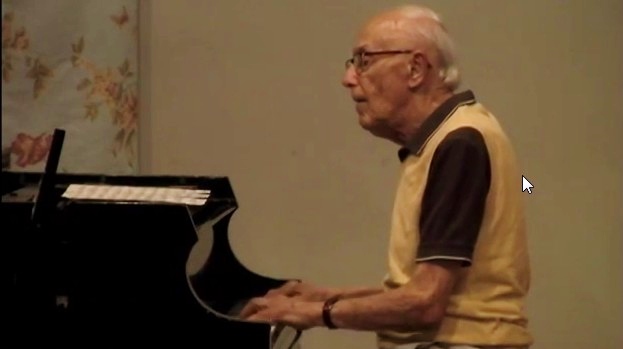

Henry Shapiro (my father-in-law) began his musical career around 1935 or 1936. He learned his craft by taking lesson in New York City with the same piano teacher who taught George Gershwin. At age 16 he had his own 12 piece big band, the Henry Shapiro Band. He played in various venues in Morris County and Northern New Jersey, including various dance halls around Lake Hopatcong. He is a life long member of the Dover Musician’s Union. He moved to Florida in the 1970’s where he continued playing at private parties and restaurants in the Fort Meyers area. His love of music and entertaining as kept him young. Now, at the age of 94, he is back in Morris County, NJ where it all began for him, playing gigs wherever he can. The You Tube video above was from a June 12, 2015 performance at an open state event sponsored by the Folk Project in Morristown, New Jersey ( http://folkproject.org/ ).
So click on the You Tube link and enjoy. Let me know what you think or contact me if you would like to get in touch with Henry.
Thank you.
The Village We Left Behind
by Brian T. Lynch, MSW
I recently returned from a trip to my father’s birthplace in County Meath, Ireland where I took a walk around the village of Athboy. This is the town nearest Kildalkey where he grew up. Like so many villages in rural Ireland it is still owned and run by local inhabitants. There is a quaint little supermarket first opened by Ollie Byrd, my father boyhood friend. It’s now run by his son since Ollie passed away a few years ago.

Just up the sidewalk is Faulkner’s men’s shop owned and operated by Brian Faulkner, a cousin to my cousin, Sean. Three doors up the street is Faulkner’s Fashion House for woman, owned and run by his sister, Ger Faulkner. Across the street is the historic Darney Hotel where you can get a proper meal and a spot of tea in homey, low chic surroundings . On certain evenings you can go there to enjoy traditional Irish music in the hotel’s pub.
There are a handful of other pubs in town named after their proprietors. There is a family owned hardware store, a bakery, a post office that also serves as a general convenience store and a little gift shop run by a mother and daughter where you can buy small gifts for your friends and family on those special occasions.
The village is alive with shoppers. The streets are abuzz with cars, lories, public buses and farm tractors towing wagons of silage or farm equipment down the main street on their way from one field to the next. It is a place where people still know their neighbors and customers are greeted by their first name more often than not. Relationships are the real treasure you will find here.
It was a striking contrast to the sterile and impersonal world of cookie cutter malls and brand name store fronts in America today. It reminded me that we once had local commerce centered in small towns all across America. We had more civic pride back then, and a deep sense of connection with the people in the community where we shared our time and place. This is a way of living that is quickly disappearing. It is under siege in Ireland as it is everywhere around the globe wherever corporate profits can be extracted from local economies and brand recognition can replace familiar faces. In the process we have lost our connections between farmers and food, craftsmen and products, business owners and commerce.
I was told that all meat sold in Ireland had the name of the farmer and the farm where the livestock was raised. People in Ireland want to know exactly from where their food comes. So I wandered into Brogan’s Butcher Shop across from the post office to look for farm names on the products in the meat case. I was disappointed to find none. Had I been misinformed?
I asked the butcher behind the counter about this. He proudly pointed to the wall where a certificate of origin hung on a nail as he explained that all this meat came from his own family’s farm. “If you want to see a farmer’s name on a piece of meat you’ll have to head back to Ollie Byrd’s,” he said.
Contrast this with the US House of Representatives who on June 11th of this year passed a bill that would eliminate a law requiring country of origin labeling on all U.S. meats. “It sounds like you are heading backwards,” he said to me when I told him this. Indeed it does.
I read that over 90% of all American’s want to know from where their meat comes, and most people I know would love to know more about where all their food is grown. We can’t have real competition in the food industry as long as information like this is hidden from us. So what is behind the passage of this bill to block COOL (country of origin labeling)?
It turns out that Canadian and Mexican meat industry trade groups have sued the United States in the WTO (World Trade Organization) over COOL, saying it constitutes unfair trade practices under international treaties. Specifically, the WTO ruled that:
“The compliance panel found that the amended COOL measure violates Article 2.1 of the TBT Agreement because it accords to Canadian and Mexican livestock less favourable treatment than that accorded to like US livestock. In particular, the compliance panel concluded that the amended COOL measure increases the original COOL measure’s detrimental impact on the competitive opportunities of imported livestock in the US market, because it necessitates increased segregation of meat and livestock according to origin; entails a higher recordkeeping burden; and increases the original COOL measure’s incentive to choose domestic over imported livestock.”
This is what we are up against. Giant international corporations battling each other beyond the reach of sovereign countries to create a world more suitable for their financial conquests. Congressional supporters of the measure to eliminate COOL are seeking to avoid the $3.6 billion in potential retaliatory tariffs sought by Canada and Mexico. In the mean time, the US livestock census is at near record lows while beef prices keep climbing into record high territory. What people want no longer matters.
Understanding Social Power – Part 1
by Brian T. Lynch, MSW
Part 1 – What is “social Power”
Social power is the force that directs and coordinates human action. It’s that simple, and yet that complex. The non-random acts of others that benefit you in some way is the active form of social power. It is the power to get things done or to stop others from doing things. It is the power to influence the behavior of others to suit your interests.
On a grand scale, social power is the force that makes, grows, sells, protects and transports things. It is the force that gets done all the work it takes for people to live together and thrive. Whenever people collaborate or coordinate, or whenever people act to block the coordination or cooperation of others, these actions are examples of social power at work.
Actions by another can benefit you directly, such as when a volunteer helps you get elected to the school board or when an employee puts in a day’s work at your store. On an personal scale, your social power becomes manifest when a friend drops by to help build your deck or students you teach line up in the hall at your command. The tangible benefits of social power can also be indirect, like when the town paves the road in front of your house or your local grade school wins an academic award thereby raising property values in your community.
Just like energy and power in the field of Physics, social power has both the active state described above and a potential state. Social power is fungible and can be accumulated (stored), traded, transferred to others or spent in exchange for human action. In its potential form, and in certain social contexts, it may rightly be referred to as social capital. At each level of social complexity, social capital takes many forms, each with its own set of symbols and rules.
Think for a moment about all the ways you can influence loved ones, or your peers, the people where you work or play, your customers, the people you meet and so forth. On an interpersonal level you have bonds of love and friendship, personal charm and charisma, verbal skills, maybe an attractive appearance, intelligence, collaborative skills and so on. On a larger scale you have natural abilities, acquired skills, knowledge, wisdom, social connections, organizational position or authority, fame, prestige and your personal accumulation of wealth, to name a few examples.
Wealth is an interesting aspect of social power because it can be more easily quantified. This sets it apart from fame, skill or most other sources of social power. It is easy to transfer or spend. Wealth is as much a medium for the exchange of social power as it is a medium for the exchanges of goods and services, yet wealth as a form of social power is often overlooked. It is studied extensively in the field of Micro and Macro Economics but it is not well integrated into the larger social economy. (More on this topic in part 2 at a later date.)
On a still larger scale, there is great social power in our big human organizations and institutions of government and commerce and religion. There is the coercive social power of great armies and law enforcement agencies. There is immense power organized around ideologies and religions that greatly influence the social behavior of millions of people. There is the power in our great institutions of learning and enormously influential multi-national corporations.
Every organization and every individual has some social capital to influence the behavior of others. A fewer number of groups and individuals have vastly more social capital than most of us. We recognize these powerful people when we are in their presence and it alters our own behavior. Powerful people are able to turn everything to their advantage, which is why they are both feared and respected.
The sum of all actions or potential actions on your behalf, if it could be calculated, would be a measure of your own social power. Most of us have more than we think and all of us could use it to better advantage if we understood it better. But no matter how you calculate your social power, it cannot be precisely measured. There is a perceptual dynamic to it that defies attempts to measure it.
These examples illustrate that social power can be accumulate, converted to other forms, transferred to other people or can be used to coordinate the physical actions of others. These operations are essential to an understanding of social power. But the important starting point is understanding that social power is the force that directs and coordinates human actions.
In the next parts of this discussion I will discuss:
– How social power operates at various scales of social complexity
– How it is accrued, converted for other forms, transferred between people and communicated or spent to bring direct coordinated actions.
—————————————————–
Please see the Introduction to this series at: http://aseyeseesit.blogspot.com/2015/04/understanding-social-power.html
Three People Die Daily in Police Actions
by Brian T. Lynch, MSW
On April 4, 2015, Walter Scott of South Carolina was stopped by a North Charleston police officer for a burned out blinker on his car. It was Saturday morning. Scott had no prior criminal history and was unarmed. At some point Scott exited his vehicle and according to the police officer Scott reached for the officer’s Taser. The officer drew his weapon and fired multiple shots, killing Walter Scott. The officer said he feared for his life and was justified in using deadly force.
That’s the way things stood until three days later when a video tape by an anonymous witness surfaced at the New York Times and other media outlets. The video clearly shows Scott running away and the officer calmly taking aim and firing multiple shots into Scott’s back. The officer then handcuffed Scott, ran back to where the office had fired his gun, picked up an object and then dropped it beside Scott’s body. The video was turned over to investigators and Officer Michael Thomas Slager was charged with first-degree murder for the shooting death of Walter Scott. Michael Slager is white. Walter Scott is black. This is a nightmare story that is all too common.
Between May 1, 2013 and April 4th, 2015 there were 2,178 citizens killed by police officers in the United States according to an extensive search of public news accounts. These media accounts include police homicides, justified or otherwise, murder/suicides involving police officers and their family, DWI accidents involving officers under the influence of alcohol or drugs, police assisted suicides of mentally ill persons and other such catagories. A more detailed analysis of this database
is pending and will be published here when completed. But there are a few quick facts off the top that you should know.
In 23 months news accounts reported 2,178 civilian fatality incidents at the hands of the police. That means there are about 94 per month or around 3 police homicides per day. Fatalities are almost entirely men, 2,044, with only 135 woman killed and 6 whose gender was undisclosed.
The identities of 565 victims were undisclosed to the media. The average age of the known fatality victims is 36.9 years. Latino’s make up 18.7% of the general population and were 17% of the fatality victims during the past 23 months. Whites make up 77% of the population but only 48.1% of the victims. African-Americans make up just 13.2% of the general population but 492 of the victims of police related fatalities, or 30.5% of the total. If there is a perception in the Black community that they are disproportionally targeted by police, these facts only confirm their fears.
The vast majority of law enforcement officers are good, law abiding men and woman who put themselves on the line to protect us. So, it may seem impossible that any officers could wantonly direct deadly force towards otherwise law abiding citizens of color without legal justification. The Scott video is graphic evidence that it does happen. You can see for yourself here, but a warning: video is disturbing.
A full and fair discussion of racism, the law and the American Justice system is overdue. The urgency is now. People are dying.
Understanding Social Power
by Brian T. Lynch, MSW
Introduction
What does it really mean when we say, “that person is very powerful.” Or what is it about an organization or corporation that makes us think of it as being powerful. The word “power” has clear meaning when we are talking about a car motor, or water crashing down a cliff side. Yet when we apply the word to people or organizations it is more difficult to pin point just what we mean. The power we are speaking of is social power, and why a person has it and how it operates often seems mysterious.
My purpose here is to describe in brief my understanding of social power, what it is and how it operates. I have read books and articles on the subject but have not been very satisfied. I found the language of these works to be somewhat inaccessible or ambiguous. Also, the focus is often too narrow for such a broad topic.
I have no special credentials to bring to this task beyond a lifetime of observation as a social worker in the fields of mental health and child welfare. I consider myself privileged to have observe people on many different levels from the intimacy of their homes to the halls of government power. This discussion, then, is intended more as a personal reflection than a scholarly pursuit and a hopeful effort to raise a productive discourse on this topic.
While each of us understands social power and responds to it in our daily lives, it remains difficult to define. This is partially because it is so pervasive and takes so many forms. It operates on every level of human interactions from the intimate to the geopolitical. For social beings, social power is our atmosphere. It surrounds us like an ocean, is essential for our survival and yet as invisible and ever changing as the wind.
Social power is often expressed in symbols. We all recognize obvious symbols of social power, like an American flag or a corporate logos. We bestow social power on our politicians when we elect them to govern. We ascribe power to people who attain “powerful position” in their company or organization. There are also very clear status symbols of power, such as a police uniform, or a Gucci handbags or the Armani suits worn by successful business people. We recognize social power when we see the skyline of great cities or the grandeur of beautiful cathedrals and synagogues. Social power is often very evident in religion. It is seen in religious symbols of worship. The special attire of priests, ministers or rabbis confer a measure of social power in the form of respect or prestige. The ornate garments of the Catholic pope during a high mass still invoke the power of ancient Roman.
But the absence of power is just as evident. We see it in the beggar or the homeless woman on the street. We sense the absence of power in the ghettos or in the desolation of small, redundant rural towns in far flung places. We sense it in young children or in the elderly living out their lives in a nursing home. We even sense it in our pets.
We all recognize and respond to social power every day. We know there is a certain pecking order in our families, among our friends or among our colleagues at work. We often exercise or respond to social power without giving it much thought. We acquiesce to authority figures such as a parent, a teacher, a rabbi, a boss or a judge. We often accede to the requests of a trusted friend or a loved one and expect the same in return. Conversely, we are very aware of social power when it is imposed on us or we are imposing it on others.
Aware of it or not, in big ways and small, we are constantly exercising or responding to social power. How we experience it goes by many names; respect, duty, obligation, intimidation, pressure, fear, expectation, demand, request. We also experience our own social power as internal feelings. We might feel empowered, entitled, privileged, respected, or even feared. On the other hand, we feel weak, vulnerable, shamed or disempowered when we are ignored, rebuked, humiliated or abused. Suffice it to say, we are a massively social species. We have evolved keen social instincts and most of us develop significant social skills throughout our lifetime.
Lake Hopatcong in New Jersey Needs Your Vote
by Brian T. Lynch
I grew up a few blocks from Lake Hopatcong and the experience has stayed with me all my life. I learned to swim there. I learned to fish and ice fish there. But the best gift of all was discovering my inner calmness in the reflections of countless sunsets and the gentle lapping of its waves. I have loved rivers and lakes ever since. It is where I feel most at home.
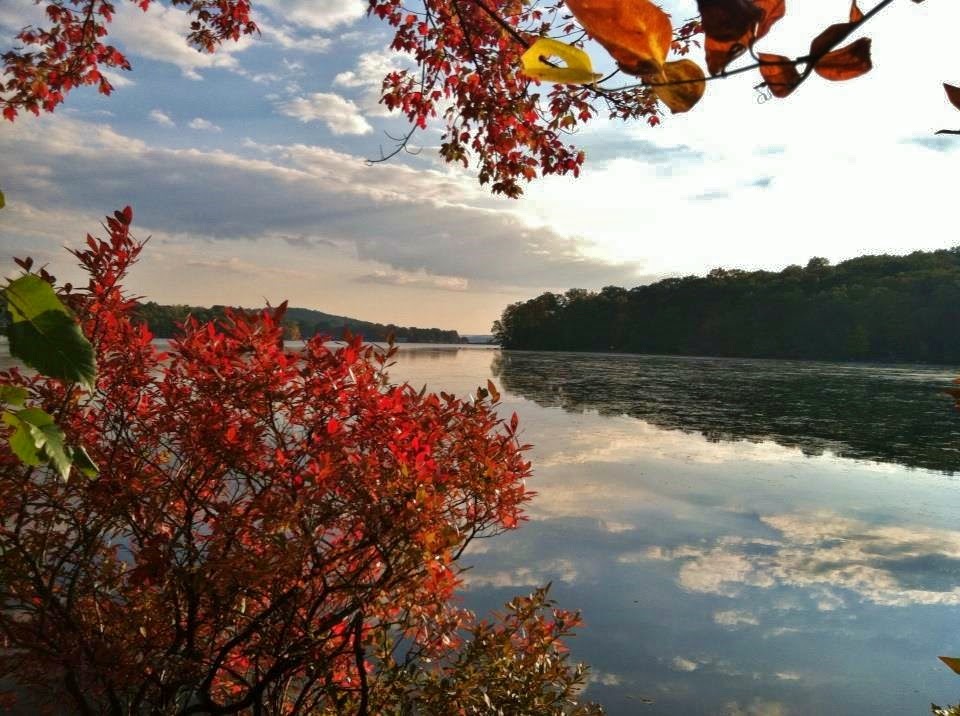
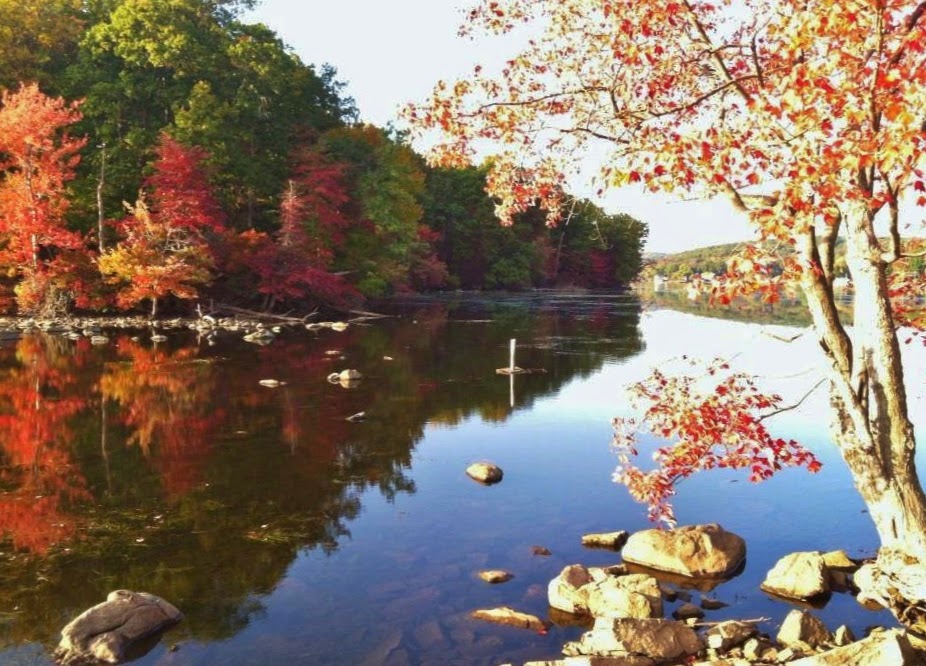
A view from tiny Snake Island on the North end of Lake Hopatcong in the Fall of 2013 looking over to a nature preserve.
Which is why I want to help the lake I love by asking you to help the Lake Hopatcong Foundation win a small grant. By casting a vote to win this small grassroots grant from the Boat U.S. Foundation you may help create a public guide map of this beautiful lake. To vote, please must click on the following link to vote for Lake Hopatcong to receive this grant:
http://www.boatus.org/grants/vote.asp
“But how does a guide map help this lake”, you ask?
New Jersey politics is heavily comingled with the interests of developers. Over the years this beautiful lake has been transformed from summer resort and recreation area to largely a residential lake. Lake access has become too limited due to over development, so tourism is down. (I would love to see the State open another state park.) This gives the New Jersey State government less incentive to support environmental stewardship of our largest lake and natural attraction. Encouraging more tourism will help attract more attention to preserving and maintaining the lake.
If they win the grant, the Lake Hopatcong Foundation will create a Lake Hopatcong Guide Map. The map will include information on invasive species and the location of pumpout stations. The map will be available for free and printed on water-resistant, tear resistant and durable 12” x 18” paper. They will also update the Lake Hopatcong Guide app which is available for free download for iPhone, iPad and Android. Information on how to prevent aquatic hitchhikers and the locations of pumpout station will be added to the app and their website. This will facilitate visitor, encourage tourism and it would be good for the health of the lake in the long run.
Putting this small grant towards some great environmental issue would be a little bit like throwing a pail of water on a burning house. The impact would be negligible. So please help out and cast a vote for help the Lake Hopatcong Foundation win this small grant. Here is a little history of Lake Hopatcong. Please come visit it if you are in the vicinity some day.
LAKE HOPATCONG, NEW JERSEY

Lake Hopatcong is New Jersey’s largest lake. It is about 4 square miles in area. It is in the water shed area know has the New Jersey highlands about 30 miles from the Delaware River and 45 miles from New York City. Lake Hopatcong was created by damming and flooding two ponds that were known as Great Pond and Little Pond. It is substantially spring fed while the Musconetcong River flows out from it.
The Big and Little Ponds in the Hopatcong basin were form during the last glacier. They were about two miles apart with some wetlands between. It is believed that these lakes were first settled by the Lenape Indians. Here they found that the lakes provided abundant fish and forested shores with plenty of game. The word “Hopatcong” is believed to be a derivative of the Lenape word “hapakonoesson”, meaning Pipe stone”.

Sometime between 1750 and 1765 the Brookland Forge and mill built a damn where the Musconetcong River flows from the lake in order to supply greater water power for the forge. This damn raised the water level by six feet and connected the two ponds.

In the early 1800’s plans were made to build the Morris Canal to connect the Delaware River with New York Harbor. The 900 foot elevation of Hopatcong basin was perfectly suited to supply water for the canal.

In 1831, the Morris Canal Company purchased the Brookland forge site and replaced the dam with one that raised the water 12 ft above the original level of Great Pond creating the lake as it exists today.
Lake Hopatcong is home to the greatest variety of game fish of lake in New Jersey.
Each spring it is stocked with brown trout, rainbow trout, and brook trout. It is home to Largemouth and smallmouth bass, rock bass, chain pickerel, channel catfish, bullheads, hybrid striped bass, walleye, muskellunge as well as perch, crappie, bluegill and carp.
I have never been skillful or lucky enough to catch one of the monster fish that inhabit the lakes depths, but I have always been inspired by those who do seem to catch these great fish.

Once a first class resort destination for the rich and famous, today Lake Hopatcong is largely a residential lake with limited public access. There is the New Jersey State Park in Landing and a number of marinas and restaurants on the lake and two yacht clubs. Many of the restaurants can be accessed by boat. You can simply dock and dine at any of these classic lakeside restaurants.

Jefferson House restaurant outdoor view
So again, Please help the Lake Hopatcong Foundation win this small grant, Click on the following link to vote for Lake Hopatcong to receive this grant: http://www.boatus.org/grants/vote.asp and Thank YOU!
The Plot to Kill Public Employee Pensions
by Brian T. Lynch, MSW
In war and politics, if you pick your battlefield you win. The current pension fight in New Jersey is a classic example. Nearly everyone in the state sees it as a battle between a broken pension system and cash strapped citizens, but this is all just a setup.
Governor Chris Christie cut $1.5 billion in pension payments from the latest budget proposal while also cutting modest tax increases on the rich to pay for it. When the unions squealed, he offered the public a false choice between tax hikes on the middle class or cuts to popular and essential programs. His framing of the problem this way pits average citizens against civil servants and their unions. This is the battlefield of choice for national conservatives.
This fight could have been between government solvency and any other public obligation of the state, but it’s not. It’s against public employee unions because killing public sector unions and fix pension systems has been a conservative priority for decades. This is a grand plan playing out in many other states. Starving public pensions was always a choice, not a necessity. If all those missed pension payments had been made the system would be awash in cash today given the huge growth in the investment markets over the past twenty years.
But Gov. Christie almost blew this plan to destroy public pensions in New Jersey when he enacted pension reforms that might actually fix the system. His reform plan could still fix it if implemented, but not without seriously upsetting his potential conservative backers.
In order to keep his presidential hopes alive Governor Christie had no choice but to sabotaged his own reforms and further degrade the state pension system by not paying what he promised. A state judge has seen through his shallow plan and ordered him to restore the cuts, and he has appealed. I hope the New Jersey Supreme Court will uphold the lower court’s decision.
I hope everyone else in New Jersey sees though his sham and demand that that he stick to the pension reform plan he has been boasting about on his trips out of state. And if the reader here happens to live in a conservative state with public pension woes, take a lesson from New Jersey. Take a step back and look around to see in whose battlefield you are standing.
 Data Driven Viewpoints