Home » Uncategorized (Page 9)
Category Archives: Uncategorized
A Passionate Call for an Alternative to Poliltics
What follows is the very essence of passion and disphoric expression by the next generation towards today’s intractable political systems that serve the interests of the rich and powerful. Russel Brand’s passion and rejection of establishment processes to bring about change mirror the essence of the Occupy movement. The outragiously disparate distribution of wealth and power has so distorted and hoplessly incumbered politics and democracy that he and many young people today are repulsed by it all. They struggle for an alternative that doesn’t yet exist and may never exist. The rant is perhaps a glimps into the hearts and minds of the coming generation. Through the social media an emotional consensus is building which has no clear expression or pathway to change.
Actor Russell Brand reduces BBC newsman to stunned silence with diatribe against corporate oligarchy
By Travis Gettys
Thursday, October 24, 2013
Actor and comedian Russell Brand is calling for a political and philosophical revolution in his guest editorship of the New Statesman magazine, and he explained what he wants to see in a passionately argued interview on BBC’s “Newsnight.”
Combative host Jeremy Paxson asked the British actor, who’s known for his past drug use and his brief marriage to pop singer Katy Perry, what gave him the right to promote his political beliefs, particularly since he’s never voted.
“I don’t get my authority from this preexisting paradigm, which is quite narrow and only serves a few people,” Brand said. “I look elsewhere for alternatives that might be of service to humanity.”
Darwin, Religion and the Rise of a Secular World
By Brian Lynch, MSW
During most of human history divine creation was the only paradigm for understanding our place in the universe. It was the grand context, the social ocean in which we lived out our lives. Human beings were divinely created in a special way that set us apart from the rest of God’s creatures. We were born, we lived and died in God’s world. There were no alternative perspectives. Our frame of reference, world view and the society in which we lived were profoundly influence by this inescapable constant. There were always questions and great disputes about nature, especially with the rise of science, but nobody seriously doubted our divine creation. Religion, and therefore religious leaders, held sway over every aspect of our social and intellectual development… that is until one reluctant scientist came to see that human beings arrived here by natural evolution and not a single act of divine creation. Charles Darwin glimpsed the profound impact his discovery would have on the world. He knew there would be unintended consequences and a contemporary backlash that would make his life difficult. He waited as long as possible before publishing “On the Origin of Species.”
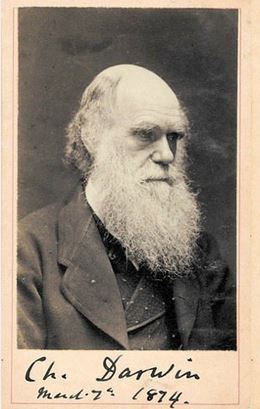
At that moment a new paradigm for human understanding became inevitable. It spawned a natural view of creation and the universe that would successfully compete with mystical beliefs in a god-centered universe. It eventually opened up a vast new social space that could be occupied by those seeking an alternative to a religious view. Today we call this vast social space a secular society, but nothing like it ever existed before. It was (and can still be) liberating and wide open with possibilities that were unimaginable under the divine paradigm. It was a space where science and technology thrived. A new sense of objectivity was a direct outcome. Ethics and morality could be studied from perspectives that were independent from specific religious texts. New philosophies sprung up and took root. It allowed us to create secular institutions of learning, medicine and other scholarly disciplines . We created secular governments, secular economies, secular business corporations and all manner of social organizations not immediately related to religion. It allowed for the creation of truly pluralistic societies and more religious tolerance than the world had ever known. But it also challenged and diminished the power of religions across the globe.
The secular paradigm that has emerged is not antithetical to God or a rejection of religion or spirituality. It is just a social framework. It is a religion neutral space where individuals are free to explore spirituality, question their beliefs or challenge tenants of their faith traditions without fear of social reprisals. It also allows citizens to accept or reject a creator god. In these ways it undermines priestly traditions and the central authority of many world religions. Religious fundamentalists who view the world as either good or evil are prone to see secularism as evil.
It is almost unimaginable today to conceive of a world without a secular alternative to a totally faith based society, especially when the fault lines separating the secular and religious worlds are still so active. In my view, the growing religious fundamentalist movements around the globe are just the most recent reactions to the declining power of organized religions to effect social change. Among Christian fundamentalists, at least, Darwin’s theory of evolution still remains at the epicenter of competing beliefs, especially with respect to the belief systems to which children are exposed. So much of the polarity and apparent disconnect found in our current politics derives from these underlying tensions between the religious and the secular. In fact, many of the global conflicts today share these same roots. The denial of climate change and the mistrust of science by conservative or fundamentalist constituents are a further manifestation of this divide.
The 19th Century saw the rise of civil secularism and the 20th Century was its flowering period. Secular societies refer to themselves as the “modern world.” They are associated with the rise of free markets, powerful business corporations and the technological revolution that has transformed every aspect of modern life. The global rise of religious fundamentalism is a rejection of modernity and secularism. It is easy to see this play out in the Middle-East where Muslim fundamentalist have resorted to violence in efforts to regain control over their people and establish Shari law. Islamist groups openly reject modernity and refer to the United State, that great exporter of secular culture, as “the Great Satin.”
Here at home these same underlying tensions are hidden in plain view because our fundamentists happen to share America’s dominant religion. The rise of politically active religious conservatism should also be seen as a rejection of modernity and secularism, just as it is in the Arib world. In many Christian communities there is strong peer pressure for Christians to conform to social norms that most resemble 18th Century America. There is also a strong distrust of secular media, secular science and especially secular government. Christian fundamentalist often view the government as corrupt because it is non-thestic and therefore evil. Secular society is evil because individuals are free to reject God’s authority. They seek to change that and establish the centrality of God in government and all aspect of American life. A theocracy would not be out of the question for them. Theirs is a direct assualt on our constitutional government as it was originally intended. Out of “Christian love” the majority of American’s continue to tolerate the increasingly intolarent Christian Right.
Ironically, most Christian fundamentalists have no problem embracing godless corporations and the free market economy. Secular society has allowed capitalism to slip the bonds of religious morality. This launched a corporate movement that is currently challenging and overpowering civil control of government. Part of the reason for its success is this alliance with the Christian right. The dynamics between secular society, fundamentalist religious society and the corporate, free market elite account for most of the forces driving today’s social changes. The current government shutdown might signal the first crack in the corporate/fundamentalist alliance.
This conceptual outline of underlying social forces has helped me make sense of current events and today’s social movements. I find myself returning to these themes whenever I need to place new developments into context. I hope that other readers might find this framework as useful.
Solar Success Generating Friction With Utility Companies
The rapid growth of rooftop solar in the US has caught the attention of electric utilities companies who now see distributed power as a threat to their business model. In the past ten years the number of rooftop solar instillations taking advantage of net metering (explained below) has grown 60 fold to cover over 300,000 homes nationwide. The following graph from the U.S. Energy Information Administration depicts the growth of rooftop solar. The full EIA report can be viewed here: http://www.eia.gov/electricity/monthly/update/?scr=email

Source: U.S. Energy Information Administration, Annual Electric Power Industry Report (Form EIA-861)
While the number of homes with rooftop solar is still less than 1% of all residential customers, the trend suggests this mix will rapidly change in the coming years. At present, all but four states have passed laws permitting net metering incentives for homeowners. California presently leads the nation in the number of homes with rooftop and other home based power generation. The next graph shows how net metering instillations are distributed among the states.
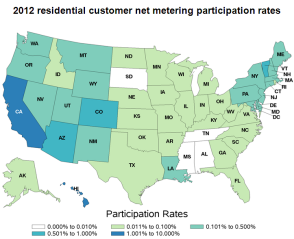
Source: U.S. Energy Information Administration, Annual Electric Power Industry Report (Form EIA-861)
The economics behind the jump in solar instillations is largely influenced by an 80% decline in the cost of solar panels over the last 10 years and by the Energy Policy Act of 2005, which requires all public utilities to offer net metering to customers upon request.
Net metering allows consumers to directly subtract the kilowatts they generate from the kilowatts they use at the retail rate they pay for electricity. If they generate slightly more electricity than they use they are credited and can carry over that positive balance for a time so they can use it to offset periods where they use more power than they generate. Additionally, net metering requires that rooftop solar systems may not be designed to generate more power than the average use for a given home. In other words, a rooftop solar system cannot be used to generate more power than the homeowner typically uses in a year. The exact details of how net metering works varies from state to state, but the concept is the same.
The problem, as framed by the energy companies, is that they are buying back electricity from customers at the same retail rate that they are selling it rather than buying it at the wholesale rate they pay power generation companies. The marginal difference between the wholesale rate and retail rate includes the expenses associated with transmission, distribution and maintenance of the electrical infrastructure (in addition to the utility company’s administrative expenses and profits). They claim that rooftop solar customers are no longer contributing their fair share towards these essential costs, shifting this burden to the utility companies and their non-solar customers. In their view, the per/customer cost of maintaining the power system will rise as the number of non-solar customers fall. Additionally, grid operators say they face additional costs associated with modifying the distribution system that allows electricity to flow both directions.
Solar and renewable energy advocates say the energy companies arguments are specious and disingenuous. They say that the utility companies their real agenda from the beginning has been to preserve their profits and basic business model.
In a recent article by EE News’s Climate Wire, Bryan Miller of the Alliance for Solar Choice is quoted as saying the alleged cost burden for upgrading the utility grid for two way transmissions isn’t true because solar companies are already paying for any legitimate circuit upgrades needed to connect solar customers to the grid. He also pointed out that the peak hours of solar generated power corresponds with periods of peak demand. This relives transmission congestion which saves money utility companies money. Peak shaving more than offsets grid interconnection costs, according the Mr. Miller.
Other advocates have pointed out other value added savings for utility companies. Distributed generation by rooftop solar customers reduces line transmission losses. According to one source, in California, the largest solar market, distributed generation is cutting transmission losses by up to six-percent. Because solar generation peaks during peak demand periods, utility companies need to buy less electricity on the spot markets at higher wholesale prices. Additionally, customer based solar instillations improve the renewable energy mix for utilities relieving them of costs related to meeting federal guidelines for improved efficiency and greater use of renewable energy over time. On balance, advocates claim that rooftop solar delivers more value than it uses while utility companies argue that government grants and tax breaks offering up front incentives for solar conversion are better than ongoing rate-based incentives.
The net metering debate in California could set a precedent for the rest of the nation. In a recent article published by Greentech Solar, both sides in the net metering debate seem to be coming together in a bill ( AB 327 ) that would modify net metering for future rooftop solar customers. In the case of California, the net metering regulations passed in that state were set to expire. Also, a provision in the law specified that the net metering would not be available to customers once the total of distributed generation reached 5% of the utilities total electricity. The agreement that is emerging would keep in place the net metering arrangement for those who already have it and preserve their rate structure. It would also remove the 5% cap on the net metering arrangements, but establish a different rate structure for new net metering customers going forward. If passed, AB 327 would require the California Board of Public Utilities to come up with a new rate structure that is more acceptable to the energy utility companies. The bill states that after January of 2017:
[…] all new eligible customer-generators shall be subject to the standard contract or tariff developed by the commission and any rules, terms, and rates developed pursuant to subdivision (b) of this section, and shall not be eligible to receive net energy metering pursuant to Section 2827. There shall be no limitation on the number of new eligible customer-generators entitled to receive service pursuant to the standard contract or tariff after January 1, 2017″.
Early adaptors of rooftop solar or other consumer based energy generation systems are likely to have an financial advantage over those who come later. In general, net metering based on retail energy rates is considered an incentive program to encourage development of solar, wind and other renewable energy sources. The upfront conversion expenses for consumers will remain substantial in the near term. Government grants, tax breaks and current net metering structures are designed to overcome these barriers. Just how much value distributed solar energy has for utilities is still an open question complicated by the fact that laws and regulations vary from state to state. Advocacy groups are needed in every state to balance the interests of consumers and environmentalists against the interests of the big utility corporations.
Correctional note of 9/6/2013: The emerging agreement on California’s AB327 bill would keep the net metering rate structure in place, not eliminate it as I mistakenly stated prior to this update. Also, a few technical corrections were made to the net metering paragraph.
It’s Time for Citizens to Take Control of Our Democracy
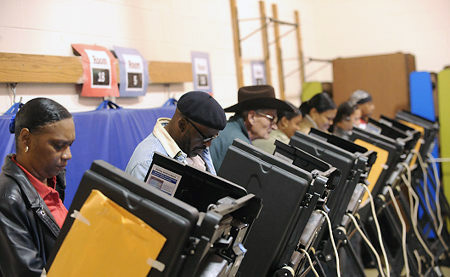
North Carolina doesn’t want you to vote if you live in a college dormitory in that state. They don’t want you to vote if you don’t have a special state identification card. There is a provision in state law that polling places can serve a maximum of 1500 voters, but in Boone, where college students nearly caused the parish to go for Barak Obama, you must now travel out of your way to the one polling place left, which serves over 9,000 voters. With only 45 parking spaces the parking lot will need to fill and empty every 6 or 7 minutes to accommodate everyone. Of course, accommodating all the voters is the last thing this Republican controlled local voting board has in mind.
Throughout the South and in other conservative stronghold around the country the story is pretty much the same. Since the United States Supreme Court struck down part of the Voting Rights Act an ideologically obstinate Republican Party, which is in demographic decline, is responding to growing pluralism and power sharing by rejecting democratic majority rule in favor of vote manipulation and dirty tricks. In one voting precinct in Texas, changes to the distribution of voting machines would have predominately African-American polling places handle ten times the number of voters as predominately White polling places. In every Republican controlled state the voting districts have been redrawn to make it nearly impossible for them to lose their incumbency. And all these changes are not random developments but elements of a nationwide plot to project conservative power and suppress opposing or alternative social views.
Admitting that there is a problem with our democratic process is difficult enough. Fixing it will be even harder. Elections are the province of state governments, each with unique constitutions, chapter laws and administrative policies. In a previous post [http://wp.me/p2WIGz-7B ] I reported on the results of a survey I conducted of the constitutional voting rights articulated in every state constitution. The results were disturbing. Most of the rights we think we have are not supported in the language of most state constitutions and no state constitution has adequately defined voting rights.
Voting is, of course, the cornerstone of democracy. It is the means by which political power is aggregated and distributed within a democratic society. Each vote is a transfer of power collected by the chosen candidate. The integrity of the voting process is therefore critical to a democratic society. It is too precious to entrust in partisan hands. The administration of the election process should be pre-partisan, outside of total government control. It should be directly under citizen control.
Our present system of election relies on election administrators appointed by the party in power. In most states that means the State Secretary of State. Keeping in mind that most states don’t have constitutionally secure voting rights, the legislatures have significant control over election procedures and the Secretary of States have great leeway over how these laws are implemented. Among the strange consequences this has cause is the turning over of elections to private voting companies. Most or our votes are cast and counted by private companies using electronic machines run on proprietary software. The voting companies are accountable to no one. We citizens didn’t ask for this and there was no discussion about this prior to hiring these private firms to collect and count our votes. Since these companies have taken over the election process we have had some of the most unusual and controversial elections in modern times. I have written extensively on this subject in the past (see below).
How should we protect our voting rights? By electing non-partisan, independent citizen boards to run our elections. All voting policies and procedures should be approved through public referendum developed by these citizen Boards of Election. Citizens on these boards should have no party affiliations and should not hold any public office. These citizen boards should be responsible for everything from drawing congressional districts, maintaining voter registrations preparing ballots, assigning polling places, etc. right down to training poll workers and monitoring elections. Any significant changes in voting policy should have to be put to a public vote. If private companies are to be hired to count our votes, it is the voters who should decide whether or not to use them. In my view, there should be nothing involving the franchise that isn’t itself subject to direct citizen approval.
The candidate who collects the most votes wins the consent to govern. In the bargain, the candidate in a representative democracy is expected to represent everyone, even those opposed to him or her. In exchange, all the people consent to be governed by majority rule even if there candidate didn’t win. Representatives should do what is right for the greatest good even if it isn’t what is popular at the moment or aligned with the interests of those who supported the candidate. Of course, this is the ideal, not the practice. But today, the basic bargain that makes a Republic work has broken down. Elected representatives are narrowly pursuing the interests of their political donors and party constituents almost exclusively. The Republican minority in the Senate no longer accepts majority rule, using filibusters to forcing super-majorities on nearly every vote. With this same disregard they are making it harder for citizens who don’t agree with them to vote in public elections. Governments and powerful interests have broken faith with democracy. It’s time for ordinary citizens to take back control over the democratic voting process.
MY BLOGLIOGROPHY ON VOTING ISSUES
The sorry state of voting rights in America, a 50 state comparison
http://aseyeseesit.blogspot.com/2012/03/sorry-states-of-voting-rights-in.html
How voter ID laws might block you from voting
http://aseyeseesit.blogspot.com/2012/07/seven-ways-voter-id-could-block-you.html
Republicans have a 5% election fraud handicap built into the voting system
http://aseyeseesit.blogspot.com/2012/08/republicans-have-5-election-fraud.html
Many state are unprepared for a fair and free election
http://aseyeseesit.blogspot.com/2012/07/many-states-unprepared-for-fair-and.html
Outsourcing or privatized voting process overseas
http://aseyeseesit.blogspot.com/2012/07/outsourcing-our-privatized-voting.html
Voting rights denied to a record number of “felons”
http://aseyeseesit.blogspot.com/2012/07/voting-rights-denied-for-record-numbers.html
Ireland Scraps Electronic Voting Machines for Good
http://aseyeseesit.blogspot.com/2012/06/ireland-scraps-electronic-voting.html
Secret flawed voting software discovered and exposed
http://aseyeseesit.blogspot.com/2012/06/ireland-scraps-electronic-voting.html
Does voter suppression have a new target in Florida (Latino’s)
http://aseyeseesit.blogspot.com/2012/05/does-voter-suppression-have-new-target.html
To know your Voting Rights you must know your state constitution
http://aseyeseesit.blogspot.com/2012/03/voting-know-your-rights-know-your-state.html
Can a convicted, or formerly convicted felon vote? Lots of confusion
http://aseyeseesit.blogspot.com/2012/04/can-convicted-felon-vote-major.html
Colorado sues for voting privacy, but do we have that right
http://aseyeseesit.blogspot.com/2012/02/colorado-group-sues-for-vote-privacy.html
A private company has the first peek at election results
http://aseyeseesit.blogspot.com/2012/02/company-wprivate-access-to-vote-totals.html
Voter suppression in America to get a hearing at the United Nations
http://aseyeseesit.blogspot.com/2012/03/voter-suppression-in-america-to-get.html
Caucus voting flubs highlight election system flaws
http://aseyeseesit.blogspot.com/2012/02/caucus-voting-flubs-highlight-our.html
South Carolina out sources vote count to Spain
http://aseyeseesit.blogspot.com/2012/01/south-carolina-outsources-vote-count-to.html
A voters “Bill of Rights”
http://aseyeseesit.blogspot.com/2011/10/voters-bill-of-rights.html
Helen Thomas – R.I.P.
A wonderful person and a journalist of historic significance
It is sad to read of Helen Thomas’ passing. She lead an exemplary life as a journalist and a woman. She has had a very positive impact on journalism. The nation’s history during her time with us is a bit more honest and open because of her. She asked the tough questions that her male colleagues didn’t think or dare to ask. Presidents were forced to anticipate her questions when planning what to say. Which Washington pool reporter today has that impact on the White House?
Ms. Thomas would find it a fitting tribute if in reviewing her life, career, and her impeachable integrity as a journalist, that we use her example to deepen our examination of journalism as it is practiced today. This is especially opportune at a time when whistle blowers are pursued as traitors, telephones at news agencies are bugged and journalists turn on their own for printing what every American has a right to know about what government is doing. I hope some of the young journalists coming up today will take some lessons from Helen Thomas and show the courage that she displayed over her career. And I hope that news organizations find the courage to challenge their corporate over lords and empower journalists to uncover what is true and important for the rest of us know.
On a more personal note, while I never met Ms. Thomas, she was very kind and welcoming to two young journalists in my familly when they first arrived in Washington. She was, and remains an inspiration for many. Knowing how much I admired her my family gave me a copy of her book, “Watchdogs of Democracy” which she very kindly signed for me. Thank you, Helen.
Do Pro-business Policies Reduce Poverty?
President Calvin Coolidge once said, “” the business of the American people is business”. He was quoted out of context at the time. His remarks were aimed at newspaper reporters who were inept at covering business news, but this intentional misquotation seemed to sum up his economic policies.
Today this misquote seems prophetic. Political leaders from both parties speak as if whatever benefits business benefits the people. State governments offer tax breaks and business friendly regulations to attract companies that might bring in more jobs. This is especially true in less wealthy states where poverty rates are high. President Lyndon Johnson’s “War on Poverty” has been transformed into pro-business politics and the promise of work for the worthy.
It is true that the poor need jobs, but the causes of poverty are more complex. There is little regard for other factors such as the need for quality daycare, health care access, job training or transportation. Journalists rarely asks politicians how they plan to help the poor. When they do, candidates talk about their plans to grow the economy. This has some become an acceptable answer.
The insurgent idea that serving business interests is the best way to fight poverty arguably arose in the mid 1970s when corporate interest groups were forming and the business lobby became a powerful influence on Congress. This was the high water mark of American unions as organized business groups launched campaigns to turn Congress and public opinion against them.
At the same time, these industry lobbying groups began fermenting hysteria over the growing “welfare state.” The poor were poor, they argued, because anti-poverty programs make people dependent on government handouts while government regulations restrict the ability of companies to create jobs for those willing to work. According to their narrative, government needed to spend more resources supporting commercial interests and deregulating markets. President Reagan road these pro-business, anti-union, anti-government sentiments to the White House in 1980.
The success of the pro-business movement is evident. In this past election Mitt Romney’s entire presidential campaign centered around the idea that business prosperity was key to growing jobs and the economy. The California Republican Party explicitly incorporates this thinking in their core beliefs:
“” each person is responsible for his or her own place in society. The Republican philosophy is based on limiting the intervention of government as a catalyst of individual prosperity” Republicans believe free enterprise has brought economic growth and innovations that have made this country great. Government should help stimulate a business environment where people are free to use their talents. “[California Rep Committee Philosophy http://cagop.org/inner.asp?z=585A]
In other words, it is the role of government to facilitate the business economy but each individual’s responsibility to avail themselves of the opportunities businesses provide.
The sufficiency of robust commerce to lift all boats isn’t just a conservative or partisan idea. It is expressed and pursued often by Democrats as well. In this last election even President Obama avoided talking about the poor by referring to them as “those aspiring to be middle class.” There was almost no mention by either party of how they would accomplish this beyond trying to grow the economy.
So how well is our pro-business politics working out for the poor? This should be an empirical question that can be tested by examining the data. Are business interests and the interests of the poor perfectly aligned? Are there points of departure where the needs of some folks cannot be met without compromising some business interests? Most importantly, does the data show that when businesses are doing well there are more jobs and better wages?
Profits, Employment and Wages
Corporate profits are a measure of how well businesses are doing, so conventional wisdom would say wages and employment should rise and fall commensurate with corporate profits. The hypothesis is that when companies do well there are more good paying jobs and therefore less poverty. Is there evidence to the contrary?
In June of 2012, the St. Louis Federal Reserve released data showing a number of economic indicators over the last 71 years. Using their report, the graph below plots corporate profits (CP) as a percentage of gross domestic product (GDP) from 1940 to 2011. GDP is total value of all the goods and services sold and a good measure our economy. The shaded areas represent periods of recession. This graph shows that corporate profits rebounded since the 2007 recession and are at the highest level since 1940. The recession is clearly over for corporate America.

Corporate Profits to GDP by St. Louis Federal Reserve
Does it therefore hold true that robust corporate profits mean more jobs? The next graph plots the number of employed Americans as a percentage of our population. This graph uses an employment per population percentage because the population doesn’t stop growing during recessions. A fair comparison over time has to incorporate population growth for the same reason dollar comparisons over time have to factor in inflation.

Civilian Employment to Population Ratios by St. Louis Federal Reserve
—– PAGE BREAK —–
This above graph shows that there are actually fewer people working today as a percentage of the population than at any time in the past thirty years. Last June, in an article related to this graphs, Business Insider magazine speculated that one reason corporations are so profitable is that they aren’t employing as many Americans.
Does it also hold true that robust corporate profits means better wages? The next graph depicts the total amount of U.S. wages paid as a percentage of the value of all goods and services sold (GDP). It shows that wages are at an all-time low relative to the wealth being generated. If jobless recoveries are one reason for record corporate profits, the decline in wages pictured in this next graph may be the other.

US Wages as a percentage of GDP by St. Louis Federal Reserve
It turns out that the null hypothesis is true. Corporate profits are at a record high, employment and wages are at a record lows and the notion that what is good for business is good for people is false. The stock markets have recovered. Corporate profits have recovered, but the financial well-being of families have declined. Median incomes are shrinking and prospects for the poor are increasingly dismal.
Are Measures of Business Competitiveness Compatible with the Interests of Individuals?
When considering what factors make businesses more competitive it’s best to take a broad global view. A global survey of business competitiveness was recently conducted and released by the World Economic Forum. The study on global business competitiveness ranks 144 nations according to indicators grouped in 12 general categories.
Overall, the United States is very competitive, ranking 7th out of 144 countries. When you drill down in some of the 12 categories, however, you find indicators favorable for business that are clearly at odds with worker interests. For example, In the area of “Labor Efficiency” the U.S. labor “redundancy” costs are low, which means it doesn’t cost as much here to fire employees. This makes us more competitive (12th place) on this measure. This variable includes the estimated costs of providing advance layoff notices, severance payments any penalties that other countries might impose on employers for terminating “redundant” workers. The U.S. may be more competitive in this measure, but is this factor good for individual workers? Does it reduce poverty?
The U.S. also did well (8th) when it comes to the ease of hiring and firing people. All of this makes for a “flexible” work force, which is good for business, but does it stabilize the workforce or encourage employers to try and weather out minor economic storms?
Are the states with the most competitive business environments doing better at lifting people out of poverty?
Every year for the past five years CNBC has scored all 50 states on 43 measures of business competitiveness. This survey was developed with input from business groups including the National Association of Manufacturers and the Council on Competitiveness. States receive points based on their rankings in each factor and the factors are organized into broader categories. I was unable to locate a detailed list of factors within each category, but CNBC has published general descriptions of each category. In the category of “Workforce” for instance, they indicate that the prevalence of unions in a state is a negative factor for business competitiveness, while lower costs of doing business is a positive factor. Among the factors creating low costs for doing business are lower tax rates and tax incentives or tax abatement for business. The general category findings for each state are published.
The hypothesis, again, is that when companies are doing well there are more good paying jobs and less poverty. So it follows that the states with the most competitive business environments should also be the states with the lowest rates of poverty.
To test this I used the CNBC business competitive findings to compare ten states with the highest poverty rates and ten states with the lowest poverty rates. The high poverty states, starting with the highest poverty rate, are Mississippi, Arkansas, Kentucky, Louisiana, New Mexico, West Firginia, Oklahoma, Texas, Alabama, and South Carolina. The ten states with the lowest rates of poverty, starting from the top, are New Hampshire, Mariland, Alaska, New Jersey, Hawaii, Connecticut, Wyoming, Utah, Minnesota and Massachusetts. The results of this analysis are found in the table below.

State poverty levels and business competitiveness by Self
Business Competitiveness Rankings are from CNBC’s Top States for Business Special Report:
ttp://www.cnbc.com/id/100000994
It is striking that states with the highest poverty levels are also states that are more business competitive. The average rank in “Overall Business Competitiveness” for high poverty states is 7 points higher (more business friendly) than the rank for low poverty states. In the “cost of business” category, high poverty states have an average rank of 18 versus 37 for low poverty states. In the “workforce” category, which includes the prevalence of unions in a state, the high poverty states have an average rank of 20 versus 32 in low poverty states.
—– PAGE BREAK —–
Despite being “business friendly”, the ten high poverty states have over eight million poor citizens while the ten low poverty states have just over three million poor. There may be some political asymmetry as well since 7 out of 10 states with the high poverty rates have conservative Republican governors, while 6 out of 10 low poverty states have Democratic governors.
Conclusions
It is clear that pro-business politics, which puts commercial interests above the individual’s interests, isn’t working for the poor or for most Americans. While a healthy economy is necessary for individual prosperity, it is clearly not sufficient. What is best for business may be good for some, but not for all of our citizens. There are certain business interests at odds with individual interests. Our political leaders need to acknowledge this when making policy.
The total dominance of pro-business politics has successfully crowded out meaningful debate on how to help the poor, the ranks of whom are swelling every year. The poor are more marginalized and invisible than ever. Almost no one speaks for them. There is no hope for them in the more competitive business policies being proposed. In fact, business prosperity is no longer well correlated with job growth or adequate pay, so plans to grow the economy ring hollow. The social contact that once pegged wage increases with increased productivity is broken. As a result, big business can flourish while the welfare of workers and the poor decline. This is unacceptable.
The ascendance of pro-business politics has given rise to commerce without conscience and too many ordinary citizens are being left behind. We need to change the dialogue and strike a better balance. We need to reclaim the role that government must play in meeting the needs of all our people.
The Nap
Are Slaves and Children Making Our Clothes?
What follows is a medley of articles on the subject of child and economic slaves at work making our clothing apparel. The purpose here is to raise awareness surrounding this issue and provide readers a starting point for learning how we unwittingly contribute to human exploitation.
Are Slaves and Children Making Our Clothes?
A new report by the California-based non-profit organization Not for Sale has found that many major fashion retailers, including Abercrombie and Fitch, Carters, Quiksilver, Walmart, and Aramark, are complicit in the persistence of modern-day slavery through negligence. The report, titled Apparel Industry Trends: From Farm to Factory, studied the publicly available and self-reported data of 300 apparel brands so as to determine the supply chain links between those brands and companies known to engage in child- and forced-labor—abuses suffered by an estimated 300 million people worldwide.
REPORT ON MODERN DAY SLAVERY IN THE APPAREL INDUSTRY
“To create true breakthrough in the fight against slavery, we need systemic change,” said David Batstone, Not For Sale President and Co-Founder. “Free2Work and the Apparel Industry Trends Report equip everyone to advocate for that change and make it a part of their everyday life.”
The report released in a presentation on Nov. 13 in Ankara, Turkey at the United Nations General Assembly expert group meeting on “Human Trafficking & Global Supply Chains.” The meeting included corporate, government, labor union, and NGO leaders from around the globe. It is the first comprehensive report on forced and child labor in international supply chains.
Not For Sale created the report to urge the clothing sector forward by offering best practice examples from industry leaders. It also points out brands that are fueling modern-day slavery through their negligence: Carter’s, Quiksilver, Walmart, and Aramark all receive “D” or “F” ratings and need to make significant improvements.
Ratings only indicate how companies are addressing the particular issue of modern slavery and do not reflect the overall measure of general supply chain working conditions. For example, while Adidas receives a “B,” campaigning is currently underway in response to the company’s refusal to pay over a million dollars in wages owed to Indonesian workers.
This is Not For Sale’s first full-length Free2Work report, and the organization has plans to release similar industry trend reports in upcoming months. To date, Not For Sale has released indepth grades and profiles on over 500 brands in industries like apparel, food and electronics.
Click here to view the report and become a smart consumer.
Bought a smartphone lately? What about a computer, T-shirt, or even a cup of Joe? Chances are, slaves made them. The Emancipation Proclamation may have abolished slavery in the United States nearly 150 years ago, but forced labor is still alive and well in the rest of the world. No matter what the brand, everything boils down to the supply chain: the people who pick and mill your cotton, mine the tungsten and gold, and harvest the coffee beans. And they’re all working for you. At least 27 million bonded laborers exist worldwide, according to Slavery Footprint, a new website and mobile app that measures the role forced labor plays in supporting our lifestyles. Most of us would like to assume the answer is zero, but even the most conscientious of consumers aren’t exempt—according to the calculator, this writer has 22 slaves forced to work against their will.
Do Pro-business Policies Reduce Poverty?
President Calvin Coolidge once said, “… the business of the American people is business”. He was quoted out of context at the time. His remarks were aimed at newspaper reporters who were inept at covering business news, but this intentional misquotation seemed to sum up his economic policies.
Today this misquote seems prophetic. Political leaders from both parties speak as if whatever benefits business benefits the people. State governments offer tax breaks and business friendly regulations to attract companies that might bring in more jobs. This is especially true in less wealthy states where poverty rates are high. President Lyndon Johnson’s “War on Poverty” has been transformed into pro-business politics and the promise of work for the worthy.
It is true that the poor need jobs, but the causes of poverty are more complex. There is little regard for other factors such as the need for quality daycare, health care access, job training or transportation. Journalists rarely asks politicians how they plan to help the poor. When they do, candidates talk about their plans to grow the economy. This has some become an acceptable answer.
The insurgent idea that serving business interests is the best way to fight poverty arguably arose in the mid 1970s when corporate interest groups were forming and the business lobby became a powerful influence on Congress. This was the high water mark of American unions as organized business groups launched campaigns to turn Congress and public opinion against them.
At the same time, these industry lobbying groups began fermenting hysteria over the growing “welfare state.” The poor were poor, they argued, because anti-poverty programs make people dependent on government handouts while government regulations restrict the ability of companies to create jobs for those willing to work. According to their narrative, government needed to spend more resources supporting commercial interests and deregulating markets. President Reagan road these pro-business, anti-union, anti-government sentiments to the White House in 1980.
The success of the pro-business movement is evident. In this past election Mitt Romney’s entire presidential campaign centered around the idea that business prosperity was key to growing jobs and the economy. The California Republican Party explicitly incorporates this thinking in their core beliefs:
“” each person is responsible for his or her own place in society. The Republican philosophy is based on limiting the intervention of government as a catalyst of individual prosperity” Republicans believe free enterprise has brought economic growth and innovations that have made this country great. Government should help stimulate a business environment where people are free to use their talents. “[California Rep Committee Philosophy http://cagop.org/inner.asp?z=585A]
In other words, it is the role of government to facilitate the business economy but each individual’s responsibility to avail themselves of the opportunities businesses provide.
The sufficiency of robust commerce to lift all boats isn’t just a conservative or partisan idea. It is expressed and pursued often by Democrats as well. In this last election even President Obama avoided talking about the poor by referring to them as “those aspiring to be middle class.” There was almost no mention by either party of how they would accomplish this beyond trying to grow the economy.
So how well is our pro-business politics working out for the poor? This should be an empirical question that can be tested by examining the data. Are business interests and the interests of the poor perfectly aligned? Are there points of departure where the needs of some folks cannot be met without compromising some business interests? Most importantly, does the data show that when businesses are doing well there are more jobs and better wages?
Profits, Employment and Wages
Corporate profits are a measure of how well businesses are doing, so conventional wisdom would say wages and employment should rise and fall commensurate with corporate profits. The hypothesis is that when companies do well there are more good paying jobs and therefore less poverty. Is there evidence to the contrary?
In June of 2012, the St. Louis Federal Reserve released data showing a number of economic indicators over the last 71 years. Using their report, the graph below plots corporate profits (CP) as a percentage of gross domestic product (GDP) from 1940 to 2011. GDP is total value of all the goods and services sold and a good measure our economy. The shaded areas represent periods of recession. This graph shows that corporate profits rebounded since the 2007 recession and are at the highest level since 1940. The recession is clearly over for corporate America.
Corporate Profits to GDP by St. Louis Federal Reserve
Does it therefore hold true that robust corporate profits mean more jobs? The next graph plots the number of employed Americans as a percentage of our population. This graph uses an employment per population percentage because the population doesn’t stop growing during recessions. A fair comparison over time has to incorporate population growth for the same reason dollar comparisons over time have to factor in inflation.
Civilian Employment to Population Ratios by St. Louis Federal Reserve
This above graph shows that there are actually fewer people working today as a percentage of the population than at any time in the past thirty years. Last June, in an article related to this graphs, Business Insider magazine speculated that one reason corporations are so profitable is that they aren’t employing as many Americans.
Does it also hold true that robust corporate profits means better wages? The next graph depicts the total amount of U.S. wages paid as a percentage of the value of all goods and services sold (GDP). It shows that wages are at an all-time low relative to the wealth being generated. If jobless recoveries are one reason for record corporate profits, the decline in wages pictured in this next graph may be the other.
US Wages as a percentage of GDP by St. Louis Federal Reserve
It turns out that the null hypothesis is true. Corporate profits are at a record high, employment and wages are at a record lows and the notion that what is good for business is good for people is false. The stock markets have recovered. Corporate profits have recovered, but the financial well-being of families have declined. Median incomes are shrinking and prospects for the poor are increasingly dismal.
Are Measures of Business Competitiveness Compatible with the Interests of Individuals?
When considering what factors make businesses more competitive it’s best to take a broad global view. A global survey of business competitiveness was recently conducted and released by the World Economic Forum. The study on global business competitiveness ranks 144 nations according to indicators grouped in 12 general categories.
Overall, the United States is very competitive, ranking 7th out of 144 countries. When you drill down in some of the 12 categories, however, you find indicators favorable for business that are clearly at odds with worker interests. For example, In the area of “Labor Efficiency” the U.S. labor “redundancy” costs are low, which means it doesn’t cost as much here to fire employees. This makes us more competitive (12th place) on this measure. This variable includes the estimated costs of providing advance layoff notices, severance payments any penalties that other countries might impose on employers for terminating “redundant” workers. The U.S. may be more competitive in this measure, but is this factor good for individual workers? Does it reduce poverty?
The U.S. also did well (8th) when it comes to the ease of hiring and firing people. All of this makes for a “flexible” work force, which is good for business, but does it stabilize the workforce or encourage employers to try and weather out minor economic storms?
Are the states with the most competitive business environments doing better at lifting people out of poverty?
Every year for the past five years CNBC has scored all 50 states on 43 measures of business competitiveness. This survey was developed with input from business groups including the National Association of Manufacturers and the Council on Competitiveness. States receive points based on their rankings in each factor and the factors are organized into broader categories. I was unable to locate a detailed list of factors within each category, but CNBC has published general descriptions of each category. In the category of “Workforce” for instance, they indicate that the prevalence of unions in a state is a negative factor for business competitiveness, while lower costs of doing business is a positive factor. Among the factors creating low costs for doing business are lower tax rates and tax incentives or tax abatement for business. The general category findings for each state are published.
The hypothesis, again, is that when companies are doing well there are more good paying jobs and less poverty. So it follows that the states with the most competitive business environments should also be the states with the lowest rates of poverty.
To test this I used the CNBC business competitive findings to compare ten states with the highest poverty rates and ten states with the lowest poverty rates. The high poverty states, starting with the highest poverty rate, are Mississippi, Arkansas, Kentucky, Louisiana, New Mexico, West Firginia, Oklahoma, Texas, Alabama, and South Carolina. The ten states with the lowest rates of poverty, starting from the top, are New Hampshire, Mariland, Alaska, New Jersey, Hawaii, Connecticut, Wyoming, Utah, Minnesota and Massachusetts. The results of this analysis are found in the table below.
State poverty levels and business competitiveness by Brian Lynch. Business Competitiveness Rankings are from CNBC’s Top States for Business Special Report: ttp://www.cnbc.com/id/100000994
It is striking that states with the highest poverty levels are also states that are more business competitive. The average rank in “Overall Business Competitiveness” for high poverty states is 7 points higher (more business friendly) than the rank for low poverty states. In the “cost of business” category, high poverty states have an average rank of 18 versus 37 for low poverty states. In the “workforce” category, which includes the prevalence of unions in a state, the high poverty states have an average rank of 20 versus 32 in low poverty states.
Despite being “business friendly”, the ten high poverty states have over eight million poor citizens while the ten low poverty states have just over three million poor. There may be some political asymmetry as well since 7 out of 10 states with the high poverty rates have conservative Republican governors, while 6 out of 10 low poverty states have Democratic governors.
Conclusions
It is clear that pro-business politics, which puts commercial interests above the individual’s interests, isn’t working for the poor or for most Americans. While a healthy economy is necessary for individual prosperity, it is clearly not sufficient. What is best for business may be good for some, but not for all of our citizens. There are certain business interests at odds with individual interests. Our political leaders need to acknowledge this when making policy.
The total dominance of pro-business politics has successfully crowded out meaningful debate on how to help the poor, the ranks of whom are swelling every year. The poor are more marginalized and invisible than ever. Almost no one speaks for them. There is no hope for them in the more competitive business policies being proposed. In fact, business prosperity is no longer well correlated with job growth or adequate pay, so plans to grow the economy ring hollow. The social contact that once pegged wage increases with increased productivity is broken. As a result, big business can flourish while the welfare of workers and the poor decline. This is unacceptable.
The ascendance of pro-business politics has given rise to commerce without conscience and too many ordinary citizens are being left behind. We need to change the dialogue and strike a better balance. We need to reclaim the role that government must play in meeting the needs of all our people.
 Data Driven Viewpoints