Home » Posts tagged 'Society' (Page 2)
Tag Archives: Society
NSA, The More We Know The More We Fear – For a Reason
The recent opinion piece (below) by Amy Zegart and Marshall Erwin of the conservative Hoover Institution suggests the NSA spy agency’s real problems are caused by our not knowing how well they protect us from terrorists. They think the NSA should focus on this rather than correcting our “misperceptions” about how they use our email and telephone data. They wrote that, “…there is no evidence the NSA is engaged in any illegal domestic snooping,” even though such evidence requires transparency and everything the NSA does is secret.
Setting aside recent proof that NSA employees do sometimes breach security protocols, we know the NSA maintains a database of electronic “envelope” information from all our calls and emails. From this information they create their meta-data analysis that reveals how closely each of us is linked to anyone else. But the NSA also has yet to deny that they are storing the content of our emails, and possibly our phone calls, in huge data storage facilities such as the recently built Utah Data Center, officially called the Intelligence Community Comprehensive National Cybersecurity Initiative Data Center. The NSA may not be previewing all this content data, but saved records can be accessed and reviewed in the future if they choose to look. By any stretch of meaning, saving private electronic content by government, even if it is never opened, is still an unreasonable government seizure prohibited by the Fourth Amendment.
So, is it reasonable for government to seize all our private emails or phone conversations providing they don’t peek? If so, then what’s to stop state or local law enforcement from doing the same. And what’s to stop the NSA from making secret allegations, obtaining secret FISA court access to stored communications or even altering those files to persecute citizens perceived as a threat? Our founding fathers would not have consented to this and neither should we. Protecting us from terrorist threats doesn’t justify suspending Fourth Amendment rights protecting us from tyranny at home.
The NSA’s image problem
To know the spy agency is not necessarily to love it.
By Amy Zegart and Marshall Erwin
November 1, 2013
In the wake of Edward Snowden‘s ongoing revelations about U.S. surveillance programs, the National Security Agency is facing the worst crisis in its 60-year history. Today, too many Americans mistakenly believe the NSA is listening to their phone calls and reading their emails. But misperception is only part of the agency’s problem. In an Oct. 5-7 YouGov national poll we commissioned, we also found the more that Americans understand the NSA’s activities, the less they support the agency. [snip]
Our poll results found the part about the public’s ignorance was true. But we did not find that ignorance bred greater distrust of the agency. [snip]
For example, Americans who accurately understood the NSA’s telephone metadata program were no more favorable toward the agency than those who mistakenly thought metadata involved snooping on the content of calls. [snip]
NSA Director Gen. Keith Alexander [has said]: “And so what’s hyped up in a lot of the reporting is that we’re listening to your phone calls. We’re reading your emails. That’s just not true.” [snip]
The NSA needs to win this debate on the merits. What we need to know is whether the agency’s telephone and Internet surveillance programs are wise and effective.
Though legal scholars will continue to debate endlessly just what “relevance” or “targeting” means, the message from these disclosures for the rest of us is this: There is no evidence that the NSA is engaged in any illegal domestic snooping operations.
For national security, the more important question now is whether these programs are good counter-terrorism policy. We have lost sight of that.
[read more at http://www.latimes.com/opinion/commentary/la-oe-zegart-nsa-effectiveness-20131101,0,1883353.story#axzz2jMeD4paf ]
Snippets: Toxic Stress and New Ways to Combat the Impact of Child Abuse and Neglect
What follows is a snip-it of an excellent article from the Opinionator section of the New York Times by David Bornstein. Within the article are hyperlinks to excellent source material on childhood toxic stress, its impact on children and new methods to prevent harm or treat children who are exposed to toxic stress. I have taken snippets of each of these hyperlinks to create an annotated index to the sources from Mr. Bornstein’s article. I hope that this will encourage further reading and understanding on this topic. Having spend 31 years as a social worker in child protective services it has been my experience that chronic and repetitive stress on children is both pervasive and incredibly damaging. It takes new protective service workers years of experience to recognize toxic stress and fully appreciate how damaging it truly is. The whole field of protective services is more oriented towards responding to physical abuse and acute safety risks than it is to chronic neglect or repetitive lower level trauma. – Brian T. Lynch, MSW
Protecting Children From Toxic Stress
New York Times – October 30, 2013
Imagine if scientists discovered a toxic substance that increased the risks of cancer, diabetes and heart, lung and liver disease for millions of people. Something that also increased one’s risks for smoking, drug abuse, suicide, teen pregnancy, sexually transmitted disease, domestic violence and depression — and simultaneously reduced the chances of succeeding in school, performing well on a job and maintaining stable relationships? It would be comparable to hazards like lead paint, tobacco smoke and mercury. We would do everything in our power to contain it and keep it far away from children. Right?
Well, there is such a thing, but it’s not a substance. It’s been called “toxic stress.” For more than a decade, researchers have understood that frequent or continual stress on young children who lack adequate protection and support from adults, is strongly associated with increases in the risks of lifelong health and social problems, including all those listed above.
[read more: http://opinionator.blogs.nytimes.com/2013/10/30/protecting-children-from-toxic-stress/?_r=0 ]
Toxic stress response: Occurs when a child experiences strong, frequent, and/or prolonged adversity—such as physical or emotional abuse, chronic neglect, caregiver substance abuse or mental illness, exposure to violence, and/or the accumulated burdens of family economic hardship—without adequate adult support. This kind of prolonged activation of the stress response systems can disrupt the development of brain architecture and other organ systems, and increase the risk for stress-related disease and cognitive impairment, well into the adult years.
When toxic stress response occurs continually, or is triggered by multiple sources, it can have a cumulative toll on an individual’s physical and mental health—for a lifetime. The more adverse experiences in childhood, the greater the likelihood of developmental delays and later health problems, including heart disease, diabetes, substance abuse, and depression. Research also indicates that supportive, responsive relationships with caring adults as early in life as possible can prevent or reverse the damaging effects of toxic stress response.
[read more: http://developingchild.harvard.edu/topics/science_of_early_childhood/toxic_stress_response/ ]
Centers For Disease Control and Prevention
http://www.cdc.gov/ace/index.htm
Survey shows 1 in 5 Iowans have 3 or more adverse childhood experiences
October 14, 2013By Jane Ellen Stevensin
Iowa’s 2012 ACE survey found that 55 percent of Iowans have at least one adverse childhood experience, while one in five of the state’s residents have an ACE score of 3 or higher.
In the Iowa study, there was more emotional abuse than physical and sexual abuse, while adult substance abuse was higher than other household dysfunctions.
This survey echoed the original CDC ACE Study in that as the number of types of adverse childhood experiences increase, the risk of chronic health problems — such as diabetes, depression, heart disease and cancer — increases. So does violence, becoming a victim of violence, and missing work days.
[read more: http://acestoohigh.com/2013/10/14/survey-shows-1-in-5-iowans-have-3-or-more-adverse-childhood-experiences/ ]
From the American Academy of Pediatrics
Technical Report
The Lifelong Effects of Early Childhood Adversity and Toxic Stress
- 1. Benjamin S. Siegel, MD,
- 2. Mary I. Dobbins, MD,
- 3. Marian F. Earls, MD,
- 4. Andrew S. Garner, MD, PhD,
- 5. Laura McGuinn, MD,
- 6. John Pascoe, MD, MPH, and
- 7. David L. Wood, MD
ABSTRACT
Advances in fields of inquiry as diverse as neuroscience, molecular biology, genomics, developmental psychology, epidemiology, sociology, and economics are catalyzing an important paradigm shift in our understanding of health and disease across the lifespan. This converging, multidisciplinary science of human development has profound implications for our ability to enhance the life prospects of children and to strengthen the social and economic fabric of society. Drawing on these multiple streams of investigation, this report presents an ecobiodevelopmental framework that illustrates how early experiences and environmental influences can leave a lasting signature on the genetic predispositions that affect emerging brain architecture and long-term health. The report also examines extensive evidence of the disruptive impacts of toxic stress, offering intriguing insights into causal mechanisms that link early adversity to later impairments in learning, behavior, and both physical and mental well-being. The implications of this framework for the practice of medicine, in general, and pediatrics, specifically, are potentially transformational. They suggest that many adult diseases should be viewed as developmental disorders that begin early in life and that persistent health disparities associated with poverty, discrimination, or maltreatment could be reduced by the alleviation of toxic stress in childhood. [snip]
[read more: http://pediatrics.aappublications.org/content/129/1/e232.full ]
WORKING PAPER #3
Excessive Stress Disrupts the Architecture of the Developing Brain
New research suggests that exceptionally stressful experiences early in life may have long-term consequences for a child’s learning, behavior, and both physical and mental health. Some types of “positive stress” in a child’s life—overcoming the challenges and frustrations of learning a new, difficult task, for instance—can be beneficial. Severe, uncontrollable, chronic adversity—what this report defines as “toxic stress”—on the other hand, can produce detrimental effects on developing brain architecture as well as on the chemical and physiological systems that help an individual adapt to stressful events. This has implications for many policy issues, including family and medical leave, child care quality and availability, mental health services, and family support programs. This report from the National Scientific Council on the Developing Child explains how significant adversity early in life can alter—in a lasting way—a child’s capacity to learn and to adapt to stressful situations, how sensitive and responsive caregiving can buffer the effects of such stress, and how policies could be shaped to minimize the disruptive impacts of toxic stress on young children.
Suggested citation: National Scientific Council on the Developing Child (2005). Excessive Stress Disrupts the Architecture of the Developing Brain: Working Paper No. 3. Retrieved from http://www.developingchild.harvard.edu
Strengthening Adult Capacities to Improve Child Outcomes: A New Strategy for Reducing Integenerational Poverty
Jack P. Shonkoff, Harvard University – Posted April 22, 2012
[snip]
It’s clear that high-quality early childhood programs can make a measurable difference for children in poverty, but we must do more. Advances in neuroscience, molecular biology, and the behavioral sciences provide the evidence needed to build on best practices and to forge new ideas that can address the factors that contribute to intergenerational poverty. One promising path is to focus on fostering the skills in adults that allow them to be both better parents and better employees.
Science tells us that children who experience significant adversity without the buffering protection of supportive adults can suffer serious lifelong consequences. Such “toxic stress” in the early years can disrupt developing brain architecture and other maturing biological systems in a way that leads to poor outcomes in learning, behavior, and health. [snip] …[T]he goal is to prevent or mitigate the consequences of toxic stress by buffering young children from abuse or neglect, exposure to violence, parental mental illness or substance abuse, and other serious threats to their well-being.
Success in this area requires adults and communities to provide sufficient protection and supports that will help young children develop strong, adaptive capacities. Since many caregivers with limited education and low income have underdeveloped adaptive skills of their own, interventions that focus on adult capacity-building offer promising opportunities for greater impacts on children.
One area of development that appears to be particularly ripe for innovation is the domain of executive functioning. These skills include the ability to focus and sustain attention, set goals and make plans, follow rules, solve problems, monitor actions, delay gratification, and control impulses.[snip]
[ See more at: http://www.spotlightonpoverty.org/ExclusiveCommentary.aspx?id=7a0f1142-f33b-40b8-82eb-73306f86fb74#sthash.4XsuGXPI.dpuf ]
Stress reactivity and attachment security.
Gunnar MR, Brodersen L, Nachmias M, Buss K, Rigatuso J.
Source
Institute of Child Development, University of Minnesota, Minneapolis 55455, USA.
Abstract
Seventy-three 18-month-olds were tested in the Ainsworth Strange Situation. These children were a subset of 83 infants tested at 2, 4, 6, and 15 months during their well-baby examinations with inoculations. Salivary cortisol, behavioral distress, and maternal responsiveness measures obtained during these clinic visits were examined in relation to attachment classifications. In addition, parental report measures of the children’s social fearfulness in the 2nd year of life were used to classify the children into high-fearful versus average- to low-fearful groups. In the 2nd year, the combination of high fearfulness and insecure versus secure attachment was associated with higher cortisol responses to both the clinic exam-inoculation situation and the Strange Situation. Thus, attachment security moderates the physiological consequences of fearful, inhibited temperament. Regarding the 2-, 4-, and 6-month data, later attachment security was related to greater maternal responsiveness and lower cortisol baselines. Neither cortisol nor behavioral reactivity to the inoculations predicted later attachment classifications. There was some suggestion, however, that at their 2-month checkup, infants who would later be classified as insecurely attached exhibited larger dissociations between the magnitude of their behavioral and hormonal response to the inoculations. Greater differences between internal (hormonal) and external (crying) responses were also negatively correlated with maternal responsiveness and positively correlated with pretest cortisol levels during these early months of life.
[read more: http://www.ncbi.nlm.nih.gov/pubmed/8666128 ]
Child FIRST
HIGHLIGHTS
- Intervention: A home visitation program for low-income families with young children at high risk of emotional, behavioral, or developmental problems, or child maltreatment.
- Evaluation Methods: A well-conducted randomized controlled trial.
- Key Findings: At the three-year follow-up, a 33% reduction in families’ involvement with child protective services (CPS) for possible child maltreatment. At the one-year follow-up, 40-70% reductions in serious levels of (i) child conduct and language development problems, and (ii) mothers’ psychological distress.
- Other: A study limitation is that its sample was geographically concentrated in Bridgeport, Connecticut. Replication of these findings in a second trial, in another setting, would be desirable to confirm the initial results and establish that they generalize to other settings where the intervention might be implemented.
Download a printable version of this evidence summary (pdf, 4 pages)
Effects of Child FIRST one year after random assignment:
Compared to the control group, children in the Child FIRST group were –
- 68% less likely to have clinically-concerning language development problems, as measured by a trained assessor (10.5% of Child FIRST children had such problems versus 33.3% of control group children).
- 42% less likely to have clinically-concerning externalizing behaviors, such as aggression or impulsiveness, as reported by their mothers (17.0% of Child FIRST children versus 29.1% of control group children).
Compared to the control group, mothers in the Child FIRST group were –
- 64% less likely to have clinically-concerning levels of psychological distress, based on self-reports (14.0% of Child FIRST mothers versus 39.0% of the control group mothers).
- The study did not find statistically-significant effects on (i) the percent of children with clinically-concerning internalizing behaviors (e.g., depression or anxiety); (ii) the percent of children with clinically-concerning dysregulation (e.g., sleep or eating problems); (iii) the percent of mothers with clinically-concerning parenting stress; or (iv) the percent of mothers with clinically-concerning depression.3
[read more: http://toptierevidence.org/programs-reviewed/child-first ]
Research Finds a High Rate of Expulsions in Preschool
By TAMAR LEWIN
New York Times – Published: May 17, 2005
So what if typical 3-year-olds are just out of diapers, still take a daily nap and can’t tie their shoes? They are plenty old enough to be expelled, the first national study of expulsion rates in prekindergarten programs has found.
In fact, preschool children are three times as likely to be expelled as children in kindergarten through 12th grade, according to the new study, by researchers from the Yale Child Study Center.
[read more: http://www.nytimes.com/2005/05/17/education/17expel.html?_r=0 ]
Preschool and child care expulsion and suspension: Rates and predictors in one state.
Gilliam, Walter S.; Shahar, Golan
Infants & Young Children, Vol 19(3), Jul-Sep 2006, 228-245. doi: 10.1097/00001163-200607000-00007
ABSTRACT : Rates and predictors of preschool expulsion and suspension were examined in a randomly selected sample of Massachusetts preschool teachers (N = 119). During a 12-month period, 39% of teachers reported expelling at least one child, and 15% reported suspending. The preschool expulsion rate was 27.42 per 1000 enrollees, more than 34 times the Massachusetts K-12 rate and more than 13 times the national K-12 rate. Suspension rates for preschoolers were less than that for K-12. Larger classes, higher proportion of 3-year-olds in the class, and elevated teacher job stress predicted increased likelihood of expulsion. [snip]
[read more: http://psycnet.apa.org/psycinfo/2009-04570-007 ]
Traumatic and stressful events in early childhood: Can treatment help those at highest risk?
Chandra Ghosh Ippen, William W. Harris, Patricia Van Horn, Alicia F. Lieberman
ABSTRACT: This study involves a reanalysis of data from a randomized controlled trial to examine whether child–parent psychotherapy (CPP), an empirically based treatment focusing on the parent–child relationship as the vehicle for child improvement, is efficacious for children who experienced multiple traumatic and stressful life events (TSEs)
[read more: http://www.sciencedirect.com/science/article/pii/S0145213411001499 ]
Listening to a Baby’s Brain: Changing the Pediatric Checkup to Reduce Toxic Stress
Listening to a baby’s heartbeat. Examining a toddler’s ears. Testing a preschooler for exposure to lead. These critical screenings have long been the hallmarks of early childhood checkups. Now, leading pediatricians are recommending major changes to the checkups of the future. The American Academy of Pediatrics (AAP) wants primary care doctors to screen their youngest patients for social and emotional difficulties that could be early signs of toxic stress. Read more >>
[read more: http://developingchild.harvard.edu/resources/stories_from_the_field/tackling_toxic_stress/ ]
From the American Academy of Pediatrics
Policy Statement
Early Childhood Adversity, Toxic Stress, and the Role of the Pediatrician: Translating Developmental Science Into Lifelong Health
Andrew S. Garner, MD, PhD, Jack P. Shonkoff, MD, Benjamin S. Siegel, MD, Mary I. Dobbins, MD, Marian F. Earls, MD, Andrew S. Garner, MD, PhD, Laura McGuinn, MD, John Pascoe, MD, MPH, David L. Wood, MD
ABSTRACT : [snip] To this end, AAP endorses a developing leadership role for the entire pediatric community—one that mobilizes the scientific expertise of both basic and clinical researchers, the family-centered care of the pediatric medical home, and the public influence of AAP and its state chapters—to catalyze fundamental change in early childhood policy and services. AAP is committed to leveraging science to inform the development of innovative strategies to reduce the precipitants of toxic stress in young children and to mitigate their negative effects on the course of development and health across the life span.
[read more: http://pediatrics.aappublications.org/content/129/1/e224.full.html ]
Top of Form
aces connection
HEALTHY, HAPPY KIDS GROW UP TO CREATE A HEALTHY, HAPPY WORLD.
This is a community of practice network. We use trauma-informed practices to prevent ACEs & further trauma, and to increase resilience.
[read more: http://acesconnection.com/ ]
ABOUT DAVID BORNSTEIN:
David Bornstein is the author of “How to Change the World,” which has been published in 20 languages, and “The Price of a Dream: The Story of the Grameen Bank,” and is co-author of “Social Entrepreneurship: What Everyone Needs to Know.” He is a co-founder of theSolutions Journalism Network, which supports rigorous reporting about responses to social problems.
Darwin, Religion and the Rise of a Secular World
By Brian Lynch, MSW
During most of human history divine creation was the only paradigm for understanding our place in the universe. It was the grand context, the social ocean in which we lived out our lives. Human beings were divinely created in a special way that set us apart from the rest of God’s creatures. We were born, we lived and died in God’s world. There were no alternative perspectives. Our frame of reference, world view and the society in which we lived were profoundly influence by this inescapable constant. There were always questions and great disputes about nature, especially with the rise of science, but nobody seriously doubted our divine creation. Religion, and therefore religious leaders, held sway over every aspect of our social and intellectual development… that is until one reluctant scientist came to see that human beings arrived here by natural evolution and not a single act of divine creation. Charles Darwin glimpsed the profound impact his discovery would have on the world. He knew there would be unintended consequences and a contemporary backlash that would make his life difficult. He waited as long as possible before publishing “On the Origin of Species.”
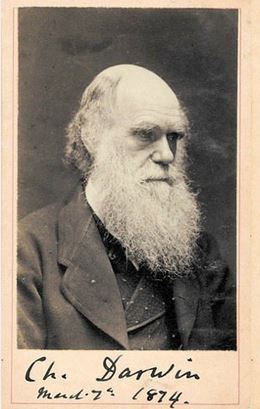
At that moment a new paradigm for human understanding became inevitable. It spawned a natural view of creation and the universe that would successfully compete with mystical beliefs in a god-centered universe. It eventually opened up a vast new social space that could be occupied by those seeking an alternative to a religious view. Today we call this vast social space a secular society, but nothing like it ever existed before. It was (and can still be) liberating and wide open with possibilities that were unimaginable under the divine paradigm. It was a space where science and technology thrived. A new sense of objectivity was a direct outcome. Ethics and morality could be studied from perspectives that were independent from specific religious texts. New philosophies sprung up and took root. It allowed us to create secular institutions of learning, medicine and other scholarly disciplines . We created secular governments, secular economies, secular business corporations and all manner of social organizations not immediately related to religion. It allowed for the creation of truly pluralistic societies and more religious tolerance than the world had ever known. But it also challenged and diminished the power of religions across the globe.
The secular paradigm that has emerged is not antithetical to God or a rejection of religion or spirituality. It is just a social framework. It is a religion neutral space where individuals are free to explore spirituality, question their beliefs or challenge tenants of their faith traditions without fear of social reprisals. It also allows citizens to accept or reject a creator god. In these ways it undermines priestly traditions and the central authority of many world religions. Religious fundamentalists who view the world as either good or evil are prone to see secularism as evil.
It is almost unimaginable today to conceive of a world without a secular alternative to a totally faith based society, especially when the fault lines separating the secular and religious worlds are still so active. In my view, the growing religious fundamentalist movements around the globe are just the most recent reactions to the declining power of organized religions to effect social change. Among Christian fundamentalists, at least, Darwin’s theory of evolution still remains at the epicenter of competing beliefs, especially with respect to the belief systems to which children are exposed. So much of the polarity and apparent disconnect found in our current politics derives from these underlying tensions between the religious and the secular. In fact, many of the global conflicts today share these same roots. The denial of climate change and the mistrust of science by conservative or fundamentalist constituents are a further manifestation of this divide.
The 19th Century saw the rise of civil secularism and the 20th Century was its flowering period. Secular societies refer to themselves as the “modern world.” They are associated with the rise of free markets, powerful business corporations and the technological revolution that has transformed every aspect of modern life. The global rise of religious fundamentalism is a rejection of modernity and secularism. It is easy to see this play out in the Middle-East where Muslim fundamentalist have resorted to violence in efforts to regain control over their people and establish Shari law. Islamist groups openly reject modernity and refer to the United State, that great exporter of secular culture, as “the Great Satin.”
Here at home these same underlying tensions are hidden in plain view because our fundamentists happen to share America’s dominant religion. The rise of politically active religious conservatism should also be seen as a rejection of modernity and secularism, just as it is in the Arib world. In many Christian communities there is strong peer pressure for Christians to conform to social norms that most resemble 18th Century America. There is also a strong distrust of secular media, secular science and especially secular government. Christian fundamentalist often view the government as corrupt because it is non-thestic and therefore evil. Secular society is evil because individuals are free to reject God’s authority. They seek to change that and establish the centrality of God in government and all aspect of American life. A theocracy would not be out of the question for them. Theirs is a direct assualt on our constitutional government as it was originally intended. Out of “Christian love” the majority of American’s continue to tolerate the increasingly intolarent Christian Right.
Ironically, most Christian fundamentalists have no problem embracing godless corporations and the free market economy. Secular society has allowed capitalism to slip the bonds of religious morality. This launched a corporate movement that is currently challenging and overpowering civil control of government. Part of the reason for its success is this alliance with the Christian right. The dynamics between secular society, fundamentalist religious society and the corporate, free market elite account for most of the forces driving today’s social changes. The current government shutdown might signal the first crack in the corporate/fundamentalist alliance.
This conceptual outline of underlying social forces has helped me make sense of current events and today’s social movements. I find myself returning to these themes whenever I need to place new developments into context. I hope that other readers might find this framework as useful.
Look at the Progress We’ve Made
I started thinking about part of a lyric from a song about the progress we have made and looked up the rest of the lyrics. I was struck by how well the words capture aspects of our social condition. Take a look –
The Progress Suite
Editorial (lyrics)
“Look at the progress we’ve made
Get your vitamin quota
In your soup ready-made
Forget that there’s hunger around you
Look at the progress we’ve seen
Perhaps you should cut down
On sugar and cream
You can’t button your jacket around you
Overcrowded world
What happens now
Better pray to your gods
And hope that somehow
Far from the shack you call home
They aren’t burning the grain
That has ripened and grown
‘Cause the prices have fallen again, so
Eat up your rice, Billy dear
They’re starving in India
At least that’s what I hear
Come on, my child, cram it down you
But we are okay
In our shiny new car
Look at us now
You can see we’ve come far
Here I am playing electric guitar
Look at the progress we’ve made”
Now consider that this song was first released in 1967, that’s 46 years ago. Sadly, little has changed that can really be called progress. The artists were Chad and Jeremy. The ablum influenced my early social development and political outlook.
Higher Wages – Good for Families, Good for Economy & Good for Business
Below is another graphic that speaks for itself. Not only does paying higher wages improve the US economy and the lives of every citizen, it also makes good business sense.
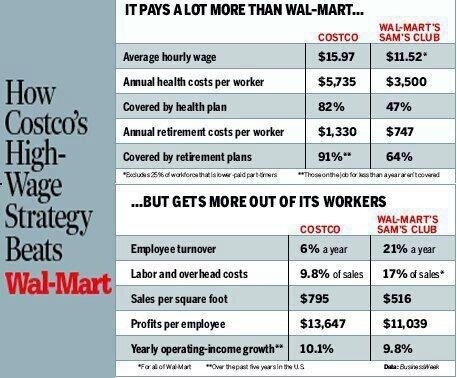
I have written extensively on wage history and the case for a living wage, wealth distribution in America, our global business competitiveness, the dangers of our growing wealth inequality, and many other issues effecting middle and working class Americans, including and post on class warfare.
In a Labor Day message from former Secretary of Labor, Robert Reich, he, ” breaks down what it’ll take for workers to get a fair share in this economy — including big, profitable corporations like McDonald’s and Walmart to pony up and finally pay fair wages.
There is a petition that you can sign if you click on the above link. Please consider it your Labor Day obligation to those who struggled and even died to give you the benefits we still have today.
Labor Day – A Day for Reflection
Labor Day. For much of the world this is a day of reflection to honor the martyrs who stood up to wealthy capitalists in the fight for dignified employment, the eight-hour workday and the five-day work week. It is a day to honor those who sacrificed their lives so that we might be home in time to eat dinner with our families and to have Saturday’s off to watch our children play baseball or soccer. It is a reminder that many of the blessings we take for granted today came at a terrible price. If we forget how we got these benefits they will slowly erode over time and history will reap itself.
Much of the world celebrates Labor Day not in August, but in May. Have you ever wondered why? Would you be surprised to learn that labor celebrations around the world commemorate events that took place in Chicago in 1816? Students of history will recognize this as the Haymarket, or May Day Massacre. Below is one account from the Encyclopedia of Chicago History via Wikipedia. http://www.encyclopedia.chicagohistory.org/pages/571.html
Haymarket and May DayLABOR UNREST, 1886 (MAP)
On May 1, 1886, Chicago unionists, reformers, socialists,anarchists, and ordinary workers combined to make the city the center of the national movement for an eight-hour day. Between April 25 and May 4, workers attended scores of meetings and paraded through the streets at least 19 times. On Saturday, May 1, 35,000 workers walked off their jobs. Tens of thousands more, both skilled and unskilled, joined them on May 3 and 4. Crowds traveled from workplace to workplace urging fellow workers to strike. Many now adopted the radical demand of eight hours’ work for ten hours’ pay. Police clashed with strikers at least a dozen times, three with shootings. At the McCormick reaper plant, a long-simmering strike erupted in violence on May 3, and police fired at strikers, killing at least two. Anarchists called a protest meeting at the West Randolph Street Haymarket, advertising it in inflammatory leaflets, one of which called for “Revenge!” The crowd gathered on the evening of May 4 on Des Plaines Street, just north of Randolph, was peaceful, and Mayor Carter H. Harrison, who attended, instructedpolice not to disturb the meeting. But when one speaker urged the dwindling crowd to “throttle” the law, 176 officers under Inspector John Bonfield marched to the meeting and ordered it to disperse. Then someone hurled a bomb at the police, killing one officer instantly. Police drew guns, firing wildly. Sixty officers were injured, and eight died; an undetermined number of the crowd were killed or wounded. The Haymarket bomb seemed to confirm the worst fears of business leaders and others anxious about the growing labor movement and radical influence in it. Mayor Harrison quickly banned meetings and processions. Police made picketing impossible and suppressed the radical press. Chicago newspapers publicized unsubstantiated police theories of anarchist conspiracies, and they published attacks on the foreign-born and calls for revenge, matching the anarchists in inflammatory language. The violence demoralized strikers, and only a few well-organized strikes continued. Police arrested hundreds of people, but never determined the identity of the bomb thrower. Amidst public clamor for revenge, however, eight anarchists, including prominent speakers and writers, were tried for murder. The partisan Judge Joseph E. Gary conducted the trial, and all 12 jurors acknowledged prejudice against the defendants. Lacking credible evidence that the defendants threw the bomb or organized the bomb throwing, prosecutors focused on their writings and speeches. The jury, instructed to adopt a conspiracy theory without legal precedent, convicted all eight. Seven were sentenced to death. The trial is now considered one of the worst miscarriages of justice in American history. Many Americans were outraged at the verdicts, but legal appeals failed. Two death sentences were commuted, but on November 11, 1887, four defendants were hanged in the Cook County jail; one committed suicide. Hundreds of thousands turned out for the funeral procession of the five dead men. In 1893, Governor John Peter Altgeld granted the three imprisoned defendants absolute pardon, citing the lack of evidence against them and the unfairness of the trial. Inspired by the American movement for a shorter workday, socialists and unionists around the world began celebrating May 1, or “May Day,” as an international workers’ holiday. In the twentieth century, the Soviet Union and other Communist countries officially adopted it. The Haymarket tragedy is remembered throughout the world in speeches, murals, and monuments. American observance was strongest in the decade before World War I. During the Cold War, many Americans saw May Day as a Communist holiday, and President Eisenhower proclaimed May 1 as “Loyalty Day” in 1955. Interest in Haymarket revived somewhat in the 1980s. A monument commemorating the “Haymarket martyrs” was erected in Waldheim Cemetery in 1893. In 1889 a statue honoring the dead police was erected in the Haymarket. Toppled by student radicals in 1969 and 1970, it was moved to the Chicago Police Academy. |

What Good Can Be Salvaged from the Trayvon Martin Case
Trayvon Martin is dead and George Zimmerman walks free. Was justice served?

Hood Up! Justice for Trayvon Martin by musyani75
That answer depends on who is asking the question. It should be a national outrage that this question splits us along both racial and political lines, but this has all become too predictable for outrage on these grounds. If we focus on the facts of the case the verdict divides us and there is no chance for reconciling our opposing views. If we shift the focus to our racial divide the glacial pace of reconciliation is measured in generations and no satisfactory solution can be seen. If we shift the focus to politics the question of justice will fade like an echo in the wind of endless partisanship. But focusing strictly gun laws in Florida may hold some slim hope for something good to come out of Trayvon’s death. If this trial has done anything useful, it has been to drawn attention to the crazy legal framework that informed this verdict.
Who instigates a conflict that turns deadly has always been a factor in determining guilt. The concept is that deadly conflicts are be avoided at the earliest possible stage, before they turn deadly. If you initiate the conflict, the onus is on you to end it before someone gets hurt. The “stand your ground” laws in Florida and elsewhere upends this logic. Now, whoever walks away from a murderous gun fight can legally claim it was self-defense, even if the dead guy was unarmed. It is mostly a reasonable assumption that the survivor of a deadly conflict must have felt their life was in danger at some point.
In Florida, you can now walk up to anyone in the street, provoke them into assaulting you physically and then shoot them in self-defense. You are no longer held responsible for their death. If this was not the intent of the “stand your ground” laws, it is the absurd practical implication following this verdict. These laws, with their faulty legal premises, need to be overturned.
Still I have to wonder what the legal outcome would have been if Trayvon also had a gun and ended up shooting Zimmerman first. Would days pass before he was arrested and charged? Would he have been acquitted by this jury?
If the only twist to this story was that Trayvon had managed to turn the barrel of Zimmerman’s gun around at the last instant to kill him, would the legal premise of the stand your ground law have been applied to Mr. Martin? Would the actions of the police and the outcome of the justice system been different? These questions are too important to ignore, but I am afraid the best answers to them depends largely on what we teach our children.
New Study – Sword Violence at an All Time Low
by Brian T. Lynch, MSW
A new study released by the O.K. Institute of Lake Woebegone, Minnesota, confirms that the rate of injury or death by swords continues to be exceeding rare in the 21st century. Once the leading cause of death in adolescents and young adults, both the incidents of sword play injury and sword related homicides remain at an all time low as a percentage of the population. In many US cities, even those with extraordinarily high homicide rates, the rate of sword related homicide was nearly zero between 2001 and 2012.

Researchers speculate that the low sword homicide rate may be the result of the present low rate of sword ownership in the United States. Less than one in one-hundred households currently own a sword and fewer than 1 person in 100,000 openly carry a sword. This is in stark contrast to the 18th Century when it is estimated that 1 out of every 20 men owned swords. Sword ownership rates may have been considerably higher in some urban areas where swords were openly carried in the streets for protection.
In their remarkable analysis, the researchers believe they have found a direct correlation between the decline of sword ownership and the decline in sword related deaths. This correlation remained robust even when compensating for variables such as sword safety training, blade size and such demographic differences as age, race, religion and economic status of the sword owners.
A spokesman at the O.K. Institute, speaking on behalf of the researchers, speculates that the results of this study could have practical implications for understanding the current high rate of gun violence in the United States. Further studies will be needed to confirme these results and to explore whether these findings can be generalized to the prevalence of violence by other types of lethal weapons.
[Obviously satirical]
How Wide is the Gender Gap – The Difference Between Mars and Venus
by Brian T. Lynch, MSW
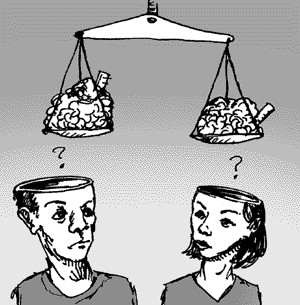
“divergent selection pressures on males and females are expected to produce consistent – and often substantial – psychological differences between the sexes. By the logic of sexual selection theory and parental investment theory, large sex differences are most likely to be found in traits and behaviors that ultimately relate to mating and parenting. More generally, sex differences are expected in those domains in which males and females have consistently faced different adaptive problems.”
Lobbying Produced a 22,000% Return for Corporations per One Study
Is lobbying Congress a good investment?
This is normally a nearly impossible question to answer, but a unique set of circumstances allowed researchers to conclude that Corporate lobbying for a tax amnesty provision in the 2004 American Jobs Creation Act(AJCA) yielded a 22,000% return. Yea, I would say it was worth it.
One reason why the question can’t normally be answered is that the financial information needed to answer the question can almost only be found on Corporate tax returns. All tax returns are confidential and only the IRS can see them. But a unique opportunity to study this question presented itself through a tax amnesty provision in the AJCA.
The University of Kansas School of Business ceased the opportunity. Researchers found that they were able, in this unique situation, to publicly obtain all the information need to analyze the return on lobbying expenditures. As stated in this study, “This is the first study to provide actual values of the financial savings arising from tax law changes, and the first to use data that has been audited by independent accounting firms.”
Cudos to the authors, Alexander, Mazza and Scholtz, and to the University of Kansas School of Business for this important piece of research.
Measuring Rates of Return for Lobbying Expenditures: An Empirical Analysis under the American Jobs Creation Act
Raquel Meyer Alexander
University of Kansas – School of Business
Stephen W. Mazza
University of Kansas – School of Law
Susan Scholz
University of Kansas – Accounting and Information Systems Area
April 8, 2009
Abstract:
The lobbying industry has experienced exponential growth within the past decade. The general public, the media, and special interest groups perceive lobbying to be a powerful mechanism affecting public policy. However, academic research finds inconclusive results when quantifying the rate of return on political lobbying expenditures. In this paper we use audited corporate tax disclosures relating to a tax holiday on repatriated earnings created by the American Jobs Creation Act of 2004 to examine the return on lobbying. We find firms lobbying for this provision have a return in excess of $220 for every $1 spent on lobbying, or 22,000%. Repatriating firms are more profitable overall, but surprisingly, profitability is not a predictor of repatriation amount. Rather, industry and firm size are most predictive of repatriation. Cash on hand, a proxy for ability to repatriate, is not associated with the repatriation decision or the repatriation amount. This paper provides compelling evidence that lobbying expenditures have a positive and significant return on investment.
Working Paper Series
GO TO THE WEBSITE AND DOWNLOAD THE FULL REPORT HERE http://bit.ly/Abj1Or
From the report:
|
[Top 20] Companies Repatriating $500M or More
(105 companies total1)
|
||||
|
Amount
|
Amount Repatriated/
|
|||
|
Rank
|
Company
|
Repatriated
|
Total Assets2
|
Revenue2
|
|
1
|
PFIZER
|
37,000
|
30%
|
70%
|
|
2
|
MERCK & CO
|
15,900
|
37%
|
68%
|
|
3
|
HEWLETT PACKARD
|
14,500
|
19%
|
18%
|
|
4
|
JOHNSON & JOHNSON
|
10,800
|
20%
|
23%
|
|
5
|
IBM
|
9,500
|
9%
|
10%
|
|
6
|
SCHERING-PLOUGH
|
9,400
|
59%
|
114%
|
|
7
|
DU PONT
|
9,100
|
26%
|
33%
|
|
8
|
BRISTOL-MYERS SQUIBB
|
9,000
|
30%
|
46%
|
|
9
|
ELI LILLY & CO
|
8,000
|
32%
|
58%
|
|
10
|
PEPSICO
|
7,500
|
27%
|
26%
|
|
11
|
PROCTOR & GAMBLE
|
7,200
|
13%
|
14%
|
|
12
|
INTEL
|
6,200
|
13%
|
18%
|
|
13
|
COCA-COLA
|
6,100
|
19%
|
28%
|
|
14
|
ALTRIA GROUP
|
6,000
|
6%
|
9%
|
|
15
|
MOTOROLA
|
4,600
|
15%
|
15%
|
|
16
|
DELL
|
4,100
|
18%
|
8%
|
|
17
|
MORGAN STANLEY
|
4,000
|
1%
|
10%
|
|
18
|
CITIGROUP
|
3,200
|
0%
|
3%
|
|
19
|
ORACLE
|
3,100
|
15%
|
26%
|
|
19
|
WYETH
|
3,100
|
9%
|
18%
|
 Data Driven Viewpoints