Home » Posts tagged 'Society' (Page 3)
Tag Archives: Society
Is Our Obesity Epidemic a Result of the War on Wages?
America has a growing obesity epidemic. This we know for certain. We also know that obesity is far more prevalent among poor Americans and that more and more Americans are slipping into poverty. Real, inflation adjusted wages have been stagnant for over 30 years. Current wages are in decline and the number of people below the poverty line is near an all time high.
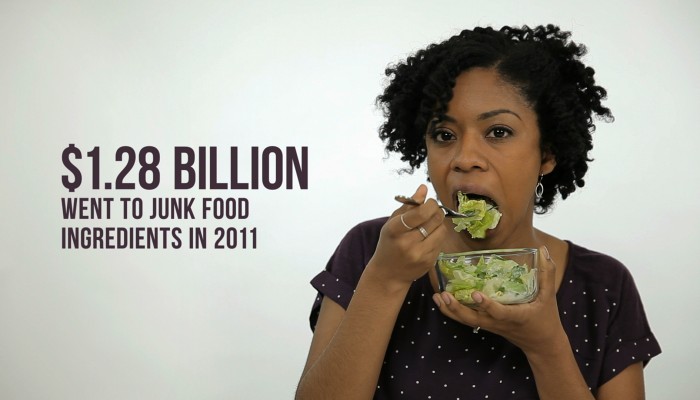
What is the link between poverty and obesity? It is a fact that the five states with the greatest obesity levels are also among the ten poorest states. They are also among the states with the lowest life expectancy. One theory as to why the poor are more likely to be obese is that they don’t have access to healthy foods in poor neighborhoods.
In April of this year the New York Times published an article highlighting two recent studies that looked at whether people in poor communities had access to stores and supermarkets that sold fresh, healthy foods. These two studies found that the poor have as much, or more access to stores selling healthy foods. One study found that poor neighborhoods have twice as many fast food restaurants and corner stores, but almost twice as many supermarkets as well. So the “food desert” theory of why poor American are more obese appears to be false.
A second theory on the connection between obesity and the poor is that they can’t afford to eat healthy. This is the “calories are cheap, nutrition is expensive” theory. Supporting this notion a recent American Journal of Clinical Nutrition study that found $1 could buy 1,200 calories of potato chips but just 250 calories of vegetables and 170 calories of fresh fruit. An excellent CNN article recently reported that:
“Ground beef that is 80/20 is fattier but cheaper than 90/10. Ground turkey breast is leaner than the other two but is usually the more expensive. And many of us can’t even begin to think about free-range chicken and organic produce — food without pesticides and antibiotics that’ll cost you a second mortgage in no time at all.”
And the cost of groceries is rising. The U.S. Department of Agriculture estimated the weekly grocery bill for a family of four was about at $134.50 in 2010 and $141.20 in 2011. An extra $7.00 per week is a lot for families living below the poverty line, especial when family incomes are in decline.
Other recent research also suggests a strong link between poverty, obesity and US food policy. While genetics may play a role in obesity, socioeconomic class may be a better predictor of obesity.
AcademicEarth.org has posted a brief video on their Website explaining this link that also relates it to current U.S. food policies. They report that Americans today eat 25% more calories than they did in the 1970’s (the same time period when hourly wages stopped rising with hourly productivity). The additional calorie intake is skewed towards lower income families. This important video federal food subsidies and other U.S. policies may be directly contributing to the current obesity crisis. Please view the video here: http://academicearth.org/electives/the-economic-cost-of-obesity/.
Created by AcademicEarth.org
Wealth Inequality and Our Brewing Social Crisis
by Brian T. Lynch, MSW
Wealth disparity has a profound, relativistic impact in human societies and this is worth understanding. Even in the most egalitarian societies where everything is shared, there are subtle differences in the distribution of goods and services. These small differences convey powerful social messages that are keenly felt by all its members. These messages impact social interactions and the social order. Wealth distribution has powerful symbolic meaning in every society, large or small, rich or poor.

Wealth Disparity is Worse Than You Think – Business Insider
http://www.businessinsider.com/inequality-is-worse-than-you-think-2013-3
When the actual material differences in wealth are subtle, the costs or benefits conferred by wealth distribution are limited to social perceptions and its impact on social order or governance. These material differences are not existential threats to the socially disadvantaged. However, as the actual material differences between members of society grows, the scarcity of essential resources for some may follow. This becomes ever more consequential as it increases the efforts needed to assure survival. It introduces more uncertainty and decreases the sense of personal control. Distribution induced disparity can grow to the point where it can even become life threaten. Additionally, the social power differential grows to the point where social relationships by the advantaged towards the disadvantaged can become exploitive and extractive.
Under conditions of extreme wealth disparity there are physical and psychological impacts on both the powerful and less powerful. The Socially disadvantaged undergo significant stress and will exhibit all the symptoms and conditions associated with chronic stress (alcoholism, drug abuse, depression, maladaptive behaviors, obesity, child abuse, poor health outcomes, etc.). What is important to understand is that it is the disparity in wealth that induces social stress, not the absolute measure of wealth. Extreme wealth disparity becomes pathological in all societies, both rich or poor. This appears to have been true throughout history. Evidence of the corrosive effects of social disparity has even been demonstrated in research studying the impact of dominance on subordinate primate populations, so this appears to be a natural phenomenon.
Extreme wealth disparity is a threat to society. This fact is underappreciated by many. And distribution induced shortages don’t need to be at starvation levels before reaching critical mass, especially in wealthy countries like ours. Pundits have used this starvation metric or comparisons of our poverty to that found in poor countries to dismiss the current threat we face from rapidly growing wealth disparity. A better measure of our social instability is the health and welfare of the nation’s poor. The ranks of the poor are growing and their welfare is rapidly deteriorating. Here we find a conspiracy of silence in the main stream press. The symptoms of poverty induced stress have been reinterpreted as moral weaknesses and personal failings for which the poor have no one but themselves to blame. Both the unfair distribution of current wages and the redistribution of wealth through taxes to assist the poor are almost taboo subjects. To raise these issues is to be accused of inciting class warfare, which is exactly what has been raging for decades to bring us to this point.
The last time America experienced such enormous wealth disparity we were fortunate that the worst consequence was the Great Depression and not a total social collapse. The Great Recession of 2008 is an early warning of what will happen if we don’t correct our current wealth imbalance. So far the alarm bells are ringing but the public address system is still on mute.
Virginia Gives Many Former Felons Permission to Vote
In Civil Rights Victory, Virginia Restores Voting Rights for Hundreds of Thousands Nonviolent Felons
|
Number of States WithThis Right
|
Percent of US Population With ThisRight
|
QUALIFICATIONS and EXCEPTIONS
|
|
49
|
99.6%
|
Must be A US Citizen
|
|
46
|
91.2%
|
Must be Registered to vote
|
|
20
|
27.6%
|
State’s Deployed Solders Can Vote
|
|
37
|
83.9%
|
Felony Exception
|
|
12
|
15.5%
|
Treason Exception
|
|
13
|
30.9%
|
Incarceration Exception
|
|
33
|
69.5%
|
Mental Capacity Exception
|
|
2
|
0.5%
|
Moral Conduct or other Exception
|
|
23
|
34.0%
|
Restoration from Exception
|
|
10
|
17.6%
|
No quartered solders
|
|
2
|
1.8%
|
Right to Appeal Voter Ineligibility
|
http://aseyeseesit.blogspot.com/2012/07/voting-rights-denied-for-record-numbers.html
Posted: 07/12/2012 3:01 pm Updated: 07/12/2012 3:08 pm
“A record number of Americans with criminal records cannot vote in what is expected to be a tight presidential election, a new study says.
More than 5.85 million adults who’ve been convicted of a felony aren’t welcome at polling places, according to data through 2010 compiled by The Sentencing Project. That’s 600,000 more than in 2004, the last time the nonprofit group crunched the numbers.
“The vast majority of these disenfranchised adults have been released from prison. Sentencing Project researchers found more than 4 million Americans who cannot cast a ballot because they’re on probation or parole, or live in a state that withholds the right to vote from all ex-felons.
RACIAL DISPARITY
- More than 60% of the people in prison are now racial and ethnic minorities.
- For Black males in their thirties, 1 in every 10 is in prison or jail on any given day.
drugs,” in which two-thirds of all persons in prison for drug offenses are people of color. – The Sentencing Project
When Beauty is Average
Beauty is average. This is truly a paradigm shifting truth. It is confirmed by both digital photography studies and new understandings of how our brains process information. It turns out Plato had it right when he said there was a place where ideal objects existed, he just didn’t know he was describing a function of our cerebral cortex. The ideal table, for instance, is a mental construct or image in our brain that allows us to recognize infinite variations in size, shape, purpose, color, aspect, texture, design, etc. as an object that is still a table. This is a remarkable fact in itself. But then comes the discovery that the most beautiful human faces ends up being the average face. This is mind blown.
http://faceresearch.org/students/averageness
 |
 |
 |
 |
 |
 |
| Individual Faces | Composite Face | ||||
|---|---|---|---|---|---|
The idea that beauty is average comes from the digital age where photographs can be rendered in pixel formats. The size of the pixels determines the resolution of the photographs. High resolution photographs have many more pixels. Some researchers got the bright idea of taking a lot of high resolution digital portraits of men and woman and then averaging the value of all the pixels that comprised the human male and female face to create a composite image. The images they created of the pixel averaged faces for men and woman turned out to be strikingly beautiful.
Next the researchers took the composite images along with the digital photos of the faces that made up the composite face, and showed these to lots of people. They asked the subjects to rate or rank the beauty of the faces. The researchers found that the average pixel face was most often rated the most beautiful. And so we discovered that beauty is literally the average.
The researchers suggested that as a species the ability to identify beauty, or the average face, may have served a natural selection purpose. They speculated that people with an exactly average appearance are more likely to be healthy, normal and able to have children. Maybe so. Who knows.
What the study also proved, but what the researchers didn’t highlight, is the amazing ability of the brain to identify the exact average of so many faces it encounters. If you think of a bell curve from statistics, the exact average is a relatively small or thin line within the normal range while the normal range of human faces is huge. Just look around and you will see tremendous variations of human faces and body types. But the exact average, or median, of all faces or body types occurs in very few individuals within the population. This fact preserves the truth that beauty is actually very rare.
If it seems like an impossible task for the brain to identify the approximate average human face, then recent understandings of the hierarchical nature of how our cortex processes data suggest how this is done. It turns out that our cerebral cortex creates idealized images of every object we see in our world. This allows us to rapidly and correctly identify object no matter what portion of them we see or individual attributes they may have, such as color, size, texture, composition, design, etc. This attribute also allows us to create idealized images of a human face.
So beauty is average and our brains have a nearly universal sense of beauty. We share this sense because we all have a similar pool of faces from which to identify the average face.
This has profound implications for the arts, but even more profound social implications. It explains how in my desire to be different as a young man I found myself conforming to my peers. When I was young and wanted to distinguish myself from my parents generation. One way I did this was by crudely cutting off the legs off my jeans to create cut-off. It turns out everyone else in my generation was wearing them. I was one of the crowd. In trying to be different from my parents I conformed to others who, like me, also wanted to be different. I identified with an image of who I wanted to be that happened to be the idealized, or exact average, of every other young person wishing to make the same statement.
As it turns out, this self-identified peer conformity is a ubiquitous feature of our human nature. It is possible because of our ability to sort out and idealize groups of objects or people. If I asked you to imagine yourself as a Harley motorcycle biker, you would conger up an idealized version of a biker that approximately represents the average Harley biker. If you acted on this image you might buy and personalize a leather jacket, and do the same for other garments and accessories, until you were satisfied that you fit in with the self-identified peer group of Harley bikers.
We almost effortlessly do this sorting and self-identifying all the time. It explains how we are both so diverse and yet so conforming. We are always moving toward some idealized average image of the groups or things with which we identify even as those idealized averages are shifting over time. But when it comes to thinking about beauty, there is something reassuring about the fact that what makes beautiful people so special is the fact that they are so average. It somehow makes me more content being more or less “normal”.
Breadwinner Moms – A New Pew Research Report
The following report is an important story of America’s demographic shifts with significant impliciations for children. If 40% of households with children are headed by working mothers, and some smaller percentage are headed by working fathers, then we are approaching the point where only about half of the children growing up are coming from two parent families. What is the impact on tomorrows society when nearly have the young adults have not grown up with a father or mother role model in their life? It also has other significant implications in terms of equal pay for women issues, day care needs, after school programming and much more. Combine this data with the recent mile stone that there are more poor people living in the suburbs than the city and it all represents some significant social challenges that we must face.
Breadwinner Moms
Mothers Are the Sole or Primary Provider in Four-in-Ten Households with Children; Public Conflicted about the Growing Trend
by Wendy Wang, Kim Parker and Paul Taylor
http://www.pewsocialtrends.org/2013/05/29/breadwinner-moms/
CHAPTER 1: OVERVIEW

A record 40% of all households with children under the age of 18 include mothers who are either the sole or primary source of income for the family, according to a new Pew Research Center analysis of data from the U.S. Census Bureau. The share was just 11% in 1960.
These “breadwinner moms” are made up of two very different groups: 5.1 million (37%) are married mothers who have a higher income than their husbands, and 8.6 million (63%) are single mothers.1
The income gap between the two groups is quite large. The median total family income of married mothers who earn more than their husbands was nearly $80,000 in 2011, well above the national median of $57,100 for all families with children, and nearly four times the $23,000 median for families led by a single mother.2
Continue reading at the following URL: http://www.pewsocialtrends.org/2013/05/29/breadwinner-moms/
America’s Social Contract And The Measure of Our Commitment
(Note: contains some material from prior posts)
by Brian T. Lynch, MSW
A key element in America’s social contract is the idea that government derives its authority from the consent of the people. So the question should occasional be asked, is our mutual consent to be governed wearing thin? There is evidence to suggest a growing restiveness in certain populations. Some symptoms of declining consent include gridlock in congress marked by an inability to pass any legislation on a simple majority vote, the resurgence in states’ rights activism, calls in some states for secession, citizens arming themselves in fear (or perhaps the hope) of armed resistance and wide spread efforts to manipulate elections. Perhaps the best, most quantitative way to judge the degree to which we consent (or commitment) to self-government is by our willingness to pay taxes.
The attitudes we have towards paying taxes, and the extent to which people and organizations will go to avoid them, is an underappreciated index of our consent to be governed. Just as taxation without representation was a rallying cry leading up to the Revolutionary War, the Tea Party and many other popular reform or resistance groups today rally around taxes as a central point of contention. Objectively speaking, the Tea Party’s opposition to taxes makes no sense since their complaint corresponded with the lowest federal tax rate since the Eisenhower administration. It isn’t until we understand that our attitude towards taxes is a barometer of our consent to be governed that the Tea Party’s tax objections become clear.
For the sake of discussion it is helpful to identify different segments of the population that are particularly opposed to taxes. But keep in mind that our personal attitude towards paying taxes is just as valid an indicator of where each of us falls on this measure of consent.
Let’s begin with those who see themselves through the lens of American individualism. They value self-reliance and see this as a patriotic duty. They tend to think less of those who are more collaborative, more dependent or less successful. They tend to discount the contribution of the public commons to their own welfare and don’t often recognize how massively interdependent advanced societies really are. They believe that less government is best for everyone. These folks are less willing to contribute to tax supported government services other than for military defense. They are ideological individualist. This group may include some libertarians and on the extreme fringes may also include some anarchists or survivalists.
There are those who are suspicious or uncomfortable with American pluralism. These folks tend to live in parts of the country where there is little diversity or just a single predominate minority group. However, folks who hold this belief can be found everywhere. They believe a disproportionate amount of their taxes go to support other ethnic or cultural groups whose members don’t share their same values or work ethic. They may fear that these other groups are taking advantage of government largess. As a result, they are more resentful of paying taxes and more critical of what they see as wasteful government spending. These folks are pluralism-adverse and at the extreme fringes this group may include racists or hate groups. A highly nationalistic subset of this pluralism-adverse group believe their government has already broken faith with them and is threatening their liberty. For them, paying taxes is akin to paying tribute to a foreign potentate. The most extreme of these consider themselves to be soverign citizens.
There are some religious fundamentalists who believe all secular government is evil. Some fundamentalist sects focus on The Book of Revelations and an apocalyptic view of the world in which governments plays a role in the rise of the false prophet. For these groups anything that expands government is evil as well, including increased taxes. They are usually considered to be on the fringe of the Christian community, but they have an impact beyond their numbers.
Then there are those who believe taxes compete or interfere with commerce and free markets. They believe that taxes reduce the capital available for businesses investments. They fear that more taxes will lead to more government regulations and further hinder commerce. They don’t see government spending as simulative for the economy. For them, the provision of government services to those who aren’t successful contributors is an unfair redistribution of wealth. Members of this group are more likely to have higher incomes and a sense of entitlement. They may pride themselves in their ability to avoid paying taxes. At the extreme fringes of this group members tend to see society as being made up of the have and the have nots, the makers and the takers. They are often contemptuous of taxes and government.
Next, there are the disaffected and those too self-absorbed to care much about government. For this group all taxes are an annoyance to be avoided. This is a large and diverse group that is often underrepresented in our national conversations. They include many who are poor, but also many who are middle class folks working hard just to make ends meet. They tend to be swing voters when they vote and their grasp of politics and government policies are more maliable. The underground cash economy is significant for them.
The impact of this growing reluctance by some citizens to pay income taxes is huge. According to a GAO report called “HIGH-RISK SERIES, An Update”, the Internal Revenue Service estimated that the gross tax gap–the difference between taxes owed and taxes paid on time–was $450 billion for tax year 2006. The IRS estimated that it would collect $65 billion from these taxpayers through enforcement actions and late payments, leaving a net tax gap of $385 billion. This doesn’t include the loss of tax revenue due to the underground cash economy and foreign US cash transactions. These create an additional tax gap estimated to be between $400 billion and $540 billion annually. There is also the tax gap created when wealthy investors hide their money in off shore tax havens. According to a study by the Tax Justice Network the world’s super rich have at least $21 trillion secretly hidden away in tax shelters as of 2010. This is equivalent to the size of the Japanese and United States economies combined, according to The Price of Offshore Revisited report. Further, the amount of secretly hidden wealth may be as high as $32 trillion.
Arguably the most tax resistant groups, which also have the greatest fiscal and political impact, are businesses and corporations. The largest loss of tax revenue, representing the lowest level of consent to be governed, comes from the corporate sector. The shift in the percentage of total federal income taxes paid by individuals verses businesses has grown substantially over the years. Individual income taxes raised 41% of the total tax revenue in 1943 while business income taxes made up the rest, or more than half of the income tax receipts. Compare this with today where 79% of total revenues comes from individual income taxes. This shift in tax receipts from corporations to individuals cannot be explained by a shift away from C corporations (who pay the corporate income tax) to S corporations (who don’t). According to the financial site NerdWallet, the 10 most profitable U.S. companies paid an average federal tax rate of just 9 percent in 2011. The group includes such giants as Exxon Mobil, Apple, Microsoft, JPMorgan Chase and General Electric. The Economist recently posted a graphic by the Bureau of Economic Analysis that depicts the decline in corporate taxes juxtaposed to the rise in corporate profits.

The inability of the federal government to collect taxes from the nation’s elite and its biggest corporations is a serious sign of trouble. It signals a real strain in our social contract and severly limits the ability of the government to serve its people. The problem is compounded by the fact that anti-tax sentiments are being exploited by wealthy business interests to ferment dissatisfaction and distrust of our government. A coalition of the most anti-tax, anti government constituents from the various tax adverse segments of society described above would look very similar to the Tea Party base of today’s Republican Party. The power we invest in civil government is the only check we have to balance the power of the largest corporations to do as they wish in pursuit of profits. It would be a mistake to weaken our commitment to good government now when it is under assault.
There are still many who believe taxes are the price we must pay for a just and robust society. Paying taxes is our civic duty and evidence of our commitment to one another. It reflects confidence that our government is representing us and upholding the social contract. The present IRS scandal over the targeting of Tea Party groups for selective scrutiny of their 503(c)4 tax status is really a minor but convenient distraction from the real tax crisis we face. We are facing a crisis of confidence in self-government. It is a challenge of our time to rekindle a popular passion for civil government that is truly of, by and for the people.
Taxes and America’s Social Contract
The American social contract is threadbare in certain parts of America. Areas of this great country are falling into disrepair, dissolution as if under a spell . In places like the Camden, New Jersey and now Josephine County, Oregon, public safety has been compromised by the failure of will to raise taxes. Below you will find a very disturbing report on the latter situation from Oregon Public Broadcasting. It dramatically highlights what can go wrong when citizens can’t make the connection between good government and the tax revenue it takes to have it. First, let’s consider the various segments of our population who oppose raising taxes.
There are those who see themselves through the lens of American individualism. They value self-reliance and see this as a patriotic duty. They tend to think less of those who are more collaborative or more dependent or unsuccessful. They tend to discount the contribution of the public commons to their own welfare and don’t often recognize how massively interdependent our advanced society really is. They believe that less government is best for everyone. These folks are less willing to contribute to tax supported government services other than for military defense. They are ideological individualist. They may include libertarians. On the extreme fringe they may include anarchists or survialists.
There are those who are suspicious or uncomfortable with Ameican pluarism. These folks most often live in parts of the country where there is little diversity or only a single other minority group. But folks who hold this belief can also be found everywhere. They believe a disproportionate amount of their taxes go to support other ethnic or cultual groups whose members don’t share their same values or work ethic. They sometimes fear other groups are taking advantage of government largess. As a result, they are more resentful of paying taxes and more critical of wasteful governement spending. They are pluralism-adverse. At the extremes this group may include racists and hate group. A highly nationalistic subset of this pluralism adverse group believes the federal government has already broken faith with the people and threat our liberty. For them, paying taxes is akin to paying tribute to a foreign potentate.
There are some religious fundamentalists who believe all secular government is evil. For them, anything that expands government is evil as well, including raising taxes.
There are those who believe taxes compete or interfere with commerce and the free market. They think that taxes only reduce the capital available for business and contribute to government regulations. They don’t see government spending as stimulating for the economy. For them, the provision of services to those who aren’t successful contributors to the economy is an unfair redistribution of wealth. This group are more likely to have higher incomes and to pride themselves in their ability to avoid paying taxes. In the extreme they tend to see society as made of the have and have nots, the makers and the takers.
I believe all these groups are being aggitated and moulded into an anti-government political movement to reduce the power of government to regulate powerful corporate interests. But regardless of what you or I believe, the truth of who we are becoming is reflected in the hopes and fears of this 911 caller in Josephine County, Oregon.
With No Officers To Respond To 911 Calls, Josephine Co. Considers Tax Levy
OPB | May 14, 2013 3:40 p.m. | Updated: May 15, 2013 10:50 a.m. | Grants Pass, Oregon
http://www.opb.org/news/article/josephine-county-tax-levy-would-add-deputies-fund-the-jail/
Does Philanthropy End Up Hurting the Poor and Vulnerable?
What follows is my response to an open discussion about the role and social value of philanthropic foundations. It is my response to the lead article by Dr. Rob Reich, which can be read in its entirity at the URL below.
BOSTON REVIEW
http://www.bostonreview.net/BR38.2/ndf_rob_reich_foundations_philanthropy_democracy.php#c5t_form
Lead Essay:
What Are Foundations For?
Rob Reich
This article leads off our debate on philanthropy, with responses from Stanley Katz, Diane Ravitch, Larry Kramer, and others.
 Graham Smith
Judge Richard Posner, one of the foremost American jurists outside the Supreme Court, once observed, “A perpetual charitable foundation . . . is a completely irresponsible institution, answerable to nobody. It competes neither in capital markets nor in product markets . . . and, unlike a hereditary monarch whom such a foundation otherwise resembles, it is subject to no political controls either.” Why, he wondered, don’t we think of these foundations as “total scandals”?
If foundations are total scandals, then we have a massive problem on our hands. We are now living through the second golden age of American philanthropy. What Andrew Carnegie and John D. Rockefeller were to the early twentieth century, Bill Gates and Warren Buffett are to the early twenty-first century.
The last decade of the twentieth century witnessed the creation of unprecedentedly large foundations, such as Gates’s. The assets of the Gates Foundation and a separate Gates Trust, which holds wealth donated by the Gates family and Buffett, together total more than $65 Billion. If the combined entities were a nation, it would be 65th on the world GDP list. And it’s not just billionaires and their mega-foundations that command attention. Record wealth inequalities might be a foe to civic comity, but they are good for philanthropy. The boom in millionaires has fueled unprecedented growth in the number and assets of small foundations as well.
So foundations have seen explosive growth. But why are they a scandal? Read the Full Article. http://www.bostonreview.net/BR38.2/ndf_rob_reich_foundations_philanthropy_democracy.php#c5t_form
My Comments:
In setting up his essay on philanthropic foundation in this “second golden age”, Reich offered the following: “Let us dismiss quickly one common and intuitive thought: that foundations exist because they are remedial or redistributive, responsive to the needs of the poor or disadvantaged.”
He goes on to identify public goods this way: “It has long been understood that the commercial marketplace does not do well at providing what economists call public goods. These are goods that, like a well-lit harbor, are available to everyone if they are available to anyone; and that, like clean air, do not cost more when they are consumed by more people. “
After three decades in the field of child welfare, this was a startling and insightful dismissal. In debating whether America’s philanthropic foundations are worthy of the tax exempt status conferred on them in 1937, Reich excludes consideration of their value relative to public services that reduce human misery but carry a cost per use. In other words Reich’s definition of public goods includes only passive public services, like street lights, but not active public services, including child welfare. This certainly explains why foundational giving for public needs is so small a percentage of their activity. Yet we are asked to judge whether their social contribution is worth their $53 billion in tax exemptions each year? How much good could that revenue do to support and strengthen our most vulnerable citizens? Don’t ask!
To characterize social services as remedial “or redistributive” of wealth, is offensive to me. When used to characterize government spending on the general welfare, “redistribution” is a code word to frame partisan arguments in our muffled debate over distributive justice. Taxing the more successful citizens to promote the general welfare, except for military spending, is considered an unfair redistribution of wealth, yet any discussion on the fair distribution of profits between workers and business owners is considered out of bounds.
The context for this discussion on foundations is the social value of philanthropy at a time when wealth disparity has never been greater. When a growing number of wealthy foundations are extracting ever more revenue from an already dwindling federal revenue stream, excluding consideration of their impact on public services makes this discussion itself a plutocratic exercise.
The pros and cons of whether foundations generate valuable diversity and innovation were well explored by the forum’s other contributors, but none of their essays addressed underlying assumptions. Foundations actually do play an outsized and often deterious role in how community social services are structured, funded and distributed. None of the contributors picked the scab off this wound to consider the broader picture. Financially speaking, foundations are in direct competition with public social services and the vulnerable populations served. I was disappointed.
International Corporate Plans to Oversee National Governments
Have you ever heard of the Trans-Pacific Partnership Agreement?
This posting is not so much an article on the Trans-Pacific Partnership agreement being negotiated as it is a gateway to articles on the subject. It is important to learn about this subject because, as Dave Johnson wrote in OpEdNews, “You will be hearing a lot about the upcoming Trans-Pacific Partnership (TPP) agreement. TPP’s negotiations are being held in secret with details kept secret even from our Congress. But giant corporations are in the loop.”
I would like to suggest you watch the DemocracyNow video from last June (see below) to UNDERSTAND this pending trade agreement and why it is a really big deal. Note, however, that the video of an awards cerimony was actually an anti-TPP activist’s hoax.
Here is an excerpt from Public Citizens analysis of TPP: ” TPP is a “trade” agreement between several Pacific-rim countries that is actually about much more than just trade. It will be sold as a trade agreement (because everyone knows that “trade” is good) but much of it appears to be (from what we know) a corporate end-run around things We the People want to do to reign in the giant corporations — like Wall Street regulation, environmental regulation and corporate taxation. ” [Note: Once finalized, this trade agreement will remain open ended so that any other nations may sign on to it in the future.]
http://www.democracynow.org/2012/6/14/breaking_08_pledge_leaked_trade_doc
Time to Cap the Debate on Social Security and Medicare
Social Security and Medicare are in serious financial trouble in the future because they have been under attack for so long that how we thing of them has been changed by those who wish to kill these programs. Regardless of whose figures you believe when discussing the financial health of these programs, it could all be fixed by scraping the income cut off cap for contributions. Right now income payroll deduction collect a fixed percent of incomes up to around the first $107,000. This was just raised to this amount this year. All income over that amount is not considered.
I am a reluctant proponent of eliminating the Social Security and Medicare income contribution caps. In the short run this improve the income projects for both programs for some time to come, but it would also plant the seeds of distruction for these programs. It is helpful to understand why there are these caps to understanding my point.
 Data Driven Viewpoints